

5 Rock Albums That Defined The '90s
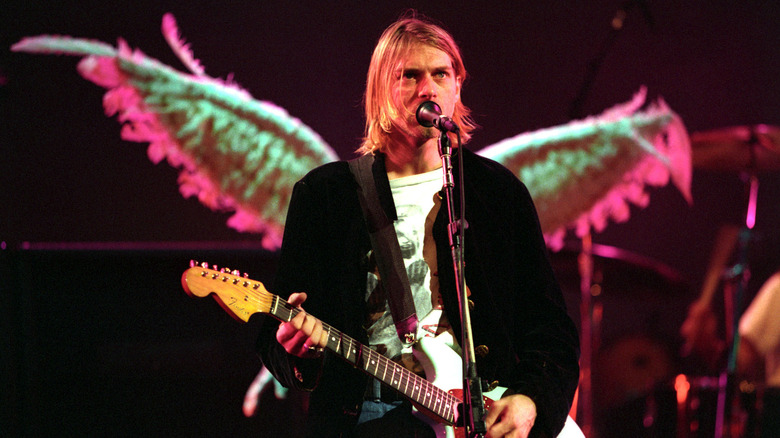
Looking back at the 1990s from a musical perspective, this was a decade of transformation as the culture moved in diverse directions. There was the explosion of grunge, which popularized several Seattle bands, including Pearl Jam, Alice in Chains, Soundgarden, and, most significantly, Nirvana. Then there was the Britpop boom, with Oasis leading the path, followed by Blur, Pulp, Suede, and other bands. Meanwhile, as hip-hop was evolving thanks to the creativity of Snoop Dogg, Dr. Dre, Jay-Z, and Tupac, the pop charts were bursting with hits from Britney Spears, Backstreet Boys, Mariah Carey, and Spice Girls.
Meanwhile, divisions were forming as new genres, subgenres, and sub-subgenres emerged, from alt-rock to country pop to ska punk, each finding their fans as punk and new wave had in the previous decade. Of the thousands of albums released during the '90s, singling out a handful from the rock genre that exemplify that 10-year period would seemingly be the ultimate fool's errand. Yet when considering the sheer vastness of those releases, there are some that inevitably rise to the surface, be it from critical acclaim, their enduring popularity, or sheer nostalgia. With that in mind, here's a rundown of five rock albums that defined the '90s.
Nirvana — Nevermind
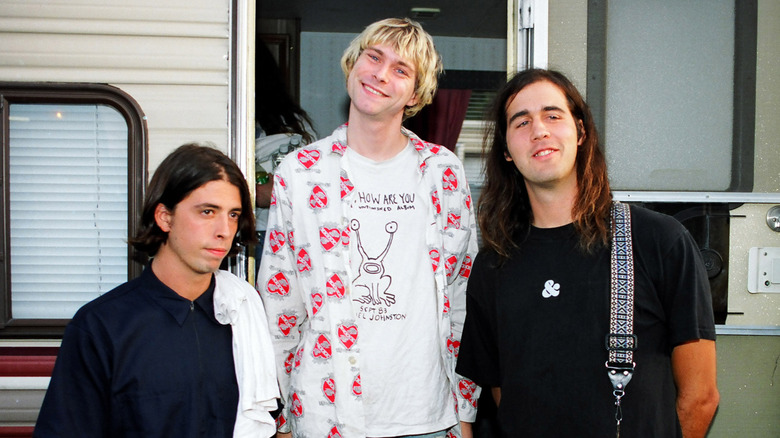
Upon its release in 1991, Nirvana's "Nevermind" detonated like a musical grenade, sending Seattle shrapnel across the world while laying the foundation for what would come to be known as grunge. Thanks to hits like "Smells Like Teen Spirit," one of the songs that defines '90s grunge, the album quickly became a sensation. It spent 700 weeks in the Billboard Top 200 and sold 30 million copies, taking the genre into the mainstream.
Compared to the slick, synth-heavy production that characterized so much of the music from the '80s, "Nevermind" was raw fury, with loud, distorted guitars propelled by Dave Grohl's powerful drumming and frontman Kurt Cobain's evocative wail. "Teen Spirit" set the template for subsequent Nirvana hits, kicking off with a quiet, clean guitar sound that progresses to an explosion of fuzz-toned riffs. Making it more palatable than the rough-edged punk that influenced Cobain and his contemporaries, Butch Vig's production came to forge the guitar-driven grunge sound of the 1990s. "It defined that particular time," Vig told Billboard of "Nevermind." "It obviously changed my life profoundly and I'm still really proud of it."
There's no question that "Nevermind" created a shift, not just in music but in popular culture and even fashion. As fans embraced Nirvana's harder-edged sound, ripped jeans and plaid flannel entered the realm of haute couture. "It was perfect timing coming out when there was a shift in music and it felt like a revolution," Vig recalled in an interview with NME.
Alanis Morissette — Jagged Little Pill
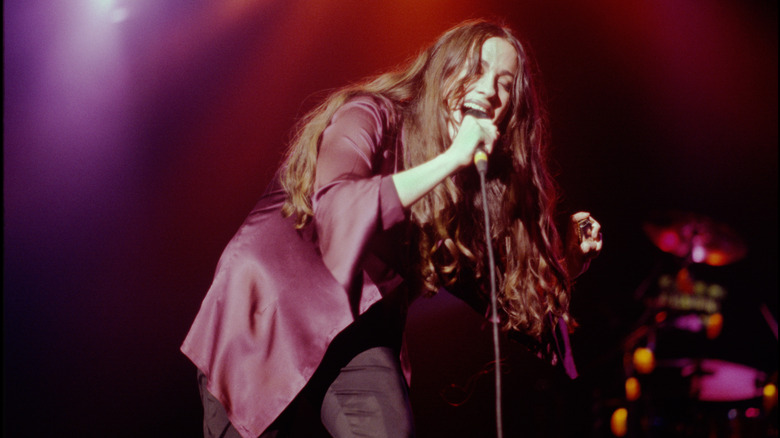
Alanis Morissette was around 12 when she began appearing on Nickelodeon kids' sketch-comedy series "You Can't Do That on Television." A few years later, she launched herself as a teen pop singer in her native Canada, and her first album, 1991's "Alanis," wasn't what you think: Vapid pop songs in the Debbie Gibson/Tiffany vein. She remained in that lane for her 1992 follow-up, "Now Is the Time," but was dropped by her label after that album tanked. Morissette subsequently struggled to find her voice. The result was "Jagged Little Pill," her 1995 breakthrough featuring a rough-edged, guitar-driven sound that was miles away from the fluffy teen-pop of her earlier albums. Still, it retained enough hooks that her anthem-like songs were catchy enough to hum along to.
The album's signature song, "You Oughta Know," is four minutes and nine seconds of pure rage directed at an unfaithful ex. While Morissette's voice quavers at first while a funky bass-driven groove emerges, she builds to a banshee-like crescendo as the distorted guitars and drums kick in. "I mean, I was just writing about what I was thinking about and mulling over and ruminating, what I was tortured by or yearning for at the time," Morissette told The New York Times. While the success of "Jagged Little Pill" seems inevitable in hindsight, the album spooked many potential record labels. "They were just afraid of how intense it was, to be honest," Morissette told CBC.
Oasis — (What's the Story) Morning Glory?
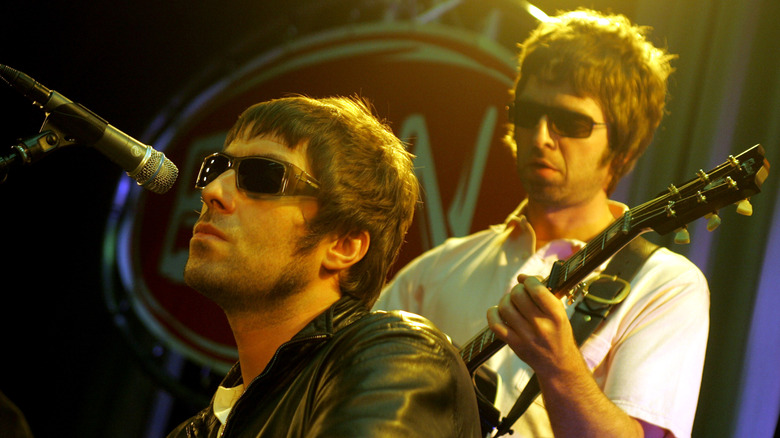
While grunge was a predominantly American phenomenon, a whole other rock evolution was taking place across the pond. Dubbed Britpop, the emphasis was on a guitar-driven sound, boasting catchy hooks and bright production. At the tip of the spear was Oasis, the Manchester band formed by battling brothers Liam and Noel Gallagher.
When exploring the untold truth of Oasis, it's clear that the band's sound was in place with its 1994 debut, "Definitely Maybe." The album boasted shimmering production and a guitar-rock sound that incorporated the swaggering feel of "Madchester" acts like The Stone Roses and Happy Mondays alongside the bravura of punk while paying serious homage to late-era Beatles. But it was the 1995 follow-up — "(What's the Story) Morning Glory?" — that really rocketed the band to the stratosphere. With hits such as "Wonderwall," "Don't Look Back in Anger," and "Champagne Supernova," the album sold 22 million copies. It became one of the decade's biggest-selling albums while also setting the stage for the ongoing drama between the battling brothers.
According to artist Brian Cannon, who'd worked with the band since the beginning, the massive success of that album transformed Oasis from a hot new indie band to international superstars. "That's when you get into the realm of housewives who never buy records buying your record," Cannon told Sky News. "To become as massive as they did you've got to achieve that level whereby people who just don't buy records, buy your records. And that's what happened."
Smashing Pumpkins — Mellon Collie and the Infinite Sadness
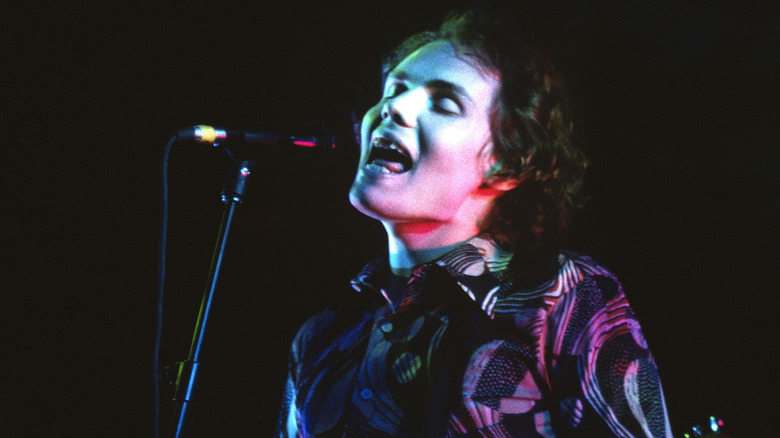
Smashing Pumpkins rode the grunge wave when it emerged in 1991 with its debut album, "Gish." Fronted by singer/songwriter/guitarist Billy Corgan, the band's sound continued to evolve in its sophomore album, 1993's "Siamese Dream." But it was 1995's double album, "Mellon Collie and the Infinite Sadness," that took the Pumpkins to the next level, selling more than 10 million copies on the strength of hits like "1979," "Tonight, Tonight," and "Bullet with Butterfly Wings." A sprawling, eclectic, magnificent mess of an album, "Mellon Collie" blends elements of grunge, glam, pop, metal, alt-rock, and pretty much everything else, bursting with rock anthems that served as a soundtrack for teen angst-ridden Generation X.
However, the band's label felt that releasing a double album full of sonically diverse material would be a disaster, especially at such a pivotal moment in the band's evolution. "Once I told the record company [Virgin] and fought to make the album a double album, the record company thought it was the most suicidal career move that you could make," Corgan told Guitar Player in 2025. "They thought it was the stupidest thing in the world," he later added.
As Corgan recalled, he wrote more than 50 songs for potential inclusion, and he felt enormous pressure to deliver hits. Looking back on the experience, he still isn't sure why the album worked as well as it did. "It's still a mystery to me," he added. "At the time, it felt like this kind of crazy mess."
Foo Fighters — The Color and the Shape
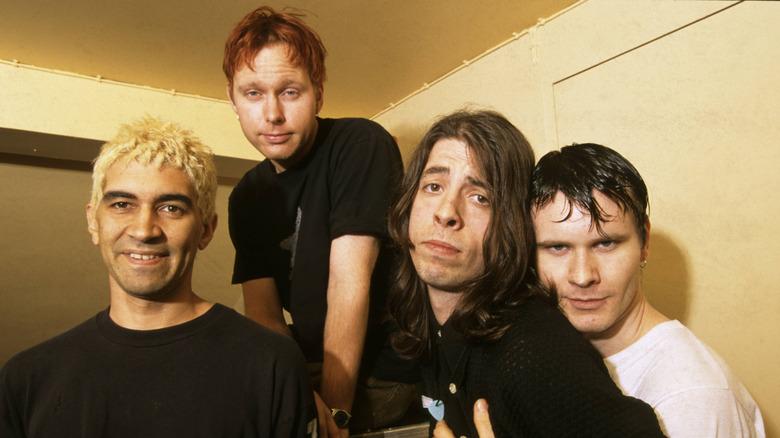
In retrospect, the general consensus has been that the 1994 death of Nirvana frontman Kurt Cobain marked the beginning of the end for grunge. Yet ironically, it was that band's drummer, Dave Grohl, who found a path forward for rock music when he unveiled the self-titled, DIY Foo Fighters debut album, on which he played every instrument. For Foo Fighters' second studio album, Grohl had put together a band — consisting of guitarist Pat Smear, bassist Nate Mendel, and drummer William Goldsmith (who quit soon after and was replaced by Taylor Hawkins) — and the energy of that outfit was palpable in 1997's "The Color and the Shape." Grohl considered the album to be the first true Foo Fighters album. "We've made a record I consider such a move forward for the band," Grohl told Melody Maker (per FooArchive). "For a first album, it is pretty f****** good."
From a sonic perspective, Grohl had moved beyond grunge, seeking a sound that was more expansive, referencing the hard rock of the '70s while taking that sound in a whole new direction. "I've made punk records, and they're fun and great and it's quick and there's passion," Grohl told Louder of what differentiated "The Color and the Shape" from its predecessor. "But I did that with the first record. I've never made a big, proper rock record before, so why not? People just don't seem to do it anymore, so we might as well take a shot."