

'70s Singers That Hurled Barbs At Other Classic Musicians
The news is full of musical feuds: Taylor Swift apparently hiding underhanded jabs at "Brat" singer Charli XCX on her album "The Life of a Showgirl," Drake ending up at war with what seemed at the time like the entire West Coast, Kendrick Lamar in particular. Those of us of a certain vintage might look down on the superstar musicians of the day for what seems like incredibly petty and childish infighting when they should be having the time of their lives.
But the truth is, stars have always had the tendency to snipe at one another, even going back to the days of classic rock. Indeed, even the Beatles, the band that once told the world "All You Need Is Love," devolved into a very public war of words that played out in the press in the years after its 1970 break-up, with John Lennon being especially critical of former songwriter partner Paul McCartney – while there were countless other musicians who were willing to take a swipe at the Fab Four. Looking back, there was plenty of animosity between other '70s acts that simply didn't like each other. Here are five '70s singers who shared their disdain for their colleagues-in-song.
David Bowie
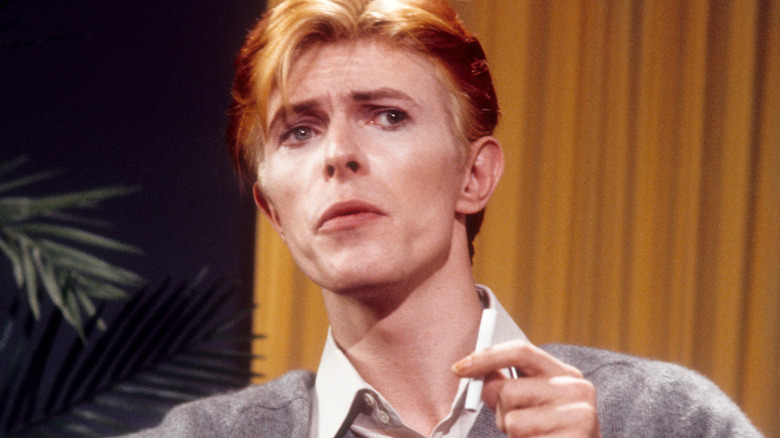
David Bowie gave few interviews in his later years, but those he gave in the 1990s and 2000s revealed him to be a down-to-earth, affable man who didn't seem to take himself too seriously while nevertheless remaining dedicated to his art. However, that wasn't always the case. Back in the 1970s, when he wasn't trying to freak people out with his androgynous look and extraterrestrial vibe, he was more than willing to show his darker side — which including bashing other major musicians.
Like others of his era, Bowie was apt to spend his time hanging around other rock stars in the 1970s, and one star the Starman crossed paths with back then was Elton John. However, unlike his friendships with Mick Jagger and John Lennon, both of which bloomed into collaborations founded on mutual respect, Bowie didn't take a liking to John, and threw frankly homophobic barbs at him in interviews, describing him as the "token queen" of rock music and comparing him to Liberace in a 1976 interview with Rolling Stone.
John was understandably hurt by the remarks, but he's a tough cookie. He addressed his strained relationship with Bowie in his autobiography, "Me," writing: "I loved his music, and we socialized a couple of times ... But there was always something distant and aloof about him, at least when I was around. I honestly don't know what the problem was, but there clearly was a problem. Years later he'd always make snippy remarks about me in interviews: 'The token queen of rock and roll' was the most famous one although, in fairness, he was absolutely out of his mind on coke when he said it."
Elton John
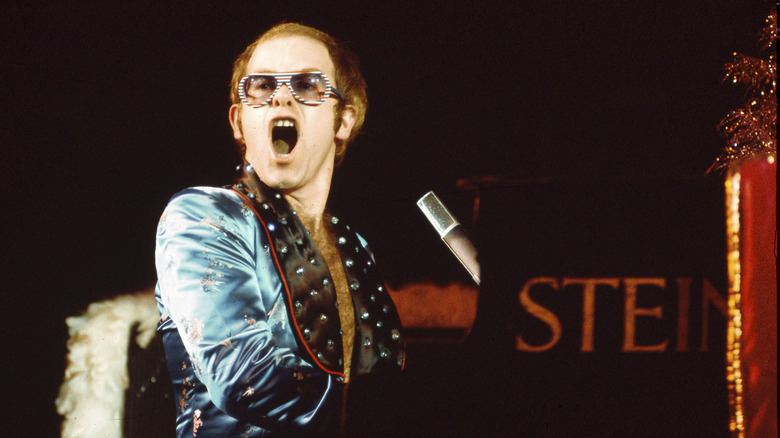
Though Elton John has developed a reputation in recent years for helping his fellow celebrities during times of crisis, he hasn't always held his tongue when it came to bashing musicians he encountered throughout his career. Perhaps his most famous feud was with Keith Richards, which began in 1975 after John joined the Rolling Stones onstage to play piano during their song "Honky Tonk Women." As John later admitted, this time it was he who was high on cocaine, and rather than leaving the stage after his number, he stayed and decided to jam along for song after song, despite the fact that the Stones already had two other keyboard players onstage.
The overconfident move reportedly drew the opprobrium of the crowd and other performers, especially Richards, who stared John down until he finally left the stage. In the years that followed, Richards took to criticizing John as a poser and was especially mean about John's 1997 dedication to the deceased Princess Diana, "Candle in the Wind," which John had originally written for Marilyn Monroe. Richards took to calling it the "Song for Dead Blondes" and dismissed it as a showbiz stunt.
At this point, John hit back against the ageing rocker, telling reporters (per The New York Daily News): "I'm glad I've given up drugs and alcohol ... It would be awful to be like Keith Richards. He's so pathetic, poor thing. It's like a monkey with arthritis, trying to go onstage and look young." Ouch.
Lou Reed
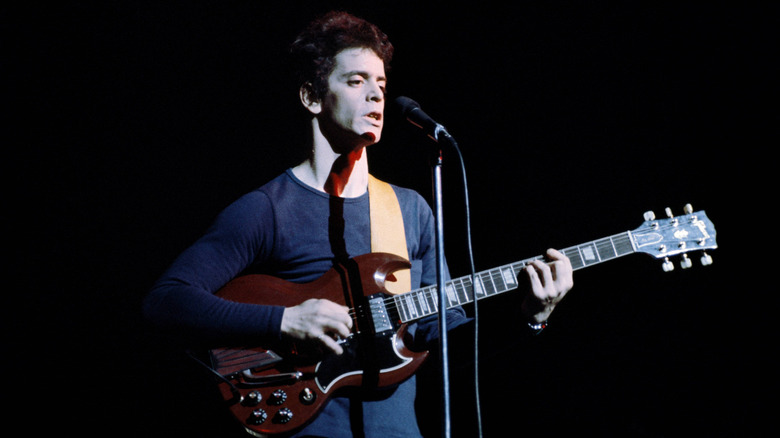
Lou Reed was a famously difficult figure. He was reportedly a man who didn't suffer fools gladly, as the old euphemism goes, and he was as open in his opinions as he was in exploring the darker sides of his psyche and personal life in his lyrics.
And while Reed enjoyed fruitful collaborations with various artists throughout his life including John Cale, David Bowie, Gorillaz, and Metallica, he was also willing to make enemies of his fellow musicians. He shared his animosity for such big names as the Beatles and the Doors in a savage 1987 interview with music industry legend Joe Smith.
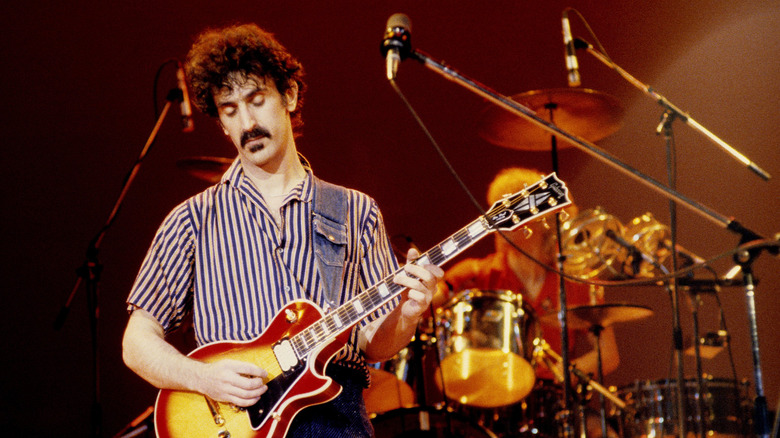
But his animosity was perhaps strongest for fellow avant gardist Frank Zappa, whose band Mothers of Invention had shared the bill with Reed's the Velvet Underground at an Andy Warhol happening in the '60s. "He's probably the single most untalented person I've heard in my life," Reed would later say. "He's two-bit, pretentious academic, and he can't play rock 'n' roll, because he's a loser. And that's why he dresses up funny. He's not happy with himself and I think he's right" (via "Up-Tight: The Velvet Underground Story"). However, his stance later softened to the point at which he gave a moving tribute to Zappa and his accomplishments when he inducted him into the Rock and Roll Hall of Fame in 1995, two years after Zappa's death.
Frank Zappa
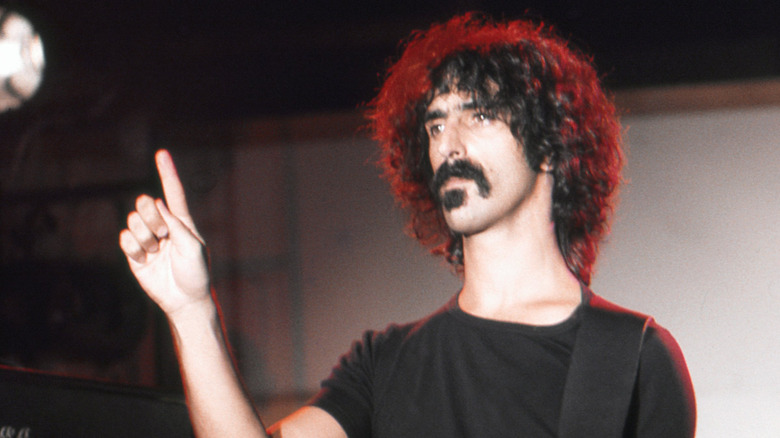
Frank Zappa was another rockstar who felt little need to play his cards close to his chest when it came to his opinions of other musicians. As well as privately disdaining the Velvet Underground for the band's use of drugs — Zappa, surprisingly, was sober throughout his life — he joined Lou Reed in disparaging the Beatles.
Mothers of Invention had famously released a biting parody of the Beatles' "Sgt. Pepper's Lonely Hearts Club Band" album, and in a 1988 interview, he explained: "No, I don't hate it. I just think that when I did the original parody of that it was to point out the fact that at the time the Beatles were only in it for the money. Everybody else thought they were GOD. I think that was not correct. They were just a good commercial group" (via afka.net). He also took swipes at other major acts like the Doors but saved his greater criticism for the music industry more generally, taking exception to its marketing practices, which he saw as cynical and misleading.
Roger Waters
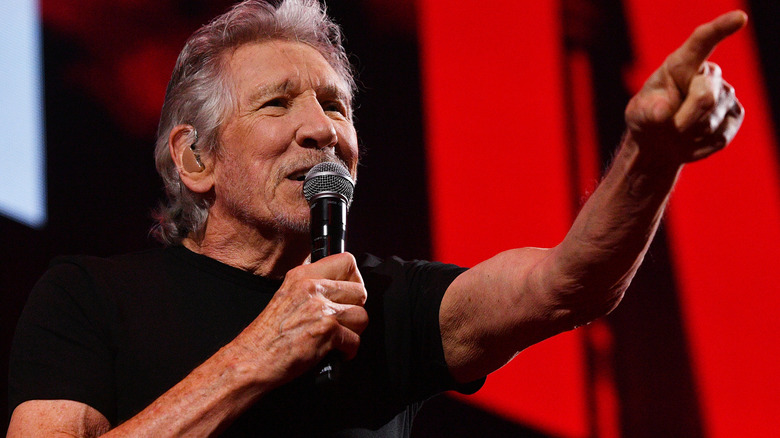
Roger Waters is the genius behind some of Pink Floyd's most critically acclaimed and commercially successful work, including the 1979 album "The Wall." However, despite the cerebral nature of much of Waters' discography with Pink Floyd, the dynamics between its band members were difficult, leading to Waters leaving the group acrimoniously in 1985. In the years since, Waters has revealed himself to be an opinionated figure willing to share his unfiltered thoughts on both his former bandmates and other musicians more generally, notably bashing Paul McCartney's abortive contribution to Pink Floyd's classic album "Dark Side of the Moon" and also being critical of John Lennon.
More recently, however, Waters has courted controversy with his ill-timed criticism of legendary Black Sabbath frontman and heavy metal pioneer Ozzy Osbourne, who died just weeks after his farewell concert in July 2025. Shortly after, Waters appeared on the podcast "The Independent Ink" and pulled no punches in discussing his misgivings when it came to Ozzy.
"Ozzy Osbourne, who just died, bless him, in whatever that state that he was in his whole life ... he was all over the TV for hundreds of years with his idiocy and nonsense," Waters said. "The music, I have no idea. I couldn't give a f***. I don't care about Black Sabbath, I never did. I have no interest in biting the heads off chickens or whatever they do. I couldn't care less." Understandably, many of Ozzy's fans were quite upset by the timing of the remarks, though Waters refused to apologize.