

Chilling Unsolved Mysteries That Still Haunt Small Town America
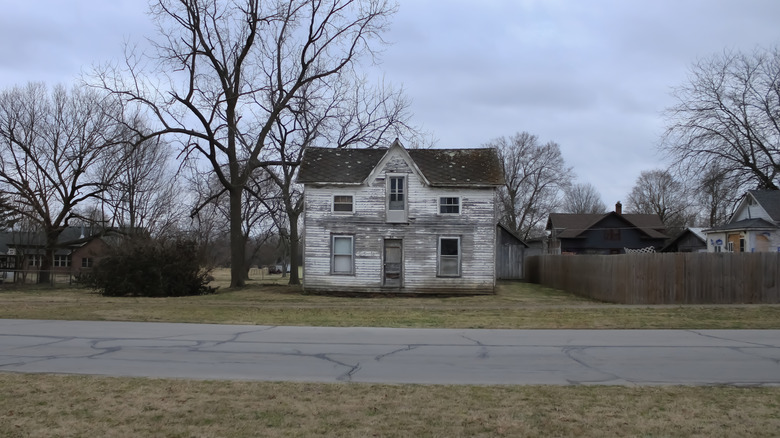
If you grew up in a small town, you probably remember "the story," the pet legend most small towns have. It can be a crime, an alleged haunting, or even something more light-hearted like the exploits of an early or prominent resident, but many, many small towns have a particular tale that becomes an informal cornerstone of civic identity.
Some towns are fortunate enough to have an intriguing and long-enough-ago story that lets the tourism boards cash in, but other, less lucky settlements are forced to contend with sadder, more disquieting moments in their histories. Unexplained deaths and vanishings can be particularly difficult for a community to move on from — in addition, of course, to the lack of closure confronted by those who loved the victims — since by their very nature, these unresolved, unsolved stories lack an ending. Without knowing what happened, those left behind are doomed to keep turning possibilities over and over, looking for a neglected angle that might finally bring answers.
Disappearance of Joan Risch
Initially, October 24, 1961, seemed like a pleasantly normal day for Lincoln, Massachusetts, homemaker Joan Risch. Her husband was out of town, and Joan spent the morning running errands before returning to have lunch and put the younger of her two children down for a nap. After that, it gets strange: Risch took her daughter and a neighborhood friend over to the friend's house without telling his parents. Later that afternoon, a passerby saw Risch in her driveway, appearing disoriented, but didn't check to see what was up.
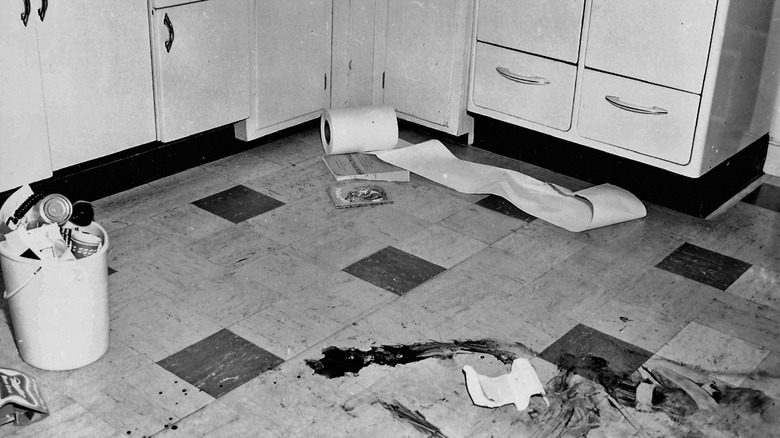
That was the last confirmed sighting of Joan Risch. Her daughter eventually returned to find the phone cord ripped out of the wall and blood in the kitchen, which the child thankfully misidentified as red paint. Someone had half-heartedly tried to clean up the blood, which was later found throughout the house and outside, and was a significant — but not fatal — amount to have lost, and left handprints that did not match Risch. Her young son, upstairs, was unharmed. A confused and apparently bleeding woman was seen walking along a road outside town that afternoon, but again, no one offered help.
Three major theories have been posited for Risch's disappearance: an attacker, a medical episode, or accidental injury of some kind, or a deliberate disappearance. Risch had endured an apparently traumatic childhood and had pursued a career in publishing before her marriage, factors that, along with her voracious consumption of crime and mystery books, suggest to some that she may have chosen to vanish.
Deaths of Kevin Ives and Don Henry
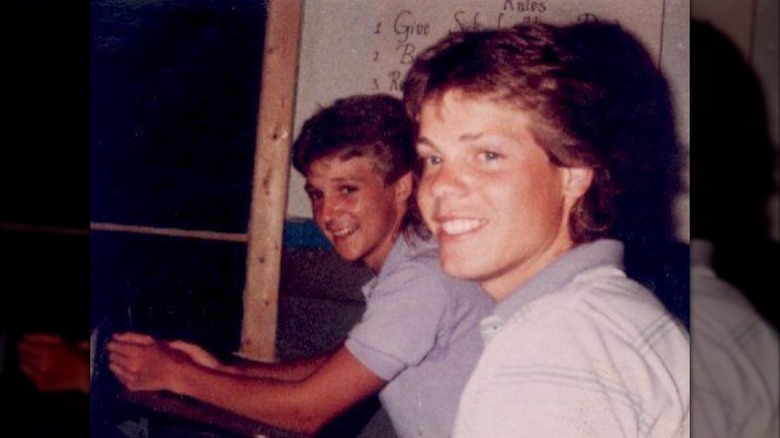
In the wee hours of August 23, 1987, the crew of a train passing through Alexander, Arkansas, had the horrific experience of seeing human forms lying on the track and being unable to stop the locomotive before it struck them. The bodies were those of Kevin Ives and Don Henry, local teenagers and close friends, who had been out hunting together the previous night. The train crew reported seeing a tarp over the bodies as well as a gun; police reported no tarp but did find a busted-up rifle.
Investigators couldn't, or didn't, determine whether Ives and Henry were already dead when the train struck them. The medical examiner ruled the deaths suicides over protests from each set of parents; this same examiner later proposed that the boys may simply have smoked so much pot they passed out on the tracks and never heard the fatal train. This "theory" had been put to the grieving families despite no reliable test for THC having yet been conducted on the remains, and in apparent ignorance of the titanic amount of weed someone would have to consume to result in sleeping through being hit by a train.
Conspiracy theories continued to blossom, encouraged by the murder of two potential witnesses, accidental death of a third, and disappearance of a fourth. Not to mention, the ongoing investigation meant the manner of their deaths, which were originally ruled suicides, changed to accidental, then undetermined, then probable homicide. And since it was Arkansas, the Clintons were eventually attached to the more fervent speculations. Recent reports indicate that the boys may have been murdered after accidentally witnessing a drug transaction, but this has not yet been confirmed.
Disappearance of Kayla Berg

Antigo, Wisconsin, teenager Kayla Berg was going through a rebellious phase, a common feature of the transition to adulthood, but one that was racking her parents' nerves. But on August 11, 2009, there seemed to be no immediate additional reason to worry about Kayla. She was in a good mood, keeping her parents better informed of her movements, and had plans to meet a friend later in the evening after the friend's McDonald's shift ended.
Berg never made that date. Eventually, it came out that she had accepted a ride from a local guy named Kevin Kielcheski, part of her extended social group, even though he was 24 to Berg's 15. He said he had dropped her off at her boyfriend's house (Miguel Marrero was 19 at the time which is ... better than 24, but not great), except that didn't make sense. Marrero's old house was in such bad shape that it had been condemned, so the Marreros were staying elsewhere, which his girlfriend clearly knew. Nevertheless, Kielcheski's story is that he took Berg to the empty house and, like everyone, never saw her again.
In October 2009, Berg's disappearance was connected to a viral video in which a man pretends to have finally gotten a girlfriend by capturing a young woman. Though the short was staged, the tied-up actress looked enough like Berg that the YouTubers were investigated by the FBI and absolved of everything except bad taste.
20th Century Limited derailment
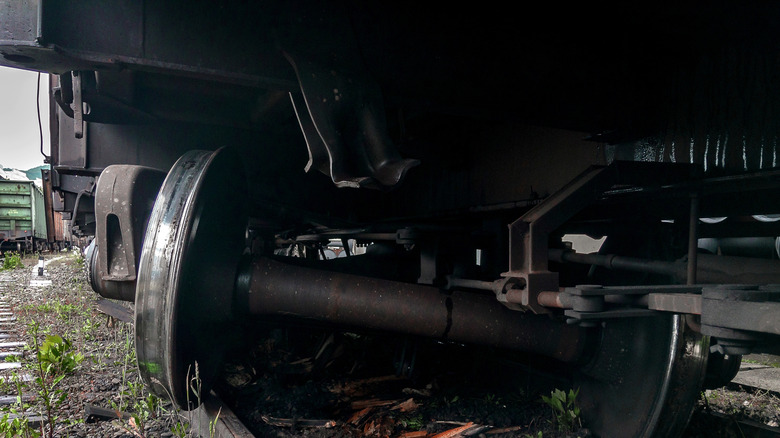
In 1905, the 20th Century Limited was one of the fastest trains in the world, shuttling well-heeled passengers between New York City and Chicago in a mere 16.5 hours. So when one of these trains slammed into a freight depot in then-rural Mentor, Ohio, during the evening of June 21, 1905, it did so at some 70 miles an hour, smashing up both the train and the depot and igniting a hot-burning fire fed by the wood-framed train cars. When the smoke cleared, 21 people lay dead from the impact and fire combined.
The problem was that a switch had been activated that diverted the train from the main tracks that led through town and, ultimately, toward New York. A prior train had thundered eastward through the station some 45 minutes before the disaster, and apparently, sometime between the two trains' arrivals at the Mentor Station, someone had intentionally thrown the switch and locked it in place, ensuring the devastating collision. Investigators found the switch undamaged after the incident, but with nearby lights doused. There seemed no way this sabotage could have been accidental, but no one was ever arrested or publicly accused of responsibility.
Death of Robert Johnson
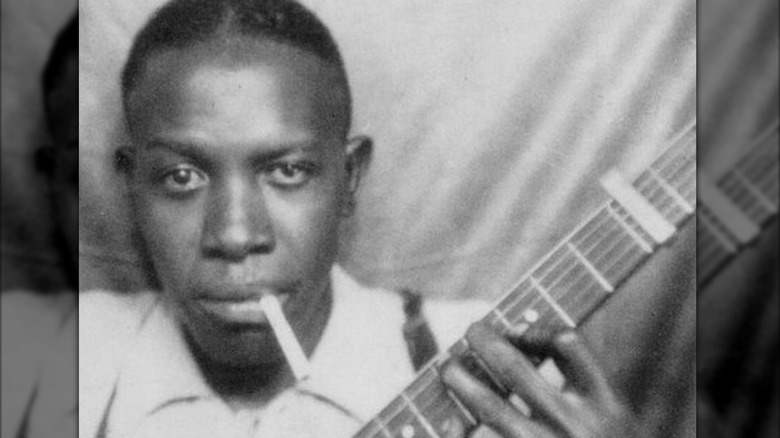
Despite only living for about 27 years, Mississippi bluesman Robert Johnson managed to build two enduring legends that would outlive him. The first is that he acquired his musical talent in a pact with the devil, selling his soul at a crossroads and taking an innate ability to play the blues as payment. The second legend is about his early death: Was Robert Johnson murdered, and if so, by whom?
Johnson had a hard life — a widower living in Mississippi under segregation, he certainly wouldn't have needed the devil to explain heartbreak to him — and coped with his favorite two vices, whiskey and women. One of these glasses of whiskey allegedly contained strychnine, a potent plant-derived poison.
The strychnine explanation of Johnson's premature death is broadly but not universally accepted. With no newspaper report and no apparent official investigation, there's no good firsthand evidence of what happened. Some versions of the story match his reported symptoms and timeline of strychnine poisoning, and some don't: strychnine kills quickly, conflicting with versions that have Johnson suffering for days. (Some stories feature another poison, often naphthalene extracted from mothballs, and some say he was stabbed.) The Skeptical Enquirer posits he wasn't murdered at all, but suffered poor health that was exacerbated by alcohol abuse. The death certificate blames syphilis, but this seems to be a common answer given by racist coroners to avoid investigating Black deaths. The story of Johnson's maybe-murder ultimately says more about race in America and the power of a legend than it reveals how the bluesman actually died.
Death of Ronald Hughes

You might well expect that being the attorney for a figure within the Manson Family would be, at best, somewhat taxing. Ronald Hughes, a novice trial attorney who had pulled the difficult assignment of defending Leslie Van Houten, was so stressed by the trial and the behavior of the Mansonites that over the long Thanksgiving weekend of 1970, he decided to take a little trip to try to unclench his jaw, driving up north of Los Angeles to a rural area, Sespe, that boasted some hot springs.
Hughes was never seen alive again. The trial went on with a pinch hitter taking over Van Houten's defense, while investigators looks for the missing lawyer near where he had last been seen and sifted reported of similarly burly, blond-bearded men seen about the West. And then in March, Hughes' remains were discovered: naked but well-preserved from the cold and with no clear evidence of foul play.
Hughes may have been murdered, allegedly poisoned, on Manson's orders, because he had tried to act independently during the trial and attempted to prevent Van Houten from testifying in Manson's defense. That said, the area in which Hughes had been staying had been hit by a surprise rainstorm over the holiday weekend, resulting in several deaths from flash flooding, and Hughes might have simply been a victim of severe weather.
Yuba County Five

Jack Madruga, Bill Sterling, Gary Mathias, Ted Weiher, and Jackie Huett formed a tight friend group. All had some form of developmental disability or mental challenge, but with the support of their families and each other, all were thriving, and it was perfectly normal and well within their capabilities to take an evening trip up to Chico, California, to watch a basketball game on February 24, 1978. After the game, they bought snacks to get them through the hour-ish drive back to their homes in Marysville and Yuba City. The store clerk was the last person to see the friends alive, barring a confused account by a man who'd had a heart attack trying to get his car out of the snow but thought he had seen a group of people pass with flashlights as he drifted in and out of consciousness.
When the men hadn't returned by the morning, their families reported them missing, but it wasn't until June that the first of them would be found, in a rural area along a mountain road — off their planned route home. Weiher's remains were discovered in a camp trailer maintained by the forest service, with frostbitten feet and a full beard indicating that he had been alive at least for some time after he was last seen. Madruga's, Sterling's, and Huett's remains were found in the nearby woods over the following days. Mathias was never found, and a 2023 letter from October 2020 credits his death to suspected foul play.
Death of Marcia Moore

Marcia Moore, the daughter of a wealthy family, had been lucky enough to have the resources to pursue her occult interest over the course of her life. She explored astrology, metaphysics, and astral projection — and marriage, married to her fourth husband before her 1979 disappearance. On the freezing cold night of January 14, the day before a planned road trip, she vanished from her home in a rural area north of Seattle, with no trace until part of her skull was found in the nearby woods two years later.
Almost anything could have happened to Moore. A heavy ketamine user, she may have overdosed, intentionally or not, or been disoriented enough that she wandered into the snowy woods to her doom. Her fourth husband, Dr. Howard Alltounian, was her ketamine source and a suspect in a series of sexual crimes, adding to the inevitable suspicion that settled on him as her spouse. Alltounian, for his part, credited her disappearance to "dematerialization." With the aid of ketamine and LSD, Moore allegedly planned to leave behind her physical form, perhaps returning in a new incarnation to take back up with Alltounian.
In a bizarre coda, Moore's son would also die under inexplicable circumstances. Christopher Roof's remains were found in rural Maine in 2010, but only identified in 2021. As in his mother's case, the cause and manner of Roof's death remain unknown.
Death of Douglas Crofut

Douglas Crofut died in July 1981 of a massive exposure to radiation from either iridium-192 or cobalt-60, two dangerous but industrially useful radioactive isotopes. As an experienced oilfield worker, Crofut would have known how dangerous it would have been to handle such materials without proper protective equipment, and yet he presented at an Oklahoma emergency room with catastrophic radiation burns to his arm and chest, described as so severe that the flesh was visibly eaten away. During the six excruciating months that Crofut lingered, slowly dying as more of his tissue succumbed to the effects of the radiation, he maintained that he had no idea how he had been exposed.
Investigators theorized, from the position of the damage to Crofut's body, that he had carried the material in his front shirt pocket, but this didn't answer questions like "where did he get it?" and "why would a person do such a thing?" An iridium source was reported missing and later recovered in the general area, but Crofut had no clear connection to the company or individuals involved. Crofut had significant personal problems, including unemployment and a criminal record of petty offenses that were seemingly connected to his alcohol use, but whether these demons had led him to act in reckless or self-destructive ways around such dangerous substances cannot be answered.
Deaths of Arnold Archambeau and Ruby Bruguier
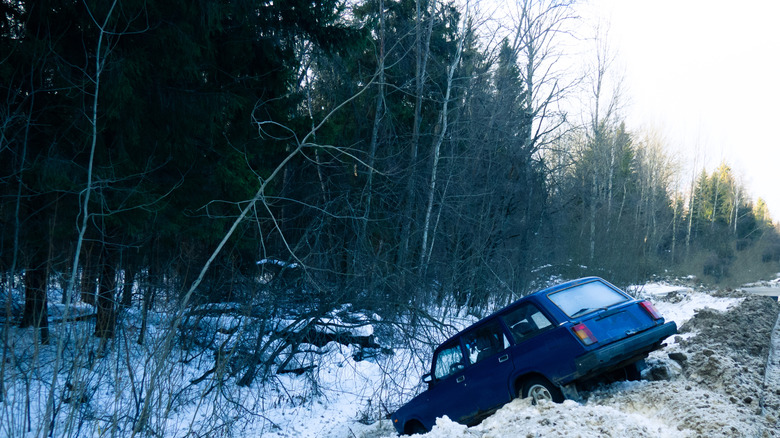
On the icy night of December 12, 1992, the car carrying young couple Arnold Archambeau and Ruby Bruguier slid off the road and turned over in a ditch outside Lake Andes, South Dakota. Archambeau and Bruguier had been drinking, as had their passenger, Tracy Dion, but thankfully none of the three was seriously injured. Dion watched as Archambeau and Bruguier walked away from the crash site ... and into oblivion. Their remains were found nearby three months later, on consecutive days. They could not have been missed by earlier searches, and though both had apparently died of exposure, they were not at equivalent stages of decomposition, with Archambeau's body reportedly in much better condition than Bruguier's.
The official story is that Archambeau and Bruguier did not die of foul play, but that someone did move their bodies postmortem to where they were found. A witness reported seeing Archambeau over the New Year's holiday and passed a lie detector test, hinting at his survival at least for three weeks but giving little additional information. Also unexplained: Archambeau was found with unidentified keys that did not fit any vehicle or building to which he was known to have access.
Disappearance of Jodi Huisentruit
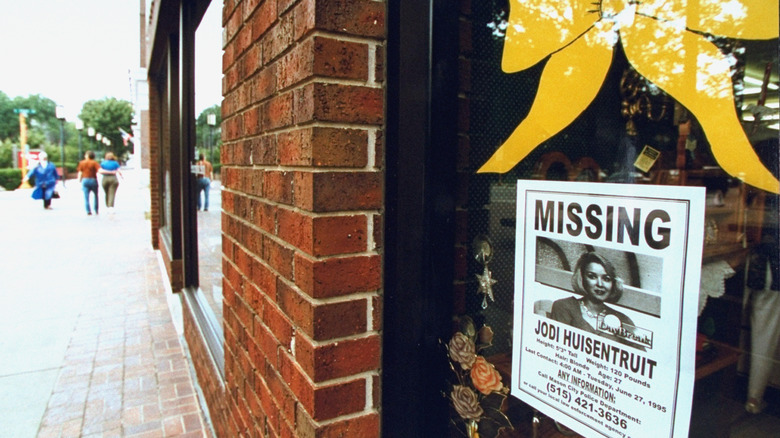
Popular Mason City, Iowa, news anchor Jodi Huisentruit was late for work on the very early morning of June 27, 1995, a rare misstep for the ambitious journalist. When her boss called, she said she was on her way, but even though she only lived about a mile away, she never made the broadcast. Police called to carry out a wellness check found alarming signs of a struggle by Huisentruit's car, still parked at her apartment complex: Her car key was bent, and her work heels, jewelry, and hair dryer formed a suggestive and distressing debris trail on the ground nearby. There was no blood, and no witness has ever come forward — nor has Huisentruit ever been seen again.
In the intervening years, two persons of interest in Huisentruit's disappearance have died, one by suicide as he awaited trial for a different murder and the other having protested his innocence for decades. Huisentruit herself was declared legally dead in 2001. Huisentruit's former colleagues in the news, along with the journalistic community more generally, have kept her memory and public interest in the case active, but so far, no satisfactory explanation for what happened to the young anchorwoman has ever emerged.