

Think You're A True Classic Rock History Buff? These 5 Little-Known Facts Will Put You To The Test
There are a lot of classic rock aficionados out there, but even they don't know every last detail about the earth-moving, foundational guitar music of the 1960s and 1970s. All of the lore, legends, breathless stories, and behind-the-scenes stuff is part of what makes classic rock "classic rock." It's reasonable to want to know, and fun to seek out, all the details about the creation and impact of the songs we've heard for years, and the bands that made them. It's greatly satisfying to unlock the mysteries of the venerable pillars of classic rock, because they seem so untouchable and otherworldly.
Cataloging and demystifying all that great music of the '60s and '70s is a massive cultural undertaking that's still a work in progress, and might always be. There are countless stories and little-known details from the classic rock era that remain overlooked or underreported, even by devoted fans and the artists themselves. Here are five such tales from the annals of classic rock that might surprise even the most hardcore listeners.
So many people could've been the new Van Halen lead singer
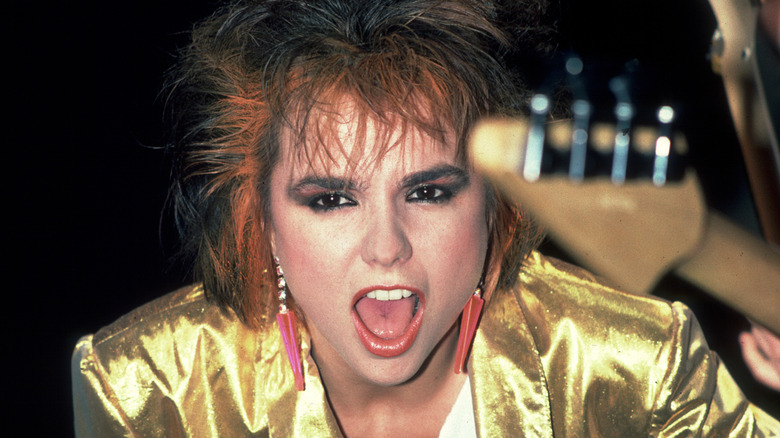
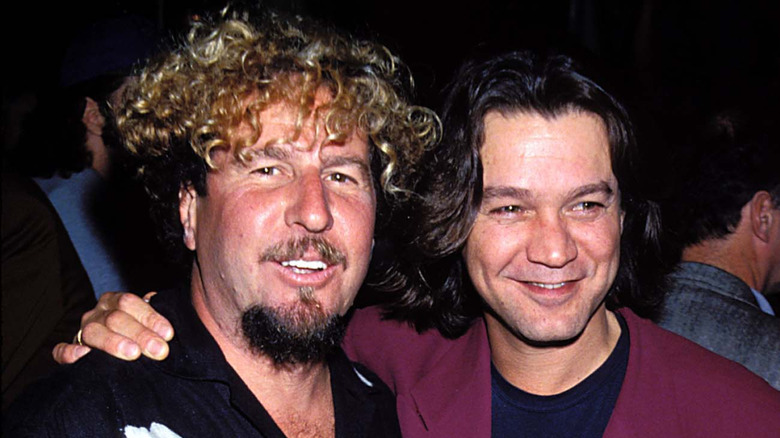
In the end, Van Halen got better when it replaced its lead singer, but the prospect of a lineup change was still an agonizing moment. Eddie Van Halen didn't want to dissolve his eponymous band after the monumental success of the "1984" album, or when David Lee Roth departed to be a solo superstar. So he set out to find a new vocalist, eventually hiring Sammy Hagar, whom Van Halen's favored producer Ted Templeman had once considered bringing in to replace Roth in 1977. Van Halen's first choice when Roth left in 1985: Patty Smyth of Scandal ("The Warrior," "Goodbye to You").
"We talked about it repeatedly. I had several problems with it," Smyth told Delaware Online. "I had just gotten pregnant with my daughter; I didn't want to move to California." Around the time that Smyth said no, Van Halen also inquired into the services of Daryl Hall, of Daryl Hall and John Oates. But Hall didn't want to interrupt his own extremely successful career.
After Hagar departed Van Halen in 1996, and before former Extreme frontman Gary Cherone sang on just one album, the band tried to hire a different vocalist, Mitch Malloy, and recorded a song with him, "It's the Right Time." But for Malloy, it wasn't the right time, and he declined the offer to join full time. "Something just didn't seem right" with the band's vibe, Malloy said on "Rock Talk with Mitch Lafon" (via UCR).
Neil Young and Rick James were unlikely bandmates
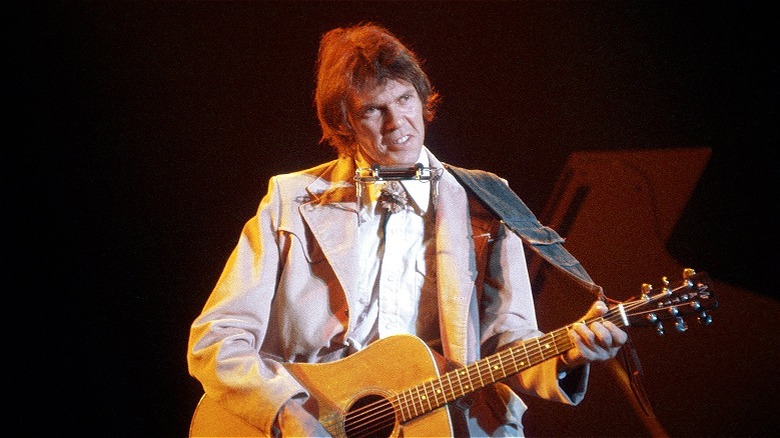
Rick James and Neil Young would both go on to become giants in their respective genres — funk and folk-rock, respectively. But before they each found their niche, they wrote songs together and were in the same popular local Toronto band.
At age 16, James — still going by James Johnson Jr. — joined the U.S. Navy, and then had second thoughts right before he was going to be sent off to fight in the Vietnam War. He left his hometown of Buffalo, New York, and crossed the border into Canada, joining the hip music scene exploding out of the Toronto area of Yorkville. In 1966, he became the lead singer of the Mynah Birds, the house band of a club called the Mynah Bird. When its guitarist departed, gigging itinerant musician Young joined up.
The Mynah Birds was primarily a Rolling Stones cover band, until James — known at the time as Ricky James Matthews — and Young tried their hand at collaborating, churning out a few originals. The band's Toronto popularity led to a deal with Motown Records, which fell apart when the Mynah Birds returned to the U.S. and James was arrested for desertion. The group subsequently split up.
Pink Floyd tried to make an album without musical instruments
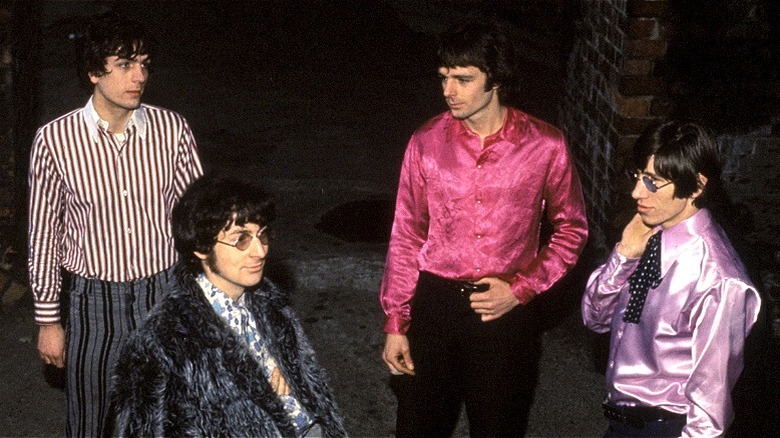
In the midst of its transition from lightly psychedelic rock act to full-fledged prog mystery merchants, Pink Floyd tried to get as experimental as possible by breaking down music into its simplest elements. In 1969, the group occasionally performed live a piece called "Work," which included utilizing the sounds made from boiling a kettle of water and dragging a saw over wood. Two years later, Pink Floyd met to record the follow-up to "Atom Heart Mother" and decided to make a whole album out of rock instrument sounds made by everyday items. "They were making chords up from the tapping of beer bottles, tearing newspapers to get a rhythm, and letting off aerosol cans to get a hi-hat sound," tape operator John Leckie told Prog (via Loudersound).
All of the individual sounds necessary to piece together the compositions were recorded and logged. Then Pink Floyd got bored with the idea and made other LPs instead, including "Meddle" and "The Dark Side of the Moon." In late 1973, temporarily struggling for ideas, the band took another look at what was privately being called "Household Objects." They spent a few weeks at Abbey Road Studios capturing the sounds of things like scratching the floor with broomsticks, chopping wood, and strumming rubber bands. Again, the plan was abandoned — permanently, it would seem — when the elements of 1975's "Wish You Were Here" started to come together.
In another timeline, Steely Dan featured a famous comedian on drums
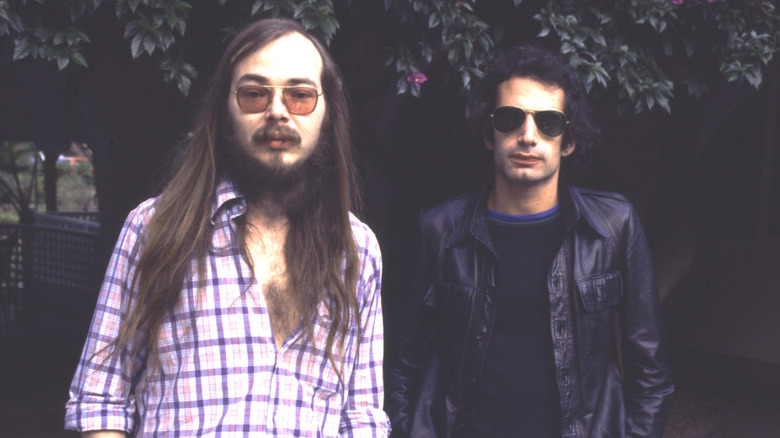
Some of the least-known facts about comedian and actor Chevy Chase are related to music. For example, he was the house pianist on his own short-lived, early-1990s talk show; he released a single half-joking, half-serious LP in 1980; and as a student at Bard College in New York in the 1960s, Chase played the drums in the Very Bad Jazz Band, a group with Walter Becker and Donald Fagen. Just a few short years later, that duo would go on to become the two permanent members of the jazzy classic-rock band Steely Dan.
Chase, citing his role as the first person to ever back up Fagen, takes a lot of credit for helping the future superstars find their voice and sound. "We started Steely Dan, basically," Chase said on "WTF with Marc Maron" (via Jambase). "I think I was a good jazz drummer. I loved doing that kind of thing and I did it many times later, too." As for why he didn't carry on with the drums, and thus missed out on what could've been a chance to play with one of the most important rock bands of the 1970s? "I didn't want to be a rock 'n' roll drummer kind of guy, you know?"
Jeff Beck is on the Woodstock poster, but he didn't play at Woodstock
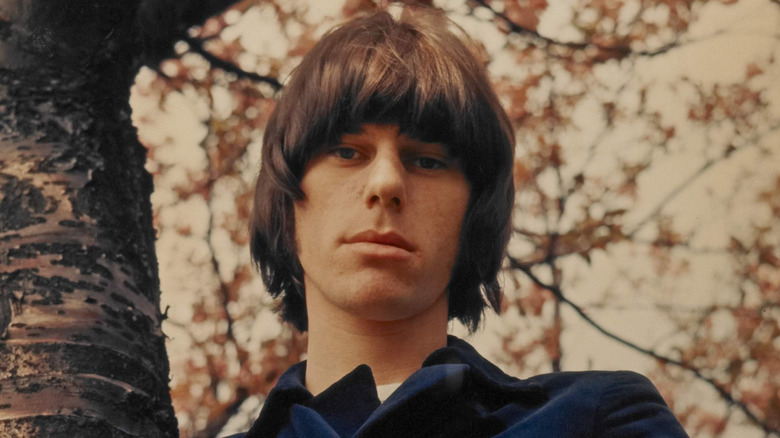
There are numerous milestones in Jeff Beck's illustrious career. The 1960s British blues-rock scene, which became the classic rock mainstream, virtually revolved around the genius-level guitarist. A two-time inductee to the Rock and Roll Hall of Fame, Beck played with the Yardbirds before creating the Jeff Beck Group with fellow up-and-coming superstars Rod Stewart and Ron Wood. After recording the albums "Truth" and "Beck-Ola" in 1968 and 1969, the Jeff Beck Group was prominent enough to earn an invite to the premiere multi-act rock show of the 1960s, if not all time: Woodstock, held on a farm in upstate New York in 1969.
The Jeff Beck Group signed on, and it was slotted to perform on the third day of the planned three-day festival. The act was even listed on the promotional materials for Woodstock. Shortly after agreeing to do the show, Beck regretted his decision. "I thought there was a bad vibe in the band," he told Rolling Stone in 2018. In addition to a failure in group chemistry, he didn't think that the Jeff Beck Group, having played mostly small clubs, had acquired the experience necessary to perform in an outdoor festival setting. "When they said there was gonna be about 100,000 people at Woodstock and it went up to 200,000, I just blanked off and thought, 'I don't want to do this.' If they're filming it, it's too nerve-racking." And so, on behalf of his trio, Beck pulled out of Woodstock.