

5 Songs From 1960 That Remind Us What It Means To Be Young And In Love
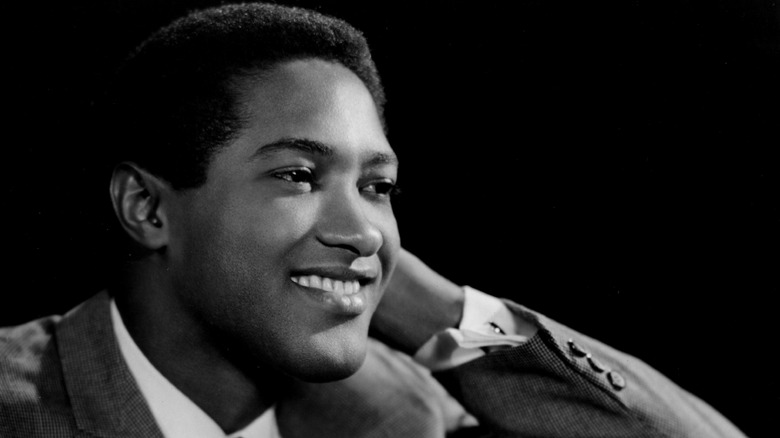
In retrospect, it turns out that 1960 was the year that songwriters and singers absolutely nailed and captured on vinyl, in musical form, what it felt like to be a young person in the throes of love. Perhaps it was because 1960 was a point of delineation between the seemingly innocent 1950s and the crackling, revolutionary in all ways 1960s to come, but that year was the one when pop musicians were particularly inspired, and rewarded for it, by writing about young love and the feelings associated with it. So many massive hit songs that year were by, for, and about teens and young adults falling in love, and grappling with their worlds being rocked by romance, usually for the first and/or most profound time.
Here are the five songs from 1960 that we think most capture that utterly timeless feeling of being a youthful and brand-new romantic. These are the tracks imbued with the giddiness and urgency of brand-new love, both in terms of a budding relationship and experiencing romance for the first time. We think that these five songs from 1960 are the best at celebrating love while also working through those melodramatic and overwhelming feelings that result. Plus, they all topped the charts, or came close to doing so, way back in 1960.
Puppy Love — Paul Anka
A No. 2 hit in 1960, "Puppy Love" borrows for its title an old, dismissive phrase to refer to the often brief but bubbly and all-consuming romances one experiences in their youth. Paul Anka was all of 19 years old when "Puppy Love" was released, and while he'd later be responsible for the worst song of the '70s, the fresh-faced and relatable Anka gave music audiences of 1960 a thorough and emotionally-driven defense of that "puppy love." In short, it's nothing to scoff at, and it's certainly legitimate to those going through it.
Falling in love for the first time is so special that everyone who does it feels like they must be the first to have ever really experienced that deep-seated rush. Anka strikes back at the nay-sayers, who dismiss his situation as puppy love, meaning unimportant, fake, and temporary. He suggests that those who criticize his relationship must have never known what young love felt like, and that just because he and his partner are 17 doesn't make it any less real. In fact, the song is based on his very real feelings during his relationship with Disney star Annette Funicello when the pair was 17. "This is not a puppy love," Anka proclaims after a few minutes of wondering aloud how he can even get through to the haters.
Wonderful World — Sam Cooke
Few singers have ever had as bright, romantic, and inviting a voice as did Sam Cooke. Tragically, he was a musician who died right at the peak of his fame. In 1960, the former gospel singer applied his talents to deftly explaining the nuances of early love in "Wonderful World." Sung from the point of view of a teenager still stuck in high school and bristling under the thumb of all kinds of authority figures, "Wonderful World" puts to music the frustrations that a couple suffers when they can't be together all the time, and also how they can't express the massive, unfamiliar but pleasant emotions coursing through their veins.
Relatable enough to hit the Top 20 in the summer of 1960, Cooke sang for the students. His character lists off all the school subjects that he just can't master: history, biology, French, geography, trigonometry, and algebra. That's a massive and at least moderately difficult course load, framing "Wonderful World" in the world of compulsory education. But the one thing Cooke's character has mastered: romance and love, specifically that which he feels for the subject of the song. As it turns out, the feelings aren't quite or necessarily reciprocated yet. "Wonderful World" explores the yearning, fiery passion of an intense crush. It would be a perfect, nay, wonderful world, Cooke suggests, if this special someone returns his interest.
My Heart Has a Mind of Its Own — Connie Francis
Young love can trigger fear and reluctance, and that's what's explored in "My Heart Has a Mind of Its Own," a No. 1 hit in the fall of 1960 for Connie Francis. One of the biggest pop stars of the era, she convincingly sang about affairs of the hearts of the youthful. Francis wrung all the emotion she could out of songs like "My Heart Has a Mind of Its Own" and helped legitimize teenagers' emotions and experiences in the mainstream. This one shows how complicated love can be at most any age — especially when one finds themself attracted to someone they know on an intellectual level probably isn't the healthiest choice.
In "My Heart Has a Mind of Its Own," the narrator's heart is made out to be a character in the story of the song, and that's to whom she apologizes. Because while the singer's heart seems to keep her interests in mind, not allowing her to run back to her ex, whom she can't stop thinking about, the free-thinking person steps in and ruins everything. She's hung up on her former partner because of the sweetness of his kisses and the magic in his voice. Francis's character is self-conscious and embarrassed about falling in love, which can very much be a part of young romance. That resistance is relatably real.
Stay — Maurice Williams and the Zodiacs
We hate to call it out, but young and first romances often don't last very long. It seems like "Stay," a No. 1 hit in November 1960 for vocal group Maurice Williams and the Zodiacs, might be cheekily and subtly calling out that hard fact of life. "Stay," a song about how time passes too quickly when one is with their object of love, lust, or passion, and how one wishes the other could stay "just a little bit longer," is an extraordinarily short song. At just over a minute and a half in length, "Stay" is the briefest song to ever top the Hot 100.
But then Williams and his singing Zodiacs didn't need a whole lot of time to get the message across. A song so explicitly concerning the unique situations faced by young lovers, the first verse consists of one enamored party trying to convince the other to get physically close via one of the few socially-sanctioned methods of the time, dancing. Williams even suggests that his partner's parents, still in charge, won't even mind. Then there's lots of dreamy talk of kissing and wishes for an infinitely repeated "I love you." So very appealing to teenage listeners of 1960, it's fitting that "Stay" appeared on the soundtrack of the early '60s-set dance romance movie "Dirty Dancing."
Young Emotions — Ricky Nelson
The self-evident lessons of youthful love — and its attendant optimism — are right there in the title. "Young emotions are mixed emotions," sang Ricky Nelson in the 1960 Top 20 hit "Young Emotions." "For it's a world where love and confusion reign." Nelson, one of the earliest rock 'n' roll teen idols, and ultimately among the list of musicians tragically killed in a plane crash, gave the young and emotional of 1960 exactly what they needed and wanted: relatable songs about how feelings can be huge and chaotic, but still poignant. Some of those emotions, like the ones surrounding a tender, youthful romance, can even help ease the transition into adulthood.
Nelson uses "Young Emotions" as a vehicle to get through to his fellow youths of the early 1960s. He tells them, by way of addressing his song to his partner, that the future is uncertain and even fearsome, but love will guide them through. And unlike most every other love song, "Young Emotions" asserts that love isn't even the toughest feeling to navigate — it's a tool that will help young lovers deal with far rougher stuff. There's such wonderful, bright-eyed wisdom expressed here, the kind that comes when one feels invincible because of love.