

5 Rock Songs Hated By Their Own Artists (But We Love Them Anyway)
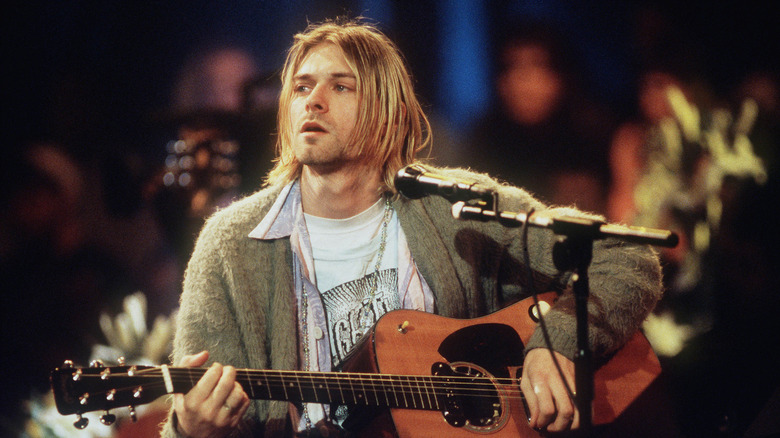
Budding musicians across the world dream of scoring a hit song — but what happens if your biggest hit is a song you hate? Surprisingly, it happens far more often than you might think.
While most artists, even the most restless ones, are happy to play their biggest hits to give audiences what they want during live shows, others find themselves with dark spots in their discographies in the form of tracks they despise playing, for whatever reason. Perhaps they released the song in question under duress from their record label or bandmates, came to feel the song didn't represent them as an artist, or they just grew tired of playing the same song time and time again. In any case, there are plenty of rock songs that audiences love but that are hated by their own artists.
Each of these five songs was an undeniable hit for the act that recorded it — it either flew up the charts or became a live concert favorite that audiences would always go crazy for. But in each instance, the artist has publicly admitted that they grew to hate the song — or couldn't stand it from the very beginning.
Thin Lizzy – Whiskey in the Jar
One of the most successful Irish bands of the hard rock era, Thin Lizzy scored a surprise hit in Ireland and the U.K. in 1972 with "Whiskey in the Jar," a track that isn't afraid to expose the band's Celtic roots. "Whiskey in the Jar" is a hard rock version of a traditional Irish song that Thin Lizzy frontman Phil Lynott undoubtedly knew as a pub drinking song in his native Dublin, which had also been given a boost in the 1960s as a song performed by trad group The Dubliners.
Thin Lizzy's version is undoubtedly a success, and the hard rock treatment serves the song well, adding plenty of rock bravado to the tale of a highwayman who robs a captain in the Cork and Kerry mountains before he in turn is betrayed by his lover. But, in truth, despite his willingness to embrace the song on wax, Lynott was far from pleased with "Whiskey in the Jar," which they released as a single, being the song they were best known for during the band's early career.
The band had struggled for a commercial breakthrough, and in 1972 Lynott had been working on a Jimi Hendrix-inspired song, "Black Boys On the Corner," that he believed would make a strong A-side for a single. He and his band knocked "Whiskey" together quickly as a B-side, but when it came to the release their record label swapped the sides. "Whiskey" became a hit, while "Black Boys," by comparison, was forgotten, to Lynott's fury. The band grew tired of being defined by a traditional song rather than original material, and dropped it from its setlists at the first opportunity.
Radiohead – Creep
The British alternative rock group Radiohead is better known for releasing critically acclaimed albums rather than chart-topping singles. Nevertheless, back when Radiohead was finding its feet, it released "Creep," its debut single that became a huge hit in the U.S. in 1994.
Written by frontman Thom Yorke while he was still at college, the song is shot through with adolescent angst and self-loathing borne out of romantic obsession. But unlike the band's later more celebrated work, the song is surprisingly straightforward in execution, with Yorke delivering straightforward imagery over a conventional arrangement. Arguably the only aspect of the song that pushes the boundaries is guitarist Johnny Greenwood's spiky, distorted guitar part that heralds the arrival of the chorus.
But the anger in Greenwood's performance didn't emerge in service of the song. Instead, the guitarist was attempting to sabotage "Creep," a song he has admitted disliking. As guitarist Ed O'Brien told Rolling Stone: "That's the sound of Jonny trying to f*** the song up ... He really didn't like it the first time we played it, so he tried spoiling it. And it made the song." Indeed, entirely unintentionally the guitarist had given "Creep" the edge it needed to find an audience among alternative rock listeners of the day while remaining a chart-friendly release. Yorke himself also soon grew tired of the song, and Radiohead has gone for long periods without "Creep" in their setlists.
Nirvana – Smells Like Teen Spirit
Nirvana's 1991 single "Smells Like Teen Spirit" launched the Aberdeen, Washington band into the big time, and made the grunge rock movement, which had been simmering in towns and cities such as Seattle for several years, mainstream. Truly, rock was never the same after the song became an MTV fixture, with many rock bands radically changing their look and sound as a result.
But frontman Kurt Cobain, who wrote "Smells Like Teen Spirit," ended up hating the hit song that made him a megastar. Cobain struggled with fame in general, but he resented "Teen Spirit" for the way it overshadowed the other songs in his discography. "Everyone has focused on that song so much. The reason it gets a big reaction is people have seen it on MTV a million times. It's been pounded into their brains. But I think there are so many other songs that I've written that are as good," he said, pointing to the song "Drain You" as a composition that rivals his biggest hit (per American Songwriter).
Cobain claimed to be embarrassed by the song and by the mainstream audiences it attracted. When Nirvana kept the song in setlists, Cobain would sometimes sabotage the performance, or tease audiences by playing the intro to the song without playing it in full. On some occasions he would refuse to play it altogether. Nevertheless, it remains the song that first comes to mind when listeners think of Nirvana and the band's cultural impact.
Beastie Boys – Fight for Your Right
Beastie Boys' breakthrough 1986 hit "Fight for Your Right" is remembered as one of the decade's greatest genre-blending singles, rivalling only Run-DMC's "Walk This Way" in appealing to both rock and hip-hop fans. Despite being considered a hip-hop group, Beastie Boys' roots lay firmly in the New York punk scene of the 1980s. With that fact in mind, it's more obvious that "Fight for Your Right" was intended as a parody of the hard rock that had dominated the previous decade.
But many listeners at the time were unaware of this, and the track turned the band into unironic frat boy icons, much to the trio's chagrin. As Beastie Boys rapper Mike D wrote in the liner notes for the group's 1999 compilation "The Sounds of Science:" "The only thing that upsets me is that we might have reinforced certain values of some people in our audience when our own values were actually totally different ... There were tons of guys singing along to 'Fight for Your Right' who were oblivious to the fact it was a total goof on them" (via NME).
Though Beastie Boys at first leaned into the hard-partying image the group had inadvertently created, an intentional left-field turn into more experimental hip-hop with the 1988 album "Paul's Boutique" would alienate a significant portion of the audience pulled in by "Fight for Your Right." Beastie Boys dropped the song from setlists as early as 1987, and rarely performed it live thereafter, though it still rocks hard and has its admirers.
Billy Joel – We Didn't Start the Fire
Piano man Billy Joel has been candid in interviews when discussing his work, and brutally honest in pinpointing songs in his discography that he considers subpar. He has been especially critical of the track "We Didn't Start the Fire," which was a No. 1 hit for the songwriter in 1989.
The track famously lists a litany of famous people and world events from the mid-20th century, delivered at a rapid rate over a restless instrumental that gives the distinct impression of an ever-moving world of chaos. However, despite the effectiveness of its concept, Joel has described it as "a terrible piece of music," explaining in the 1993 documentary "Shades of Grey": "It started as a whole different song. The original song I had was this country idea that I had ... But when you take the melody by itself, terrible, it's like a dentist drill" (via YouTube).
But lately his position has softened on the divisive song. In 2021, he appeared on the "We Didn't Start the Fire" podcast, which delves into the history of all the people and events listed in its lyrics. As Joel told the hosts, "The only thing I've heard about that song from people is, 'I hate that song!' ... It's one of the most hated things I ever wrote! And I don't get the hate." However, during the interview Joel also reiterated his earlier criticism of the song's melody, so he still appears to have mixed feelings about the track. Nevertheless, he continues to perform "We Didn't Start the Fire" live for his fans.