

Iconic TV Show Couples Who Couldn't Stand Each Other In Real Life

Over the course of long-running shows, we, the collective audience, feel like we really get to know the characters who appear on our screens. We're also intelligent enough to know that those are fictional entities, delivering dialogue and playing out scenarios invented by writers. Nevertheless, a lot of people get very invested in the romantic fortunes and evolving relationships of TV characters. It's fun to root for couples to get together and live happily ever after, or to look to rock-solid partnerships as examples of relationships that work.
It's hard not to think of the actors who so convincingly play those characters. Those pairs have such undeniable chemistry that the actors who portray them simply must get along in real life. But some of the best-known and forever adored TV scene partners couldn't tolerate each other. Here are some actors who were so good at their jobs that they fooled the world into thinking they were really into their costar and romantic opposite — whom, when the cameras stopped rolling and there was no more script to tell them what to do, they absolutely loathed. These are the TV couples of the past who were all lovey-dovey life partners on screen but were portrayed by actors who didn't get along whatsoever.
Daniel Desario and Kim Kelly (Freaks and Geeks)
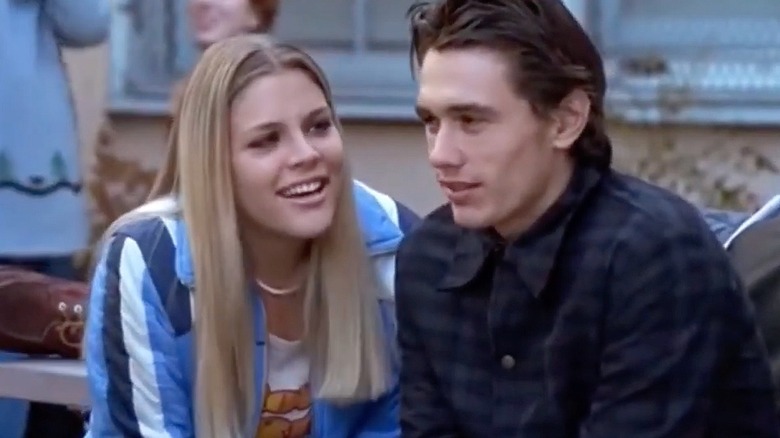
"Freaks and Geeks," a beloved cult show and critically acclaimed favorite set in 1980, is one of the few high school shows to examine the non-popular kids. Among the subset of outcasts and stoners, two characters shared troubled and disadvantaged familial backgrounds: Daniel Desario and Kim Kelly, portrayed by future stars James Franco and Busy Philipps, respectively. The pair were breaking up as much as they were making up, alternating between aggressive PDA and waging screaming matches on the street or in the hallway at school.
"James Franco and I really didn't get along," Philipps said on "Watch What Happens Live." "We were 19 and we really, really disliked each other." One scripted altercation turned downright violent on the part of Franco, later an actor who ruined his career in a matter of seconds with assault allegations. After Philipps followed a direction to light strike her co-star's torso, Franco — not in character — came unleashed. "He grabbed both my arms and screamed in my face, 'DON'T EVER TOUCH ME AGAIN!'" Philipps wrote in her memoir "This Will Only Hurt a Little." "And he threw me to the ground. Flat on my back. Wind knocked out of me." Franco, whom Philipps labeled a "f***ing bully," was forced to apologize the next day.
Charlie and Kate (Anger Management)
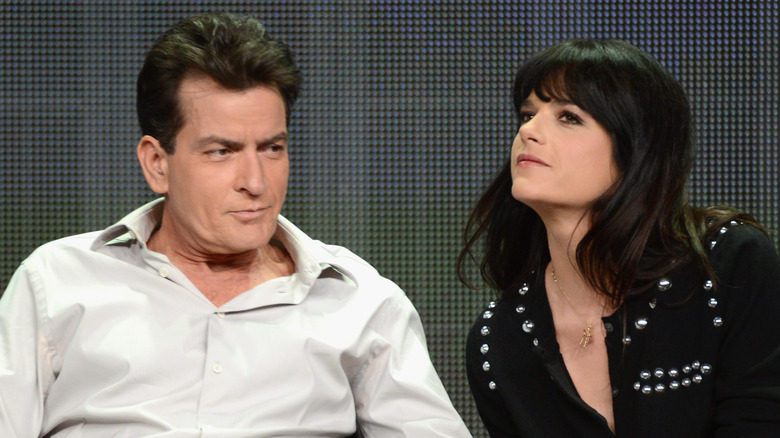
After publicly feuding with "Two and a Half Men" creator Chuck Lorre and exhibiting troubling behavior which he'd later attribute to a testosterone overdose, Charlie Sheen, also an actor who partied way too hard, was fired from the CBS sitcom in 2011. Very quickly, he jumped to the FX sitcom "Anger Management," where he co-starred with Selma Blair. Sheen played Charlie Goodson, an anger management therapist whose rage issues destroyed his baseball career. Still attending regular therapy sessions to control his emotions, and his ire in particular, Charlie has a complicated relationship with that therapist, Blair's Kate Wales – she's also his sometimes girlfriend or fling partner.
Sheen was reportedly often tardy to "Anger Management" production days during its first two seasons and exhibited such a relaxed attitude toward work that a frustrated Blair discussed her concerns with the show's executive producer. Sheen quickly heard about Blair's complaints and took it upon himself to get his co-star fired, taking his case to FX executives and refusing to act if Blair reported for work again. Sheen took it upon himself to end Blair's time on the show via a text message to her, and studio Lionsgate made Blair's termination official. She "had no problem leaving after Charlie flew off the handle and seems to be at peace to be off the show," an associate of Blair's told E! News.
Maddie and David (Moonlighting)
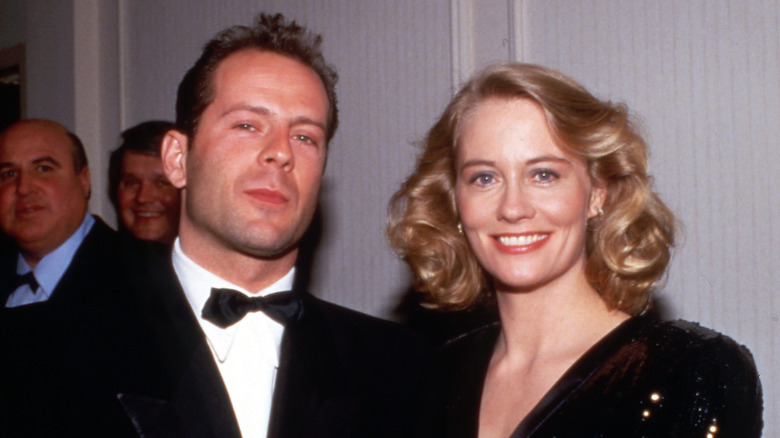
"Moonlighting" was a very 1980s show influenced by the films of the 1930s and 1940s. Set at the Blue Moon Detective Agency, the dreamy dramedy starred Cybill Shepherd as proper office head Maddie Hayes and Bruce Willis as smirking wise-guy investigator David Addison. Like a modern-day Katherine Hepburn and Spencer Tracy, they delivered their witty, intricately woven lines of dialogue, constantly butting heads and putting one another down while trying to deny the explosive romantic chemistry brewing between them. When Maddie and David did finally couple up, ratings plummeted, as the tension driving the show had dissipated.
The relationship of Willis and Shepherd often mirrored that of David and Maddie. The actors felt an attraction to one another, and according to co-star Curtis Armstrong, the pair entered into a low-key, brief, and disastrous relationship. After that, they grew to resent each other, filming scenes with stand-ins so they wouldn't have to be in the same space together and getting into a shouting match at least once on set. "It's hard to do a show and keep your relationships with everybody," Shepherd told Entertainment Weekly in 2005. "I remember at one point in the show, it had gotten to where we just hated each other."
Castle and Beckett (Castle)
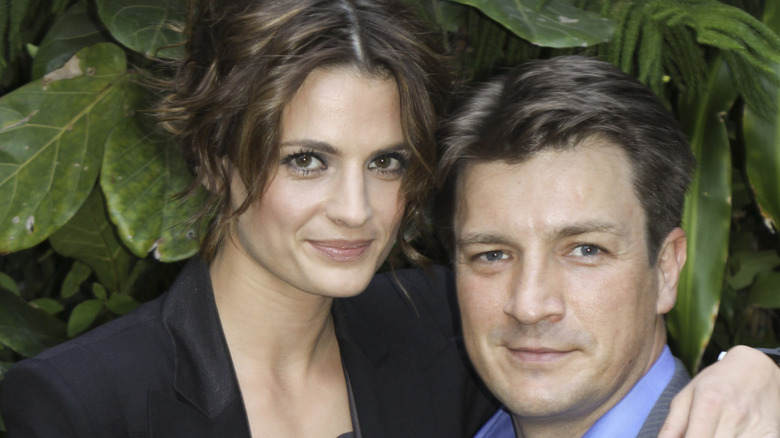
When "Castle" began its eight-season run in early 2009, the lightly comedic police procedural presented an all-business relationship between its main characters. Richard Castle (Nathan Fillion) is a bestselling murder mystery novelist, and he teams up with Detective Kate Beckett (Stana Katic) when a dangerous individual starts committing copycat crimes based on his books. Castle ultimately becomes a police consultant, tagging along on Beckett's investigations. By the end of the series, Castle and Beckett succumb to the sexual tension that flavored their working relationship, become a couple, and get married.
While cameras rolled on the last episodes of "Castle" Season 8, with another season likely on the way, ABC announced that Katic was leaving the series. Show insiders spoke out on the surprise casting change, revealing years of hostility between the show's stars. "Stana Katic and Nathan Fillion completely despise each other," one person told Us Weekly. "They will not speak when they are off set, and this has been going on for seasons now." A few months earlier, producers even ordered Katic and Fillion to attend couples counseling sessions. In the end, ABC fired Katic and kept Fillion but then decided not to pursue "Castle" Season 9. "It hurt and it was a harsh ending," Katic later told Entertainment Weekly.
Martin and Gina (Martin)
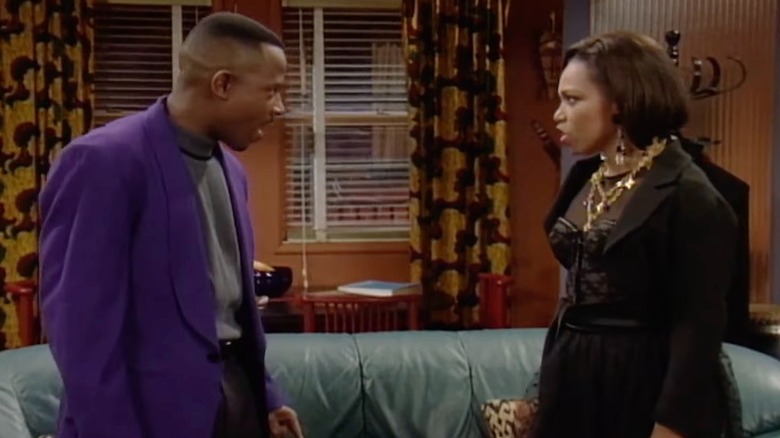
Martin Lawrence was one of the most audacious and wildly popular comedians of the 1990s, and "Martin" was a weekly primetime vehicle on the Fox network for the comic to do pretty much whatever he wanted. He delivered schtick and routines through his character, Martin Payne, a radio and TV host, and played multiple over-the-top characters. About the only other person on the show who could match real or fictional Martin on his energy was Tisha Campbell, who played the main character's long-suffering and tough-loving girlfriend and later wife, Gina, source of the show's best-known catchphrase, "Damn, Gina!"
A wildly controversial opening monologue reportedly got Lawrence banned from "Saturday Night Live," but back on his own show, the comedian's behavior was allegedly profoundly worse. In the fifth season of "Martin," Campbell departed and filed a lawsuit accusing Lawrence of continuous acts of sexual harassment and sexual battery as well as verbal abuse and threatening behavior. The suit was settled before a courtroom trial, and Campbell came back to film the last episodes of "Martin" but with a strict rule in place: She would film her scenes alone, with Lawrence barred from even being on the set while she worked. The actors later reconciled, but Lawrence spoke about the feud in 2020. "None of that was true. It was all a lot of bull****," he told GQ, adding that the reason "Martin" ended when it did was because the lawsuit inspired him to walk away.
Fred and Ethel Mertz (I Love Lucy)
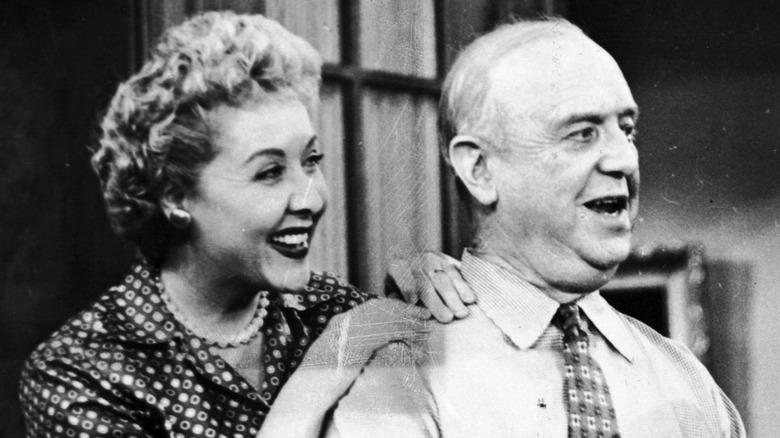
Remembered first as a foundational sitcom that showcased the talents of Lucille Ball (as Lucy Ricardo) and secondly as a vehicle for nightclub entertainer Desi Arnaz (as Ricky Ricardo), "I Love Lucy" often featured plots that revolved around the couple's interactions with their landlords and best friends Fred and Ethel Mertz, played by William Frawley and Vivian Vance. Older and married a long time, Fred and Ethel frequently and pointedly insulted one another's physical appearance, but it was clear that the pair were very much in love.
One disturbing behind-the-scenes detail about "I Love Lucy" is how Vance and Frawley didn't care for one another. Vance thought that TV audiences wouldn't buy the marriage because of the 22-year age gap between actors. She openly complained about that on the set so often that Frawley heard and developed a personal distaste for the actor, whose skills he already questioned. "Where the hell did you find this b****?" Arnaz recalled Frawley telling him upon Vance's casting in his memoir "A Book" (via Cheatsheet). "She bugs me."
After years of insults and loathing, Frawley was still game for a proposed "Fred and Ethel" spinoff after the end of "I Love Lucy." Vance killed the project because she wouldn't work even one more day with Frawley. It's something of a Hollywood urban legend, but when Frawley died in 1966 and Vance got word of it while dining out, she reportedly cried out, "Champagne for everyone!"
Mike and Julie (Growing Pains)
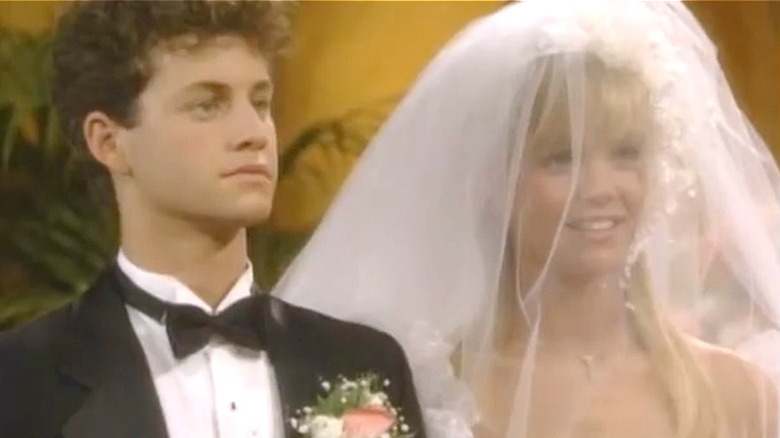
"Growing Pains" was initially a typical nuclear family sitcom, focusing on the Seavers, a well-to-do Long Island unit. But then the hit show made Kirk Cameron, who played impish and conniving teenage son Mike Seaver, into a teen idol, and he stole the show right out from under his TV parents Alan Thicke and Joanna Kerns. Mike grew up quickly, from troublemaking, girl-crazy teen into a college student with career aspirations. During the 1989-1990 season, he also found the one woman he could settle down with: Julie Costello, a college student hired to nanny the Seavers' youngest child. Within a year, the whirlwind romance culminates in a wedding that Julie ultimately calls off.
Cameron had so much clout that he could get plots changed and actors fired. The reason for Mike's transformation: Cameron had committed himself to his conservative Christian faith, and he wanted the character he played to act in a more morally upstanding manner. Producers balked when he asked for changes, but they had little choice after Cameron approached ABC executives, whom he reportedly coerced into firing McCullough. The actor playing his on-screen wife-to-be had once appeared nude in "Playboy," and that incensed Cameron so much that he likened the network to smut peddlers for giving McCullough a sitcom gig. The TV wedding was called off, and the Julie character was abruptly written out.
Rachel and Joshua (Friends)
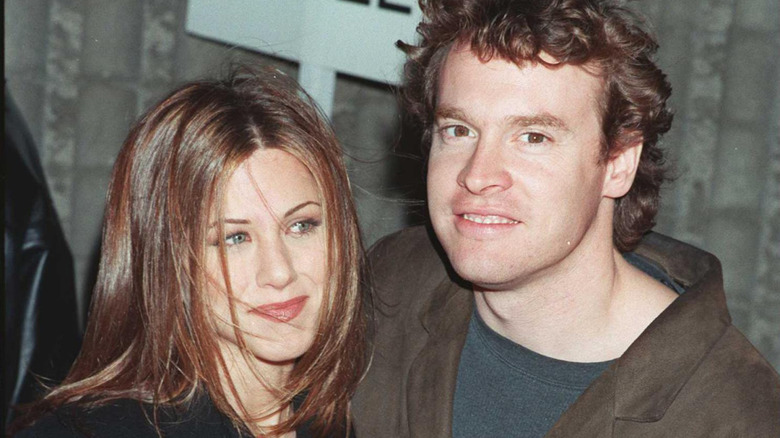
After begging off on the initial will-they-or-won't-they romantic saga involving characters Ross and Rachel (David Schwimmer and Jennifer Aniston) that made the show the hottest show on TV in the mid-1990s, "Friends" writers set up those characters with various other partners for some ultimately short-lived romances. In Season 4, Rachel landed a primo job as a personal shopper at a high-end department store, and she fell hard for a quiet and awkward guy named Joshua (Tate Donovan). Over five episodes of "Friends," a show that would likely be taboo today, the would-be romance never quite took off but gave Aniston plenty of chances to mine the humor in Rachel's cringe-inducing attempts to seduce an oblivious Joshua.
Awkwardness, not hate, defined the off-screen relationship between Aniston and Donovan during his "Friends" stint. They had dated for years and broke up just before Donovan was offered the role of Joshua. "I was like, 'Well, maybe it would be good to work through this break-up,'" Donovan recalled on "HuffPost Live." "What an idiot!" Donovan asked his new ex what she thought about him taking the job — she thought it was an April Fool's prank. But the actors went through with the plan and dutifully shot their scenes. "It was horrible. It was so tough," Donovan said. "I remember just getting back to my dressing room and just weeping."
Elena and Stefan (The Vampire Diaries)
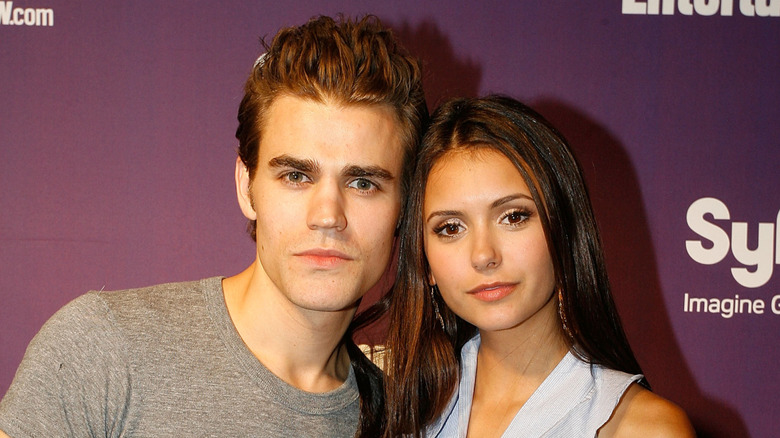
Almost from the beginning of the CW's dark fantasy romance hit "The Vampire Diaries," the primary characters were a couple with a very serious and very complicated love. Set in the town of Mystic Falls, well trafficked in supernatural figures like witches and werewolves, Elena (Nina Dobrev) and Stefan (Paul Wesley) negotiated their epic love through many challenges, such as other, charismatic romantic opponents trying to break them up, and the fact that Elena was a human woman and Stefan was a vampire who'd been stuck in a teenager's body since the 1860s.
Any intense chemistry on camera was fueled by Dobrev and Wesley's shared animosity. "I realize now that there's a fine line between love and hate, and we despised each other so much that it read as love," Dobrev said on the "Directionally Challenged" podcast (via "Entertainment Tonight"). "We really just didn't get along the first maybe five months of shooting."
"We totally clashed. Creatively, it just wasn't in sync," Wesley confirmed, but explained that the two eventually became very good friends. "After a few seasons, we developed this absolute mutual love."
Brooke and Lucas (One Tree Hill)
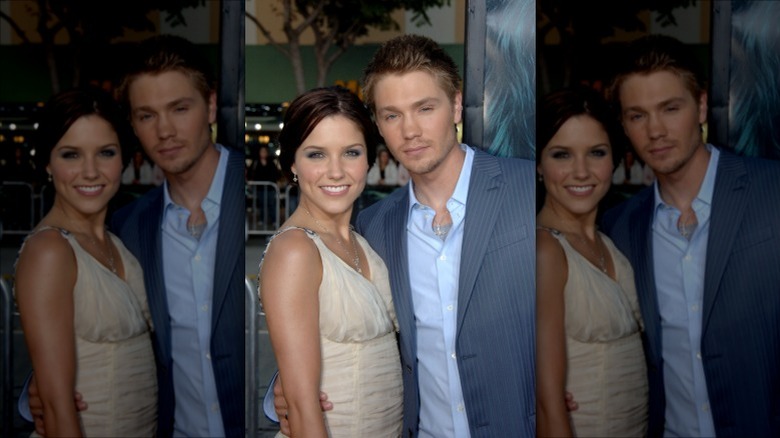
In the first handful of seasons of "One Tree Hill," a prominent teen soap of the mid-2000s, much of the drama and character development stemmed from a central love triangle. Star high school basketball player Lucas Scott (Chad Michael Murray) just couldn't decide which of his classmates he was more in love with: rogue cheerleader and artist Peyton Sawyer (Hilarie Burton) or fashion maven Brooke Davis (Sophia Bush). On-screen, Lucas and Peyton eventually went exclusive. Off-screen, actors Murray and Bush became a couple around the time that "One Tree Hill" debuted in 2003. They got married in 2005, separated only five months later, and divorced in 2006, following Murray's reported extramarital affair with celebrity heiress Paris Hilton. And then they had to keep working with each other for another few years, until Murray departed "One Tree Hill" over a pay dispute.
Years later, neither Murray nor Bush seems keen to discuss their "One Tree Hill" era. "It's a section of my life that I deleted. A lot of development, a lot of growth as a human being, and just deleted so much of it," Murray said at Christmas Con 2022 (via People).
"I'm not gonna talk about that," Bush said on the "Inside of You Podcast" when asked to comment on the marriage. "Whenever I've done that, it gets twisted into, I'm talking s*** about somebody who I don't even know anymore."
Libby and Drew (Life Goes On)
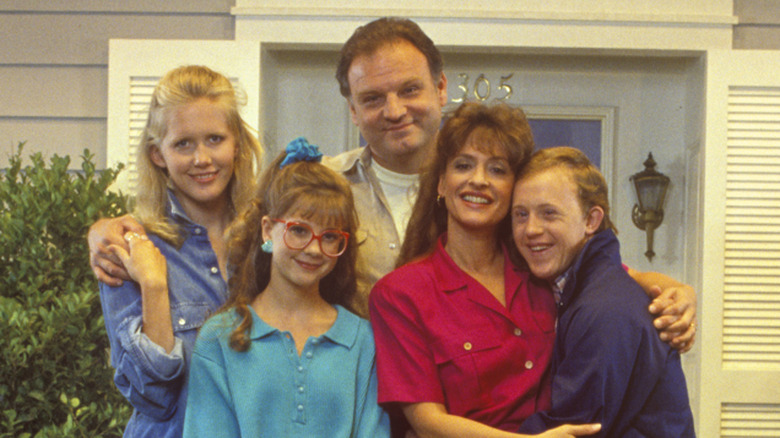
A tender but unflinching drama that examined real-world problems through the lens of a middle-class suburban Chicago family, "Life Goes On" kicked off ABC's Sunday night primetime lineup from 1989 to 1993. The show made a lot of headlines and history for its storylines and cast. The Thatcher family's teenage son, Corky, was the first major American TV character with Down syndrome (as portrayed by Chris Burke), while mother Libby Thatcher was portrayed, in a rare turn in a recurring television role, by iconic theater actor Patti LuPone. Fictionally co-parenting opposite LuPone as Drew Thatcher: Bill Smitrovich, a seasoned character actor with Broadway experience of his own.
While she might have confronted creepy Broadway ghosts in her other life, the set of "Life Goes On" seems to have been far more frightening for LuPone, who from the early days of production strongly disliked her on-screen spouse. "I had absolutely no chemistry with Bill Smitrovich," the actor wrote in "Patti LuPone: A Memoir." "If only he had been a talented or generous actor, his behavior might have been justified." Toward the end of the show's four-season run, LuPone and Smitrovich didn't speak to each other when they weren't delivering lines on camera. "We played love scenes, we played parenting scenes, we kissed, we hugged, and when the director yelled 'Cut' we never even looked at each other," LuPone recalled. "That's acting. (On my part. He just stunk.)"