

'70s B-Side Songs That Outshined Their Lead Singles
When they issued carefully chosen singles from their biggest bands and singers, all those powerful 1970s record labels thought they knew exactly what the public wanted. But every so often, those executives were totally wrong, and some heretofore unnoticed song completely overshadowed what was presumed to be an undeniable smash hit.
It's outdated terminology now, but in the 1970s, a single was synonymous with "A-side," referring to the main single, heavily marketed to radio stations and listeners, that took up an entire side of one 45 rpm (revolutions per minute) record. On the other side of that vinyl: the B-side, of course. More often than not, what wound up there was regarded as second-rate filler that only hardcore fans or completists would enjoy.
But radio and club disc jockeys didn't only have to play the A-side. If they felt curious or underwhelmed by the primary song, they might turn the 45 over and make a discovery. This happened over and over in the 1970s, giving listeners some of the greatest songs and biggest hits of all time that may otherwise have disappeared without a trace. Here are five beloved '70s hits that began as B-sides but went on to surpass their A-sides in popularity, both on the Billboard charts and in the memories of music fans.
Ain't No Sunshine
A definitive entry in the musical subgenre of self-pitying, woe-is-me, after-the-love-is-gone anthems, Bill Withers' devastating "Ain't No Sunshine" is a '70s breakup song that will take every boomer back to their first heartache. Describing the depths of emotional despair after the end of what seemed like a rock-solid romance, Withers wrote the 1971 Top 5 hit after taking inspiration from the unhealthy relationship central to the 1962 alcoholism drama "Days of Wine and Roses."
Withers' label, Sussex Records, thought so little of the slow and sad "Ain't No Sunshine" that it threw it onto the musician's first album, "Just As I Am," and on the reverse of the snappy lead-off single "Harlem." That song didn't move many DJs or record buyers, and it tanked. But a different Withers song did get people excited: the B-side of "Harlem." Sussex Records responded to the positive DJ and public response and re-issued the 45 with the placements reversed: "Ain't No Sunshine" on the A-side, and "Harlem" on the B-side.
I Will Survive
When disco music hit big in the mid-1970s, one of the dance genre's first stars was belter Gloria Gaynor. Her first release, "Honey Bee," was a club hit, and her cover of the Jackson 5's "Never Can Say Goodbye" hit the Top 10 in 1975. Gaynor dropped out of the scene for a while to recover from surgery for a spinal injury, and Polydor Records attempted to relaunch the disco diva's career in 1978 with a new LP, "Love Tracks," and its initial single, "Substitute." A generic disco song with vague lyrics about wanting to be a replacement lover, "Substitute" buries Gaynor's powerful voice under too many drums, synths, and horns. It subsequently flopped, missing the Hot 100 altogether.
Disappointed with the first new Gaynor song in a while, dance club and radio DJs went looking for something more and flipped over the "Substitute" single. There they found the B-side, which, after a piano flourish and a barely accompanied declaration of pain and rebirth by a pleading Gaynor, segues into a disco classic. That song was "I Will Survive," an empowering, gospel-inflected work of catharsis that quickly became an anthem for the recently broken-hearted. In March 1979, "I Will Survive," a proud statement from a jilted and mistreated lover moving on and moving up, went all the way to No. 1 on the pop chart and within a few weeks had sold a million copies.
Beth
Beneath its elaborate costumes and makeup, Kiss made a lot of corny songs about rock 'n' roll, among them "Detroit Rock City." The '70s-dominating, arena-filling theatrical hard rock band was from New York, not Detroit, but that didn't mean it couldn't churn out a fist-pumping anthem about how the Motor City sure does like to rock out. Kiss was so confident in the song that it placed it at the top of the first side of its 1976 album "Destroyer," its follow-up LP to its commercially dominant live album "Alive!"
Buried deep on side two of "Destroyer" and tossed onto the reverse of the "Detroit Rock City" 45: "Beth." Completely uncharacteristic of the hard-charging Kiss, "Beth" was a ballad, and the rare tune not written by co-frontmen Paul Stanley and Gene Simmons, but instead co-written by the band's drummer, Peter Criss. "Beth" is more of a Criss solo work than a Kiss song, as it features just the drummer's raspy vocals, pleading with his partner to understand that he's going to be rehearsing with his bandmates and friends instead of heading home, and a string section. "Detroit Rock City" stalled on the pop chart, but then DJs started to play the B-side. "Beth" turned into the biggest hit that Kiss ever had, reaching No. 7 on the Hot 100, selling half a million copies, and winning a People's Choice Award.
Maggie May
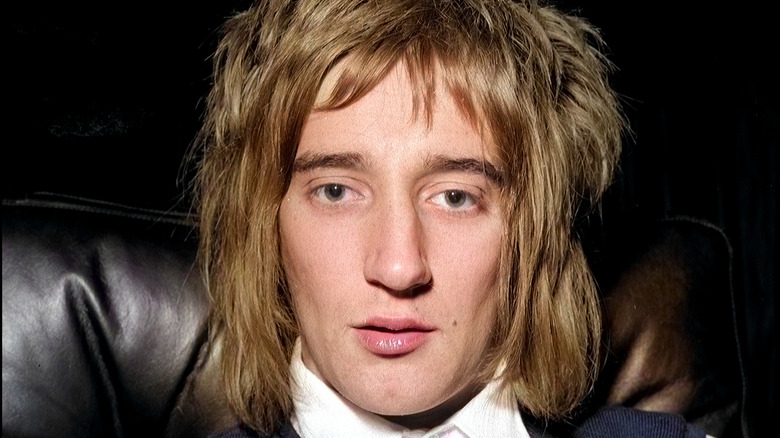
After a stint in the British band the Faces and a couple of early solo albums, Rod Stewart was only mildly famous in the U.S., until the release of his folky, poppy, rocky 1971 third album "Every Picture Tells a Story." The record sold well thanks to the single "Maggie May," the first No. 1 hit of Stewart's storied career. But that song, about a young man looking back on a predatory relationship with an older woman, was initially an afterthought. Mercury Records only allowed it to be included on "Every Picture Tells a Story" just before it was set to be pressed, and so it placed the late-breaking song on the reverse of the first promotional single, "Reason to Believe," a melancholy analysis of a complicated romance originally performed by singer-songwriter Tim Hardin.
Radio stations around the U.S. liked "Reason to Believe" enough to get the song into the lower rungs of the Billboard Hot 100 in 1971. But the two-sided 45 really started to sell when DJs started playing "Maggie May" more. After a few weeks on the chart, Mercury Records officially declared "Maggie May" the A-side and "Reason to Believe" to be the supporting track.
Black Water
A lilting and soaring delivery of nostalgic vocals from singer Tom Johnston, a chugging drumbeat, and playful acoustic strings — everything that distinguishes a Doobie Brothers song from other '70s classic rock staples is present on "Another Park, Another Sunday." That was the initial single on the Doobie Brothers' 1974 album "What Were Once Vices Are Now Habits." Despite giving Doobie Brothers fans exactly what Warner Bros. Records figured they wanted, the single was only a middling success, topping out at a mere No. 32 on the Hot 100.
It turned out that pop and rock radio listeners of 1974 wanted something different, both in general and from the Doobie Brothers. Filling out the B-side of the "Another Park, Another Sunday" 45 was an experimental and free-wheeling song called "Black Water." Band member Pat Simmons wrote it after a visit to the Mississippi River. It's a solo acoustic piece for more than a minute before it evolves into a groovy, funky Southern rock jam session notable for varying tempos and some rich harmonies. A small radio station in the South was the first to stop playing "Another Park, Another Sunday" in favor of the hypnotic "Black Water," and the trend spread around the country. In March 1975, "Black Water" spent a week at No. 1 on the pop chart.