

12 Hit Songs Allegedly Stolen By Other Artists
The inspiration for what turns into a classic and chart-topping pop or rock song can come from anywhere — and occasionally, that's another classic and chart-topping pop or rock song. And that's when things get so messy and murky that lawyers, judges, and juries have to intervene. It's honestly surprising that there aren't more high-profile cases of musical thievery, or, as it's technically known, copyright infringement. In the Western musical style, there are only 12 notes, and every song that's ever been written and recorded is a largely unique combination and rearrangement of those same dozen tones. But that speaks to the genius and difficulty of writing not just any song, but one that resonates the world over. To be completely original is sometimes not an option.
Here are 12 very popular, very lucrative songs that were allegedly conceived and released without good faith, or with a false pretense of some kind. These big hits were possibly stolen, at least in part, from other well-known tunes.
Creep
Officially, the inspiration behind Radiohead's "Creep" came from fixated frontman Thom Yorke's short time stalking a stranger. The band forged an anthem for the self-loathing and lovelorn, and in 1993, "Creep" became a huge hit in both the band's native U.K. and in the U.S. Almost immediately, the alternative rock classic came under legal scrutiny for potential copyright infringement. Mike Hazlewood and Albert Hammond, composers of the haunting 1972 love ballad "The Air That I Breathe," made famous in 1974 when the Hollies took it into the American Top 10, filed suit against Radiohead's publisher Warner Chappell Music. The songwriters alleged that "Creep" used the same little-used chord sequence and the same eight-bar section of melody as "The Air That I Breathe." That constituted copyright infringement, and in an out-of-court settlement, Radiohead agreed to cut Hammond and Hazlewood in on the song's profits by crediting them as co-songwriters.
Twenty-five years later, Radiohead and its representatives called out moody-pop singer Lana Del Rey, alleging that her song "Get Free" musically resembled "Creep." Before the story broke in 2017, Del Rey offered the band a 40% share of the royalties created, but it declined the offer, wanting a songwriting credit and 100% of the proceeds. The parties privately settled for a number somewhere in the middle.
Crocodile Rock
In early 1973, Elton John topped the pop chart for three weeks with "Crocodile Rock," a rollicking homage to the early rock 'n' roll music that the performer loved in childhood. John even states his thesis, and the point of the song, in the first line of "Crocodile Rock," commenting, "I remember when rock was young." Along with a traditional, lyrical chorus, the tune includes a catchy, repeated run of John's falsetto vocalizing — "la, la-la-la-la-la," etc.
John reminisced on record about rock 'n' roll that wasn't all that old, and so one of the songs to which he paid blatant tribute on "Crocodile Rock" was fairly fresh in the memories of listeners and the writers of "Speedy Gonzales," a Top 10 hit in 1962 for Pat Boone. The "la-la" section from "Crocodile Rock" is an approximation of a bit in "Speedy Gonzales." The rights holders considered legal action but ultimately never pursued a case. Still, John was apprehensive when Boone approached him at an industry event and called him out for copying "Speedy Gonzales." "And he said, 'Yes, I used it in 'Crocodile Rock,' and I thought you were going to sue me,'" Boone recalled to Fox News. "I said. 'Sue you?' You know, we performers, we're thrilled when somebody does something that we did. I was honored.'"
Stay With Me
While Tom Petty wasn't a fan of modern music, he was likely forced into at least a few careful listens of "Stay With Me," Sam Smith's epic, devastating let's-not-break-up ballad that won the Grammy Awards for Song of the Year and Record of the Year and hit No. 2 on the pop chart in 2014. That omnipresent song sounded oddly familiar to the publishing company that owns "I Won't Back Down," Petty's 1989 hit.
A member of Smith's camp told Rolling Stone that Petty's publishers reached out to Smith's people to point out "similarities heard in the melodies of the choruses" of the two songs. Smith and Co. denied familiarity with "I won't back down," but when they listened to it, they "acknowledged the similarity." Chalking it up to an eerie coincidence or parallel thinking, Petty and Lynne were added to the songwriter credits on "Stay With Me."
Rapper's Delight
Talking rhythmically to dance records at parties had become such a phenomenon at New York house parties that in 1979, Sugar Hill Records boss Sylvia Robinson decided to put together a group to record a few of those "rap" songs. She recruited three young rappers to base a song around the hook from Chic's then-contemporary disco hit, "Good Times." Rather than just record the rappers performing over the Chic sample, Robinson hired a studio musician to just play the line on the bass guitar over and over. That project became "Rapper's Delight," the first ever rap song to hit the Top 40.
Robinson didn't clear the use of "Good Times" with Chic, nor its co-writer, bandleader Nile Rodgers. Shortly after "Rapper's Delight" started blowing up, Rodgers heard the record in a New York club — or he'd actually heard his song interpolated without permission. He found out the party responsible by talking to the club's DJ, and he threatened to sue Sugar Hill Records. Instead, an out-of-court settlement was reached, and from that point, "Rapper's Delight" bore songwriting credits for Chic's Rodgers and Bernard Edwards.
The Old Man Down the Road
One of the final singles that Creedence Clearwater Revival placed in the pop Top 20 before band tension rendered a split in 1972: "Run Through the Jungle," a bit of twangy, ominous, swamp boogie in which the band specialized. As a double A-side with "Up Around the Bend," "Run Through the Jungle" hit No. 4 in 1970, but the song's writer, CCR leader John Fogerty, didn't get to enjoy much financial benefit. The rights to that, and most every other Creedence Clearwater Revival song, belonged to Fantasy Records, wholly owned by Saul Zaentz.
Fogerty publicly despised Zaentz. On his 1985 album "Centerfield," he recorded the diss tracks "Mr. Greed" and "Zanz Kant Danz" about his ex-boss. Zaentz sued Fogerty for defamation, and while he sought $144 million in damages, he settled for a smaller, undisclosed sum without a trial. However, Zentz waged a second suit against Fogerty for another "Centerfield" song: He claimed that the newly-recorded hit "The Old Man Down the Road" bore a near-identical melody to "Run Through the Jungle." Fogerty, Zaentz alleged, had plagiarized his own work, but because he didn't own the rights to it, it constituted copyright infringement.
That case went to court, and lawyers put Fogerty on the stand, where he played both songs on a guitar to demonstrate that while the songs were similar, it was because they were both of the musician's unique style, but not the same song. The jury ruled for Fogerty.
Good 4 U
Pop star of the 2020s Olivia Rodrigo leans more toward the rock side, penning and performing anthems of frustration about love gone wrong and being betrayed. Rodrigo cites female alternative rock stars of the '90s and 2000s as inspiration, including Hayley Williams, the singer-songwriter behind Paramore, who, like Rodrigo, wrote hit songs before she reached the age of majority. One of Paramore's most notable smashes from Williams: "Misery Business," a Top 30 hit in 2008, in which the singer severely berates an ex's new girlfriend. In 2021, Rodrigo went all the way to No. 1 with "Good 4 U," a guitar-driven, thorough dressing down of a former boyfriend who moved on to another with shocking speed.
Within three months of "Good 4 U," topping the charts, Rodrigo filed to change the names on the songwriting credits in the official ASCAP Repertory database. After comparing and mashing up the two songs became a viral phenomenon in the summer of 2021, Rodrigo's team elected to add Williams and her "Misery Business" co-writer, former Paramore guitarist Josh Farro, to the names listed for "Good 4 U."
My Sweet Lord
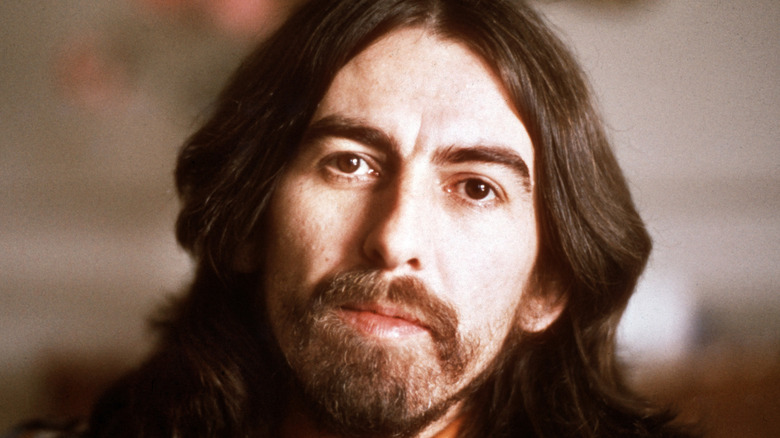
Fresh off the breakup of the Beatles in 1970, George Harrison released his third solo album, the sprawling triple LP "All Things Must Pass." The leadoff single was the yearning, folky "My Sweet Lord," about Harrison's pursuit of a higher level of consciousness and connection. It spent four weeks at No. 1 and produced a lot of income for the newly solo Harrison, but as the song descended from its peak in February 1971, a lawsuit came in from music publisher Bright Tunes. That company managed "He's So Fine," a 1963 hit by the Chiffons, and it alleged that Harrison had lifted the primary melody of "My Sweet Lord" from that song.
Harrison's team tried to make the suit go away with a settlement offer and even an attempt to outright purchase Bright Tunes, which would later wind up in financial jeopardy as the legal proceedings dragged on for more than four years. Eventually, the case saw the inside of a courtroom where a judge ruled that Harrison had indeed plagiarized "He's So Fine," although subconsciously and unintentionally. He was still on the hook to pay Bright Tunes royalties of nearly $1.6 million.
Surfin' USA
Chuck Berry is among the widely acknowledged architects of rock 'n' roll music. His 1950s recordings like "Johnny B. Goode" and "Sweet Little Sixteen" helped establish what rock sounded like to a generation and inspired countless musicians to give the genre a try, including Brian Wilson, the primary songwriter in the early years of the Beach Boys. Wilson actually didn't change all that much from Berry's "Sweet Little Sixteen" when he created "Surfin' U.S.A.," a rollicking ode to California beach culture that became the Beach Boys first Top 5 hit in 1963. "I was going with a girl called Judy Bowles, and her brother Jimmy was a surfer," Wilson recalled in "The Beach Boys: The Definitive Diary of America's Greatest Band, On Stage and in the Studio." "I started humming the melody to 'Sweet Little Sixteen' and I got fascinated with the fact of doing it, and I thought to myself, ... What about trying to put surf lyrics to 'Sweet Little Sixteen's melody?'" And that's precisely what he did.
Once Berry got an earful of that very popular song in the mid-1960s, he approached the Beach Boys' manager (and Brian Wilson's father), Murry Wilson, about a lawsuit. Instead, the manager signed over the copyright to "Surfin' U.S.A." to Berry.
Blurred LInes
Certified for sales of 10 million units, "Blurred Lines" spent 12 weeks atop the Hot 100 in 2013, making it one of the longest-running No. 1 hits ever. Featuring three of the biggest stars of the era, singer Robin Thicke, rapper T.I., and writer-producer-performer Pharrell Williams, "Blurred Lines" captured on record a throwback R&B flavor and an infectious party atmosphere, and it initially generated about $16 million.
That was the figure stated in court papers filed in 2013 by the estate of deceased R&B legend Marvin Gaye. The sound and feel of "Blurred Lines," the suit argued, were totally stolen from Gaye's 1977 smash "Got to Give It Up." The court, citing the major and undeniable similarities between the songs, ruled against Thicke and Williams (T.I. was later determined not liable) in 2015 and required the musicians to pay Gaye's family about $7 million, an amount ultimately amended to around $5 million and upheld upon appeal.
Ghostbusters
Within "Ghostbusters," the 1984 comedic sci-fi blockbuster movie, there's a lengthy montage. Director Ivan Reitman cut the scene to Huey Lewis and the News' then-current hit "I Want a New Drug." That's not what was used in the final version of the film. "When it was time to mix the movie, someone introduced me to Ray Parker Jr., and he comes back with a song called 'Ghostbusters' that has basically the same kind of riff in it," Reitman told Esquire. "About six months later, we heard that Huey Lewis was suing us."
"Ghostbusters," the song was a No. 1 hit while "Ghostbusters" the movie dominated the box office in the summer of 1984, but it took numerous elements from "I Want a New Drug," Lewis alleged. Parker and his team relented and agreed to an out-of-court settlement with Lewis's crew, and that included the stipulation that neither parties discuss the matter in public. In 2001, after Lewis talked about the lawsuit and his ire at Parker's adjudicated intellectual property theft, the "Ghostbusters" singer brought a lawsuit against the "Drug" singer and publisher Hulex Music, which Parker won.
Ice Ice Baby
Early '90s hip-hop sensation Vanilla Ice has been arrested more than once, but he never faced a judge for trying to steal one of the best-known riffs of '80s rock. In late 1990, Vanilla Ice went to No. 1 on the Hot 100 with "Ice Ice Baby," a song that starts with and repeatedly uses an infectious, leading, seven-note motif. Anyone alive and listening to music only nine years earlier instantly clocked the riff as the one that propelled "Under Pressure," the moving 1981 Top 30 ballad that teamed up two of music's biggest voices, David Bowie and Freddie Mercury of Queen.
What was essentially a sample wasn't credited on "Ice Ice Baby" nor was it cleared with Bowie or Queen. That's because Vanilla Ice didn't think it was necessary. "They're not the same!" he exclaimed incredulously in one interview (via Reddit) after attempting to point out that the lines were very different because Queen's went down a note at the end of the riff, while his had an uptick in the middle. Queen's representatives in the music industry didn't buy it, and legal papers were filed. The sides reached a pre-trial settlement, and Vanilla Ice forked over a portion of his royalties to Bowie and the members of Queen, who became credited songwriters on "Ice Ice Baby."
Stairway to Heaven
Jimi Hendrix's guitar protégé Randy California (aka Randy Wolfe) put together a respectable career in the 1960s and 1970s, releasing solo albums, playing with the tragedy-beset Deep Purple, and heading up the psychedelic trio Spirit alongside "Thunder Island" singer Jay Ferguson, who'd go on to be a one-hit wonder who made millions as the composer of the theme song of "The Office."
In 1968, Spirit released its artsy and challenging self-titled album, which included a two-and-a-half-minute instrumental track called "Taurus." About 45 seconds into the song, a plucked acoustic guitar riff rings out — which to a lot of people sounds a lot like the opening riff to Led Zeppelin's iconic "Stairway to Heaven, released in 1971."
Wolfe died in 1997, but in 2014, his estate sued Jimmy Page and Robert Plant, alleging that "Stairway" substantially stole from "Taurus." A judge dismissed the suit in 2016, but an appeals court negated that ruling, bringing on another trial, which Page and Plant won in 2020, absolving them of the charges of thievery. "What you have here is a big win for the multi-billion dollar industry against the creatives," Francis Malofiy, Spirit's lawyer, told Rolling Stone. [Led Zeppelin are] the greatest art thieves of all time and they got away with it again today."