

Journey's Don't Stop Believin' Was The Perfect Classic Rock Song Until Pop Culture Ruined It Forever
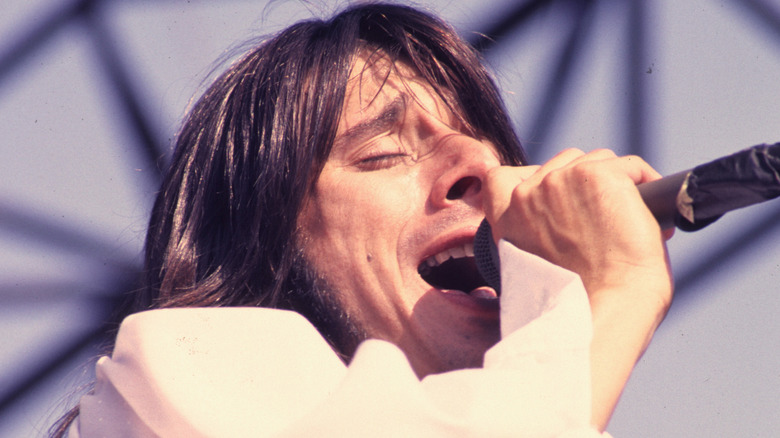
The arena rock era — in which guys with guitars and keyboards made huge-sounding anthems powered by monster riffs and anthemic choruses — peaked in 1981, and that's maybe because that's the year when Journey released "Don't Stop Believin'." But then Hollywood had to go and ruin the fun for everyone. The ideal and most definitive song of its ilk, "Don't Stop Believin'" possesses everything that makes a rock song into a classic rock song. It starts off with a leading electric organ hook onto which Journey builds and builds, adding guitar riffs, pounding drums, and the undeniable vocal theatrics of Steve Perry, who weaves a story of love and encouragement. "Don't Stop Believin'," unlike most songs, ends with its chorus, an iconic section of music that releases the pent-up musical tension and gets audiences singing along and pumping their fists.
"Don't Stop Believin'" is so irresistible, and able to convey so much and so quickly, that soundtrack supervisors and commercial producers went all in on the song. Since the 2000s, the Journey classic rock radio staple has been used in far too many movies, TV shows, and ads, cynically exploiting the built-up goodwill and emotional resonance felt by millions. We think the world needs to lay off "Don't Stop Believin'" — at least for a little while — before more damage is done.
This is all the fault of Scrubs and The Sopranos
Once upon a time, "Don't Stop Believin'" wasn't even Journey's most popular song. The tune reached No. 9 in late 1981, and while it became part of the permanent classic rock radio playlist, it was a golden oldie by the early 2000s. The unstoppable comeback likely began in 2003. That's when the hit NBC hospital dramedy "Scrubs" licensed "Don't Stop Believin'." Later that same year, the song popped up in "Monster," an '80s-set biopic about serial killer Aileen Wuornos that won Charlize Theron an Academy Award.Those are high-profile needle drops, but they're minor compared to how "Don't Stop Believin'" was a factor in one of the most talked-about TV moments of all time. The power ballad's profile was permanently elevated after the 2007 finale of "The Sopranos." As gangster Tony Soprano and his family gather in a diner, the scene abruptly goes black, and the song cuts off mid-titular line.
But things didn't stop there. The song is also crucial to a 2005 "Family Guy" episode that lives forever in reruns, it was deployed for comic effect as one of the best rock songs used in a Super Bowl commercial in 2005, and it's the centerpiece of the 2009 pilot episode of the musical comedy series "Glee." That show's audience of teens and young adults discovered "Don't Stop Believin'" all over again, and the version sung by the "Glee" cast was a No. 4 pop hit. In all, "Don't Stop Believin'" has been used in a whopping 40-plus projects
It's time to let go of that feeling
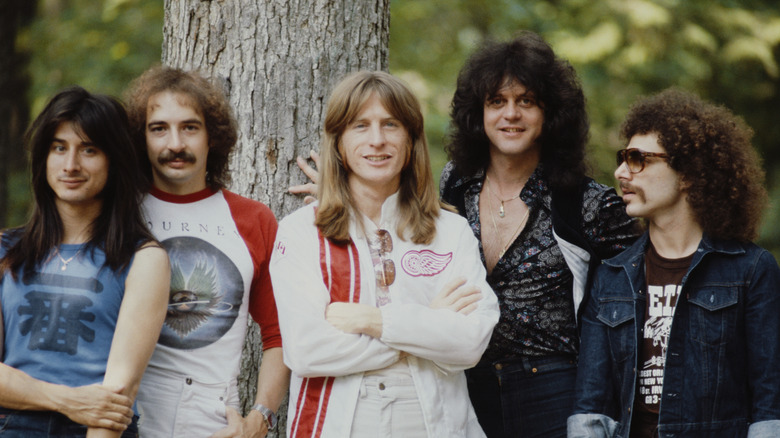
By 2013, Journey's recording of "Don't Stop Believin'" had been certified for sales of four million copies by the Recording Industry Association of America. Just 11 years later, it became an '80s classic rock song that's worth a ton of money when that figure had grown to 18 million. Clearly people are purchasing, streaming, and listening to "Don't Stop Believin'" of their own free will, but encouraged to do by its prominent use in pop culture. It's reached a saturation point. We don't need to listen to "Don't Stop Believin'" on our own anymore because we're bound to hear it when we're watching TV or seeing a movie.
Hearing "Don't Stop Believin'" on the big screen has become a cliché. Filmmakers know people will like it, and it's an editorial shortcut to get audiences to feel a certain way. But it's been done so much that it doesn't work anymore, because we've grown so sick of this song we once loved. Hollywood ought to adopt a self-imposed moratorium on "Don't Stop Believin.'" There are plenty of songs out there that can get the job done, even of Journey's exact vintage. Soundtrack supervisors can stand to dig a little deeper, and maybe explore some rock songs from 1981 that sound even cooler today.