

Underrated Barry Manilow Tracks That Never Went No. 1, But Should've
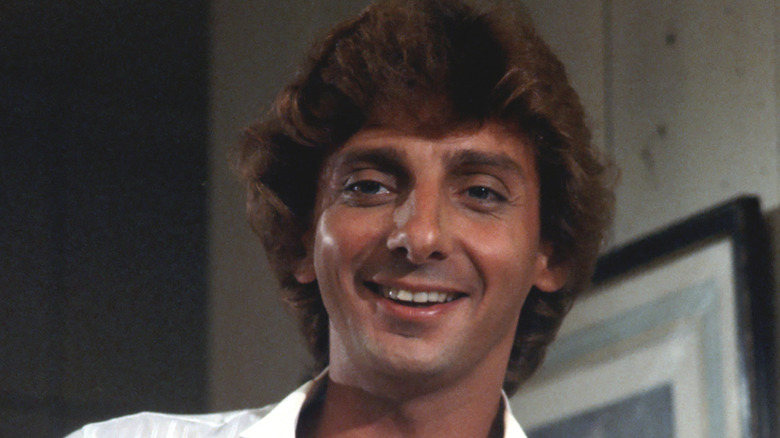
A master of the slow, smooth, emotional ballads that Americans just couldn't get enough of in the 1970s, Barry Manilow scored multiple No. 1 hits. Still, it's surprising — and kind of unfair — that he didn't rack up a lot more chart-toppers.
One of the definitive sounds of the '70s was adult-oriented, lightly maudlin soft pop. Manilow was the king of the genre, providing a clear and empathetic voice for characters falling in and out of love, questioning their choices, and dealing with the consequences, all backed by his own piano and, more often than not, a string section.
Manilow's music proved a soothing salve for troubled times. In his peak commercial era of the mid-to-late 1970s, Manilow topped the Hot 100 pop chart for three total weeks, on three occasions, with three songs. "Looks Like We Made It," "I Write the Songs," and "Mandy" all went to No. 1. About two dozen other Manilow songs made the Top 40 in the '70s and '80s, though they hit surprisingly low peaks for songs that seemed to be culturally ubiquitous. Manilow wrote or performed many lush and enveloping love songs that were a soundtrack for the lives of the mature music listeners of the 1970s, and it's a wonder he didn't take more gems to the top. Here are five Manilow songs that didn't hit No. 1 but probably should have.
It's a Miracle
The messed up history of disco had a boom period in the late 1970s, and it seemed so all-encompassing that many musicians who otherwise wouldn't have touched dance music got involved just to keep up with the times. Barry Manilow dabbled in disco relatively early in the movement, releasing "It's a Miracle" as a single from his late-1974 album "Barry Manilow II." The song topped out at No. 12 on the Hot 100 in the spring of 1975, so perhaps it was just ahead of its time.
Manilow, purveyor of the downbeat and mawkish, broke from his style with the joyful and endearing "It's a Miracle." While many of the disco hits pumping out of the speakers in the wild 1970s club scene trended toward the juvenile and superficial, "It's a Miracle" is refined dance music for grown-ups. Manilow employs an extra large backing band with plenty of crisp and persuasive percussion, an active group of background singers, and the musician's bouncy electric piano. The lyrics tell the story of the romantic homecoming — a miraculous one, even — of an individual realizing that the love he'd sought for so long was there waiting for him all along. "It's a Miracle" sounds like it could be the closing song to a '70s romcom or a musical like "Grease."
Somewhere in the Night
"Somewhere in the Night" squeaked into the Top 10 in February 1979, and it really should've finished higher. At a time when music fans couldn't get enough Barry Manilow, it's confusing that interest faded a bit too early on a song that finds him sounding the most like himself. "Somewhere in the Night" is the quintessential Manilow single, as if scientifically designed and manufactured based on what parts of his catalog had previously resonated so well with audiences.
It strikes on Manilow's combo of effusively romantic, happy lyrics about a long-wished-for love made real, and startlingly bittersweet musical accompaniment. "Somewhere in the Night" captures a magical moment, wherein the first-person narrator is gazing upon a lover's face, wanting the feeling to last forever as he gushes about how happy and appreciative he is for this love. But that melancholy music, a Manilow hallmark, makes it all feel sad and fleeting, as if he's mourning or feeling nostalgia for the thing as he experiences it. This is what Manilow did best, and "Somewhere in the Night" should've been enshrined in pop history as a No. 1 hit.
Copacabana (At the Copa)
Barry Manilow had serious doubts about his 1978 single "Copacabana," on account of how it's a lyrically dark and twisted song. That part might get overlooked beneath the irresistible melody and bubbly rhythm, because "Copacabana (At the Copa)," is a perfect disco song, playful with its music and words. Manilow incorporates internal rhymes and repetition and seems to be having a wonderful time singing it, a feeling that listeners can't help but share.
But the fact remains: "Copacabana" is a potentially disturbing tune. That duality and complexity, both rare for a 1970s pop tune, only serve to make it a better song, and it's a shame that it peaked at just No. 8 in the summer of 1978. "Copacabana (At the Copa)" is an ultra-contemporary disco song with flashes of old-fashioned nightclub pizzazz, befitting its harrowing story about a mid-century showgirl named Lola whose bartender boyfriend, Tony, gets shot by a shady guy at a legendary nightclub that has since been turned into a disco. History simply comes alive in "Copacabana (At the Copa)."
This One's for You
A relative flop in Barry Manilow's most successful career period, "This One's for You" only managed to get to No. 29 on the pop chart in the fall of 1976. While most of Manilow's best-known songs and hit singles are straightforward, from-me-to-you-type ballads, "This One's for You" is a quirky little number, a love song that's aware of its status as a love song and which comments on itself as it goes along.
Manilow starts off the song by proclaiming, accurately as it would turn out, that it will "never sell" — in other words, it won't be relatable or attractive to fans. He also claims he isn't doing a very good job at singing the song he's currently singing, but he's determined to keep it in his repertoire because it's a very special song, devoted to his one true love. That's a powerful and charming emotional twist, one you wouldn't expect in a song that plays so much with form, perspective, and irony. "This One's for You" is a love song told from the unique perspective of someone who performs love songs for a living, and that's a rare treat.
Can't Smile Without You
"Can't Smile Without You" has a lot of what it takes for a song to gain wide appeal. It's got a relatable and frequently explored premise of trying to move on after a breakup, and there's the instant-earworm melody, to name two things. It's a striking song in that it's the rare one that starts with its chorus. Barry Manilow wants to state his case to his imagined former lover as quickly as possible, letting them know that he's unable to find pleasure in life, let alone smile, laugh, or sing, since the end of their existence-affirming relationship. The recurring melody begs for a singalong, sounding as if it came from some folk tune or pub song that originated long ago.
American record buyers nearly took this one all the way to No. 1 in April 1978, as "Can't Smile Without You" peaked at No. 3 on the Hot 100. At almost any other time in the late 1970s, this Manilow classic probably would've had a shot at reaching the top position, but it had the misfortune to see release during "Saturday Night Fever" fever, when the Bee Gees' hits from the disco juggernaut ruled the charts. "Night Fever" was nestled at No. 1 at the time, and it wouldn't be disturbed by even an anthemic ballad.