

You're Wrong About The Real Reason These Bands Broke Up
In the chaos, confusion, and heartbreak over a major band split, a lot of misinformation often gets distributed, and fans tend to buy it. It can be shocking and hard for fans to accept when a group breaks up, and so much so that the reason given at the time or those that emerge in the dramatic narrative can become an intractable part of the band's story, and possibly permanently so. But surprisingly often, all those big reasons why a band ended their massively successful creative endeavor are little more than rumor or lore.
Breakups are necessarily complicated. After all, it's not all that easy to suddenly stop making art (and tons of money, for many) with one's friends and/or creative soulmates. Many factors go into the decision to go in different directions, but the reason given is the one that fans or history decide is the right one, and it's left at that.
After the proverbial dust settles, when the pain subsides, and the NDAs aren't in effect anymore, musicians discuss their notorious splits and reveal the nuance and details that cast doubt on the common story. Sometimes, what fans think they know is completely wrong. Here are some of the most infamous band breakups ever — and what actually happened.
The Police didn't run out of steam
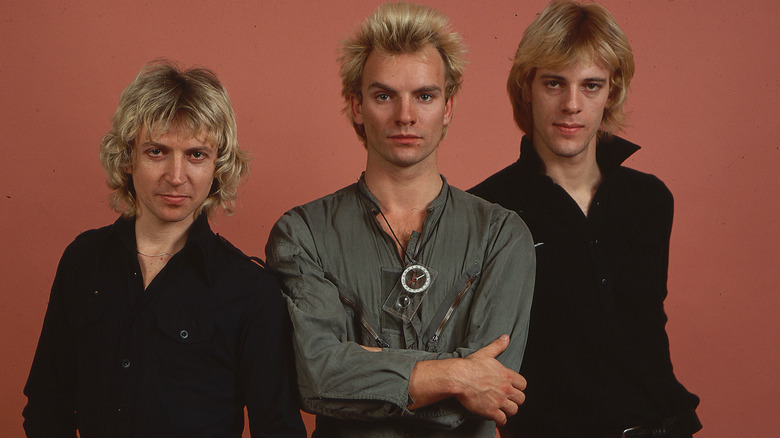
The Police, a reggae-punk act turned sophisticated pop outfit, was huge in the early '80s. The trio landed nine songs in the Top 40, including "Wrapped Around Your Finger," "King of Pain," and the chart-topping "Every Breath You Take," a classic rock song from the '80s worth a head-turning amount of money. The Police was as prolific as it was popular, churning out five albums in five years before what looked like burnout set in.
The band notably didn't record anything after 1983, broke up in 1984, and when it reunited a couple of years later, it only got as far as a remix of its old hit, "Don't Stand So Close to Me." Creative disagreements and drummer Stewart Copeland shattering his collarbone in an equestrian mishap added to the drama, and the Police finally called it a day in 1986. But the Police didn't peter out; for one member, it was just the beginning.
Frontman Sting went on to a wildly successful solo career, which he'd actually launched while the Police remained a going concern with the 1985 album "The Dream of the Blue Turtles." Sting's need to do his own thing is what ultimately led to the demise of the Police, both his want of a solo career and his domination of the band. "A band is a democracy. Or the semblance of democracy. You have to pretend more in a band," Sting told Rolling Stone, adding that the Police had been Copeland's idea until he kind of took over. By 1983, Sting admitted, the shift in power dynamic had completed.
Journey didn't split so Steve Perry could go solo
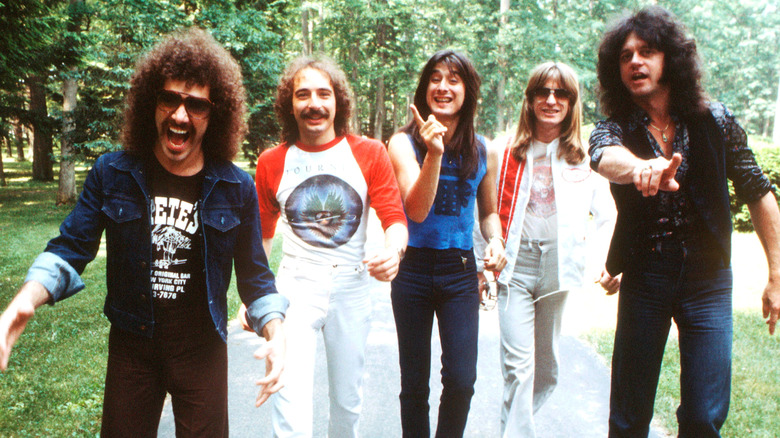
Journey may have sold millions of records, but it never had a No. 1 hit, although it was the quintessential arena rock band of the '70s and '80s, thanks in large part to the powerfully voiced Steve Perry. With that singer at the helm, Journey released eight albums in eight years, and toward the end of that unprecedented run of many multi-platinum hits, Perry found the time to start a solo career — his 1984 LP "Street Talk" generated the smashes "Oh, Sherrie" and "Foolish Heart." Journey called it quits in 1986 because Perry exited, but it wasn't out of ego or ambition.
"I'm sure they thought, 'Oh, there he goes. Solo career. F*** Steve'," Perry told GQ in 2008. In fact, while golden-era Journey recorded what would be its last album, "Raised on Radio," the singer's mother died. After seeing to her affairs, he completed the record, went on tour, and then realized he hadn't grieved. "I hadn't even really addressed or dealt with anything pertaining to that loss. So I was about ready to crash and didn't know." And during the "Raised on Radio" tour, Perry required nightly injections of medication and vitamins to preserve his voice, seriously strained by years of hitting those high notes. Perry cited the extreme need for vocal rest as his main reason for leaving Journey.
Crossing boundaries was more to blame than creative differences for Uncle Tupelo's split
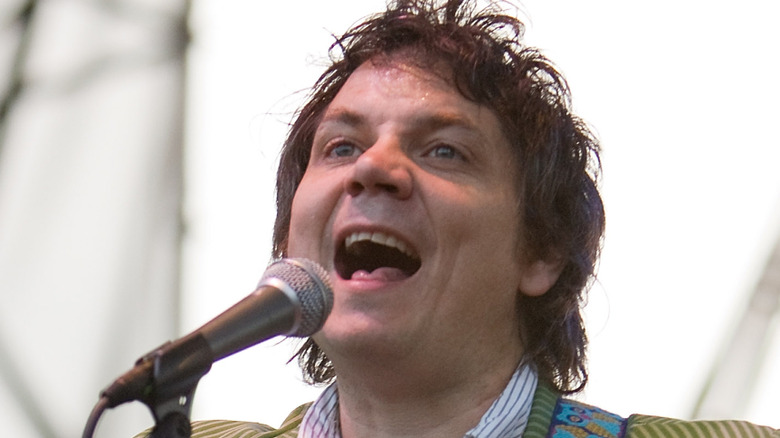
As led by troubadour Jeff Tweedy, the Americana-inflected rock band Wilco is among the most consistently critically acclaimed acts of the 21st century. The group emerged in the late 1990s out of the remnants of Uncle Tupelo, an outfit so influential to alt-country that the chief magazine reporting on the genre, and the genre itself, were known as "No Depression," after the band's 1990 debut album. When Uncle Tupelo fractured, co-founder Jay Farrar went on to start Son Volt, a moderately successful band faithful to the mission of its parent group. Wilco and Son Volt sounded so different that from the outside looking in, it seemed like Tweedy and Farrar had wildly different creative aims. Farrar even sort of admitted that in a 1996 interview. "The band had just run its course. After six or seven years of doing the same thing, you start to question what you're doing," he told the Los Angeles Times.
But really, Farrar may have blown up Uncle Tupelo because of Tweedy's allegedly untoward and predatory behavior. One day, Farrar walked in on his long-term girlfriend — and later spouse — sleeping, while Tweedy touched her. "I found out later that he was telling her stuff, like, he loves her," Farrar recalled to Relix (via Ilxor).
Yoko Ono didn't destroy the Beatles
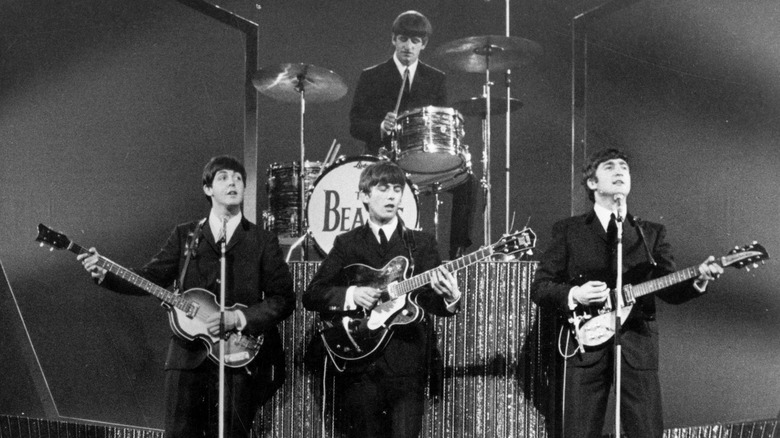
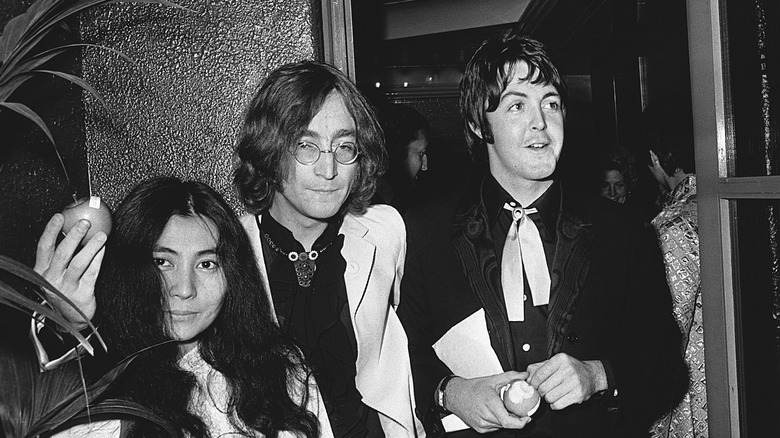
John Lennon and Yoko Ono's relationship was so intense that the latter's intrusion into the former's work with the Beatles led to the end of the band. That's been the cultural scuttlebutt for more than 50 years, and it's mostly myth. In fact, Ono entered the picture after a breakup was inevitable. Lennon thought that the band struggled after the 1967 death of its manager and peacemaker Brian Epstein. "I knew that we were in trouble then," Lennon told Rolling Stone."I didn't really have any misconceptions about our ability to do anything other than play music and I was scared. I thought, 'We've f***in' had it now.'"
The official end came in 1970, after McCartney issued a press release announcing a solo album and a sabbatical from the Beatles. But McCartney claims he was driven to such extraordinary measures. "I didn't instigate the split. That was our Johnny," McCartney told the BBC. "John walked into a room one day and said I am leaving the Beatles. And he said, 'It's quite thrilling, it's rather like a divorce.' And then we were left to pick up the pieces."
As for the conceptual artist who captured Lennon's heart: "I don't think you can blame her for anything," McCartney told Al Jazeera (via The Guardian), explaining that Lennon already had a foot out of the door. "She showed him another way to be, which was very attractive to him. So it was time for John to leave."