

13 Times High-Profile Missing Person Cases Were Actually Fake
Missing persons cases often make for dramatic affairs, sometimes with bizarre details. But, while many of us rejoice when a lost person is safely found, there's a darker side that occasionally develops. Sometimes, a person is found ... and they weren't really missing at all. Throughout history, multiple disappearances made for a high-profile news story, only for investigators and members of the public to realize that they'd been conned.
Why, exactly, would someone go to the trouble — and legal risk — of fooling so many and in such a flashy way? Motivations vary as much as individual cases and include the desire for notoriety, a big life insurance payday, and the hope of escaping one's previous life. But, with these cases, the fraudsters were eventually caught and have often faced jail time and serious fines, not to mention major public embarrassment.
Carlee Russell
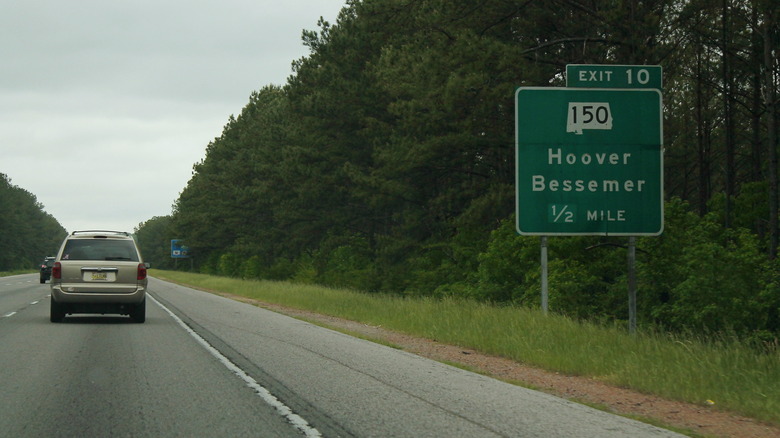
As Carlee Russell initially told it, she was driving home one evening when she spotted an alarming sight: An unaccompanied toddler just off I-459 near Hoover, Alabama. After contacting 911, Russell called her brother's girlfriend, during which she seemingly approached the child, screamed, and dropped the call. Police found only her car and some of her personal effects scattered about.
When Russell returned after two days, she said she'd been abducted by an unidentified man. Upon escaping, she said she navigated woods until finding her own neighborhood. Investigators discovered that Russell had concerning internet history, including searches for Amber Alerts, bus fares, and the Liam Neeson kidnapping-focused action film, "Taken."
It's still unclear why Russell did all this. As reported by NPR, she vaguely referenced "various emotional issues and stress" and apologized for her actions. Though Russell avoided incarceration, she pled guilty to filing false police reports and was ordered to serve probation and pay $18,000 in restitution.
Sherri Papini
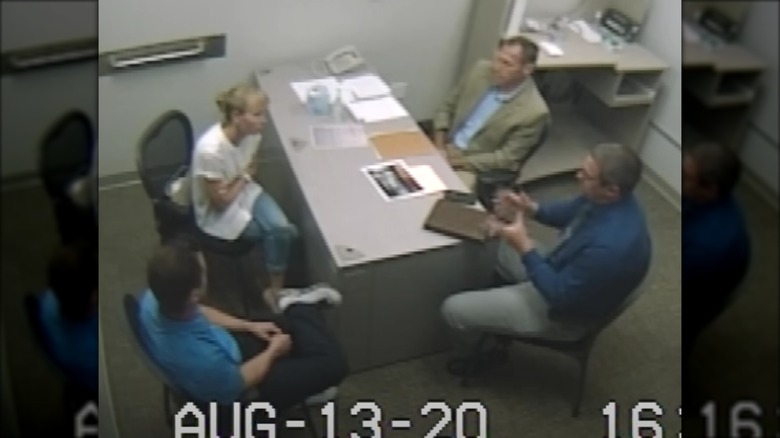
In late 2016, 34-year-old mother Sherri Papini went for a run near her home in Redding, California. Her husband, Keith, eventually reported her missing. Over three weeks later, a driver found her walking along a road near Sacramento, far from her home. She told police that two Hispanic women had kidnapped and assaulted her.
At first, with no known motivation and a dearth of leads, police were stymied. Then, in 2020, investigators began to examine genetic evidence. DNA found on her clothing linked Papini to an ex-boyfriend, James Reyes. He admitted to helping her fake the whole thing after she'd claimed her husband was abusive. While hiding in his apartment, Papini inflicted injuries on herself to bolster claims of a mysterious and violent kidnapping. By 2022, Papini had pled guilty to lying to a federal officer and mail fraud. After sentencing, she served 10 months in prison and began to pay back over $300,000 in restitution.
A now-divorced Papini still admits the original tale was false but has pivoted to blame Reyes more overtly. She now alleges that he held her at his apartment and only agreed to let her go once she promised to deliver that wild story. Reyes hasn't responded to the allegations, and, so far, it appears investigators aren't biting.
Aimee Semple McPherson

By the 1920s, Aimee Semple McPherson had risen to great prominence as a Christian preacher who could draw huge crowds of people eager to hear the word of God — or at least her interpretation of it. McPherson, also known as Sister Aimee, wasn't above getting theatrical with her message from the Angelus Temple in Los Angeles, where her sermons were enhanced by full stage productions (and occasional advice from Charlie Chaplin). In May 1926, she went to Venice Beach, ostensibly to swim and work on her next sermon. But when McPherson's assistant couldn't find her, it seemed the charismatic leader had drowned. Weeks later, she appeared in the Mexican border town of Agua Prieta, saying she'd been lured away from the beach when someone asked her to pray for a sick child nearby. Instead, she was allegedly tossed into a car and driven to a remote location where three people held her.
McPherson's dramatic return made for good sermonizing — she said it was all Satan's work to silence her, but her mighty faith had prevailed — but people were suspicious. A grand jury hearing focused on McPherson's possible relationship with an audio engineer (who perhaps ran away with her during that missing time) and included possible charges of conspiracy, lying to the grand jury, and fabricating evidence. Ultimately, a trial never happened, and the possibly unsavory matter of her "disappearance" remains unresolved.
Ryan Borgwardt
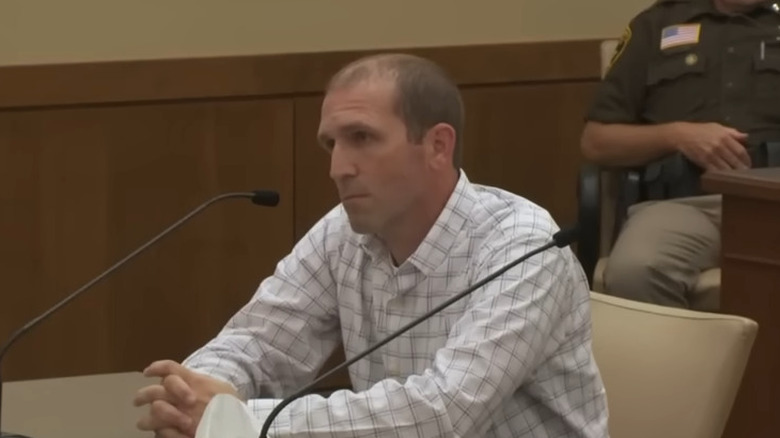
Ryan Borgwardt went kayaking on Wisconsin's Green Lake in August 2024. When he didn't return as expected, his wife reported him missing. An extensive search found only Borgwardt's empty kayak. Yet, the Green Lake County Sheriff's office grew suspicious when his remains weren't recovered. With a bit of investigating, they managed to get in contact with the man himself by the end of 2024. One key bit of evidence: Borgwardt used his own passport in Canada the day after his disappearance.
Authorities later revealed Borgwardt had enacted an elaborate scheme that saw him abandoning his family for a new life in the nation of Georgia. Borgwardt capsized his kayak, used an inflatable boat to paddle back to shore, biked to a bus station, traveled into Canada, and flew across the Atlantic. His plan included connecting with a Ukrainian woman. Unsurprisingly, his wife initiated divorce proceedings once Borgwardt returned. Back in Wisconsin, he was charged with obstructing an officer for planting evidence and sentenced to 89 days in jail, as well as $30,000 in restitution.
Agatha Christie
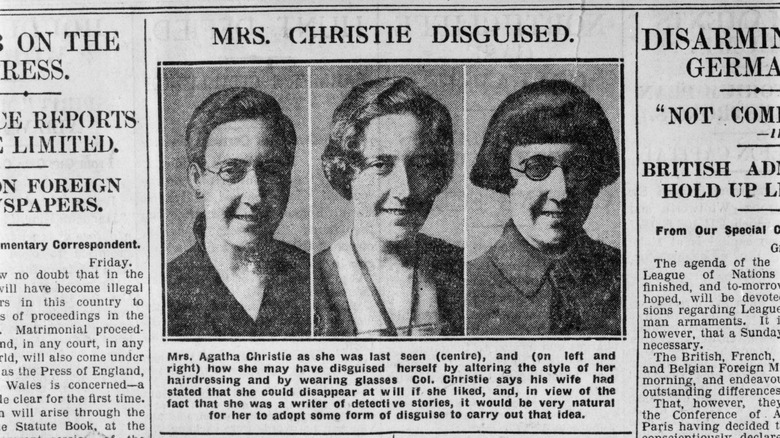
Agatha Christie never revealed much about her infamous 1926 disappearance, but we do know that, by December of that year, she was gaining success as a writer. On the surface, she was also seemingly happily married. But the couple had an argument in which husband Archie decided to leave for the weekend.
Things looked pretty suspicious for Archie and his mistress, Nancy Neale, when Christie's empty car (which still held her coat and suitcase) was found by the side of the road. The writer's disappearance became a news sensation, even drawing the attention of Sir Arthur Conan Doyle, who helped in his own way by hiring a psychic investigator. Surrey Deputy Chief Constable William Kenward grumbled that it wasn't that big of a police search (and use of police resources) as the media let on considering the efforts of the public. Still, the mystery remained: Had Christie experienced a brain injury? Had a nervous breakdown? Been abducted? Enacted a wild publicity stunt?
Finally, a Yorkshire hotel worker told police that a guest — going by Theresa Neale — looked an awful lot like Christie. Archie traveled to the establishment and found his wife casually sitting down and reading a newspaper featuring her own disappearance. Christie apparently didn't recognize him. Later, Archie and two physicians would say that Christie had been suffering from a possible concussion, though the Christies divorced not long after.
John Darwin
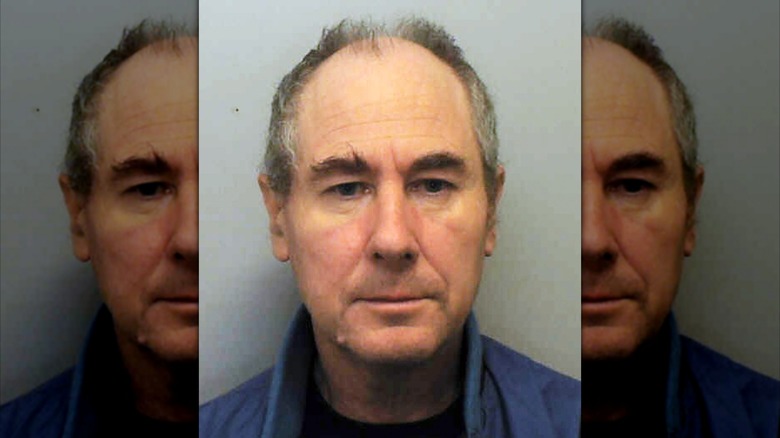
John Darwin and his wife, Anne, were in serious debt by 2002. Though both were gainfully employed and lived a seemingly unremarkable life in Hartlepool, England, they felt that their situation was dire enough that they should fake John's death. He would pretend to go out canoeing, and when only his paddle and damaged canoe came back, everyone but Anne assumed he'd died, including the pair's two sons, Anthony and Mark.
Only John Darwin was alive, and for four years, Anne collected on his life insurance policy. In the interim, he lived in property adjoining the family home. Eventually, the Darwins decided to move to Panama, which must have seemed smart until they realized both needed character references to establish residency — a pretty tough task for a dead man. So, John appeared at a London police station, claiming amnesia. Yet, both police and amateur investigators uncovered evidence that John Darwin had been alive and fully cognizant the whole time.
The Darwins were arrested in 2008 and sentenced to six-year prison terms, though both were granted early release. Meanwhile, Mark and Anthony Darwin cut ties with their parents. Anne later claimed she was bullied into lying about her husband's "death."
Natasha Ryan
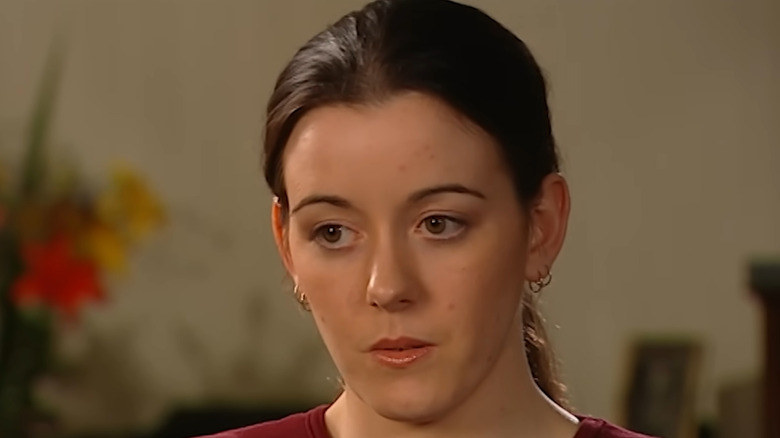
Many teens have fleeting thoughts of running away, but Natasha Ryan really did it — and lived to regret it. In 1998, a 14-year-old Ryan ran away from home to be with her boyfriend, Scott Black. For years, her family presumed she had died, especially after serial killer Leonard John Fraser confessed to killing her.
But, as with other imprisoned serial killers who confess to extra crimes, Fraser was lying. That became clear in 2003, when Ryan was found in a cupboard in Black's home, leading to the "girl in the cupboard" moniker. According to Ryan, she'd stayed indoors much of the time she'd been missing, with merely six trips outside, mostly at night. Why not just go home? Ryan told Australia's "60 Minutes" that she was afraid of being sent to prison. Yet, she was only given a $1,000 fine and a charge of causing a false police investigation, while Black was sentenced to a one-year prison term (he had lied about not knowing of Ryan's whereabouts at Fraser's trial). Ryan died in 2024, aged 40, though her death was ruled not suspicious.
Arkady Babchenko
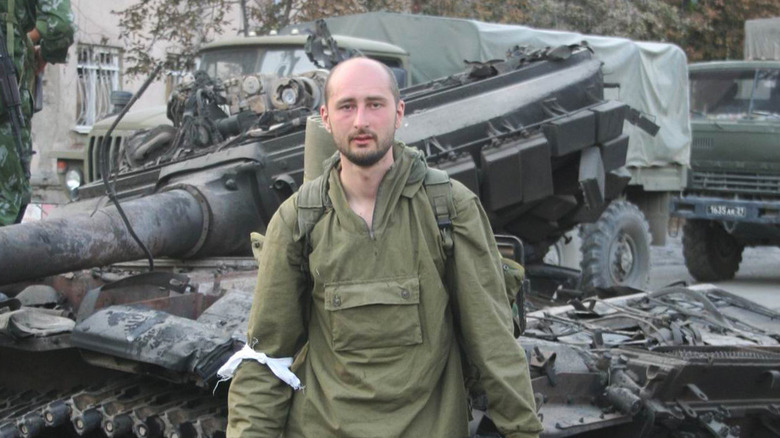
You can't really blame journalist Arkady Babchenko for being afraid when he learned that Russia really was planning to assassinate him. By 2017, he'd already fled his home country and was living in Ukraine, where that nation's security personnel informed him of the plot. Their solution: Fake his death. Babchenko worked with them for about a month, planning the dramatic scene that involved his wife, Olga, finding him at their apartment building, bearing gunshot wounds.
Babchenko, smeared with pig's blood, was placed into an ambulance and rushed off to the hospital, reportedly dying en route. He recalled that this was a turning point. "I only stopped being afraid at the morgue," he said (via PBS News). The subterfuge was revealed a day later at a news conference featuring the dramatic reveal of Babchenko, whole and well. Though he faced some controversy, he pushed back, noting that journalistic ethics weren't exactly top of mind after the assassination plot was revealed. Babchenko eventually left Ukraine, and, though Russia's hardly been friendly to him, he remains alive.
Jennifer Wilbanks
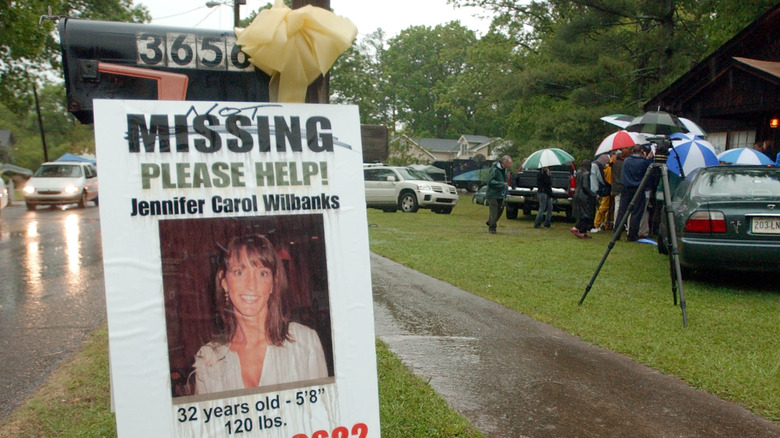
Sure, "Runaway Bride" was a moderately successful '90s rom-com starring Julia Roberts, but one real-life "runaway bride" has a tale that's far less cutesy. Jennifer Wilbanks came to notoriety in 2005, when she failed to show up for her elaborate wedding (set to include over 600 guests). Assuming that she wouldn't miss such a big day of her own volition, Wilbanks' friends and family assumed she had been kidnapped. Days later, she was found in Albuquerque, claiming abduction.
When the FBI began to ask her questions, Wilbanks caved and revealed she'd just gotten cold feet and taken a bus from Georgia to New Mexico. Her fiancé ultimately left her, and she found herself facing serious criminal charges. Wilbanks pled guilty to felony charges of making a false statement and, though she escaped jail time, did serve two years of probation. On top of that, she was to pay over $15,000 in restitution to the Georgia agencies that conducted a three-day search for her.
John Stonehouse
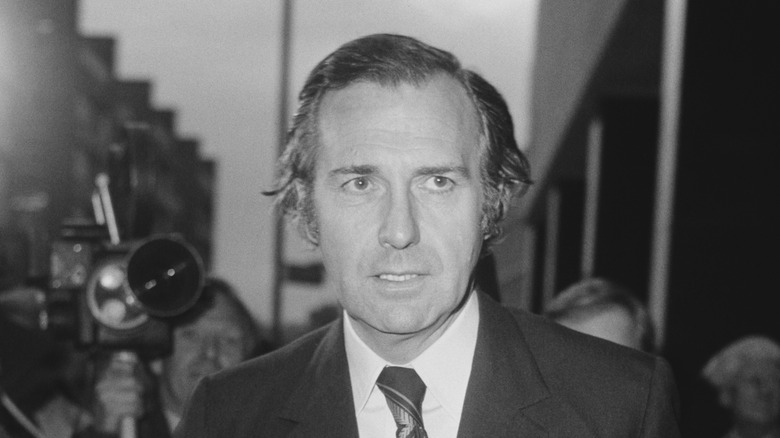
John Stonehouse didn't seem the most likely candidate for faking his own disappearance. Besides being a prominent member of the British parliament, he had a family and a growing business career. Well, he had been accused of being a Communist spy (a charge that may have been true) and was hit with fraud allegations. At one point, Stonehouse was even found guilty of 21 criminal counts, including fraud, forgery, and theft.
In 1974, he disappeared while swimming off Miami Beach. His wife, Barbara, was certain he had drowned ... but Stonehouse's girlfriend wasn't. She continued communicating with him even after his supposed death and even sent some of her clothes to Australia. Oh, and those earlier forgery and theft charges? They included Stonehouse's decision to steal the identities of two deceased people, one of whom was on a false passport he used to get to Australia.
When he was finally caught in Melbourne on Christmas Eve 1974, Stonehouse remained bold as brass. Both his girlfriend and wife traveled to see him in Australia, where he tried to convince both to stay with him. As reported by the BBC, he also claimed that he should still collect on his MP's salary, saying, "I've been doing a fact-finding tour not only in terms of geography, but in terms of the inner self of a political animal." Stonehouse was eventually deported back to Britain, put on trial, and sentenced to seven years (though he served only three).
Shannon Matthews
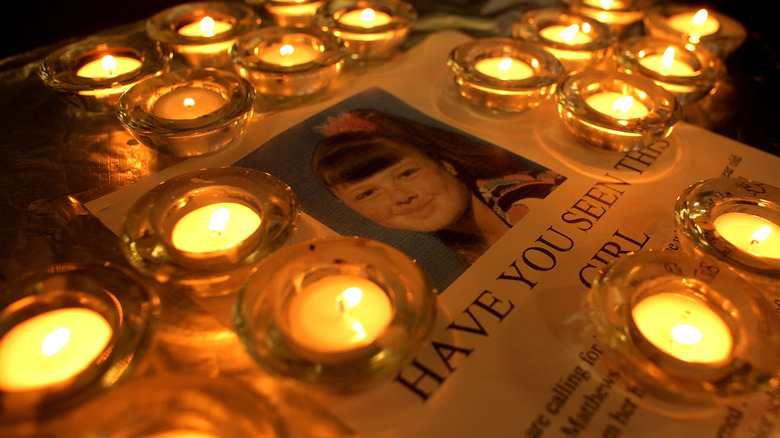
When 9-year-old Shannon Matthews disappeared in early 2008, her mother, Karen, seemed a terrified parent, speaking tearfully to journalists and police. But, over 24 days of searching, indications of something awry arose. Karen's friend, Natalie Murray, told the BBC that when she visited the Matthews home, shared with Karen's boyfriend Craig Meehan, it all felt off. "Straight away my gut was telling me something wasn't right," she recalled. "Karen was carrying on with normal stuff, tidying up the house. It was as if Shannon had just gone to her friend's." Police officer Barry South also told the BBC that, upon meeting Karen, "Immediately I thought, 'Something's not right with this woman.'" As if that weren't enough, Detective Constable Christine Freeman told The Telegraph that Karen "enjoyed the fact that the press knew her name [...] and that the police were on the doorstep."
In March, a tip directed police to search a nearby apartment that belonged to Michael Donovan, Meehan's uncle. There, they found Shannon stashed beneath a bed. Though scared and drugged, she was physically unharmed (though she would experience significant psychological upset afterward). Karen Matthews and Donovan had come up with the false kidnapping plan to claim a £50,000 reward by pretending to recover Shannon at a nearby market. They were each imprisoned for eight years, and Shannon was given a new identity and moved away.
Balloon Boy
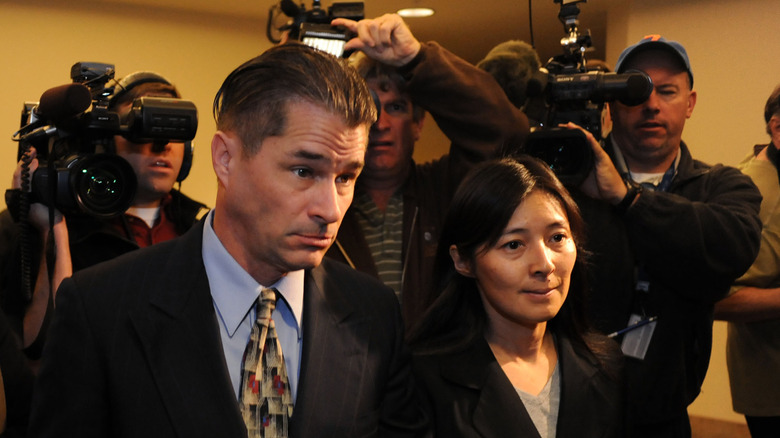
It sounds cartoonish: A boy trapped in a balloon floating thousands of feet high. But, for a while in October 2009, people believed that really happened to the Heene family of Fort Collins, Colorado. The balloon was a large, saucer-shaped affair that the family father, Richard Heene, crafted in the family's backyard. When its tethers snapped, Richard and his wife, Mayumi, reportedly believed their youngest son, Falcon, was inside. According to the Heenes, their son had attempted to enter the balloon all day, only to be rebuffed. Unable to find Falcon, the parents panicked. When the balloon finally landed, though, it was empty. Eventually, Falcon emerged from a crawlspace above his home's garage.
Though the Heenes vehemently deny hoax allegations to this day, the family doesn't look totally innocent. Some suggested the Heenes were fame-hungry and may have been angling for a TV show after appearing on "Wife Swap" (this was an era when networks like TLC readily gave unusual families attention). In response to his father's question on "Larry King Live" wondering why he didn't just come out, Falcon baldly stated that "you said that we did this for a show" (via People). At the time, Mayumi also told the Larimer County Sheriff it was a hoax. Richard pled guilty to attempting to influence a public servant (a felony charge), while Mayumi pled guilty to misdemeanor false reporting. They were sentenced to 90-day and 20-day prison terms, respectively, as well as a $36,000 fine.
Kevin McGeever
Back in 2013, Catherine Vallely and a companion were driving near Ballinamore, Ireland, and spotted a bedraggled man by the side of the road. When the two stopped to help, he claimed he'd been left there by someone in a van. At a police station, he told officers he was Kevin McGeever and he'd been kidnapped. Indeed, McGeever's partner had reported him missing.
McGeever said that he had been held in captivity, in total darkness, for eight months. It was seemingly revenge for his long-running career as a con artist, which included real estate scams and a false bank scheme that netted him more than $8 million. Only, his kidnapping tale was yet another elaborate fraud. Sure, he had a long beard, untrimmed fingernails, and a scrawny body that seemed evidence of a long, arduous imprisonment. Yet, he didn't stink (one might guess his captors wouldn't be so liberal with shower privileges), and his eyesight seemed just fine for months spent in the dark. A police investigation found that McGeever's phone was used during that time, including texts telling his partner that he was fine. McGeever eventually quasi-admitted to the fraud (though, in other statements, he's claimed it wasn't totally false) and was given a suspended sentence.
Denise Huskins' case proved to be real after all

Every once in a while, a genuine abduction is taken as a hoax. That's the ghoulish situation once faced by Denise Huskins and her boyfriend, Aaron Quinn, in what's now called the "Gone Girl" case. One very early morning in 2015, an intruder broke into their Vallejo, California apartment, tied and sedated the two, and left with Huskins. Quinn contacted police and was immediately treated as a suspect.
Yet, Huskins soon provided a message showing she was alive and kidnapped. Two days later, she appeared, claiming she'd been assaulted and drugged, though police publicly maintained she and Quinn were lying. But when The San Francisco Chronicle received letters from the attacker, the allegations of a false kidnapping scheme began to fall apart. When the attacker tried another home invasion, the couple fought back, and the assailant fled, leaving behind a cell phone. This led to Matthew Muller, a known home invader who was finally linked to Huskins' kidnapping. He was sentenced to 40 years in prison in 2016. Huskins and Quinn, who later married, sued the city of Vallejo and settled for reportedly over $2.5 million.