

Rockers Whose Egos Got In The Way Of Almost Certain Success
A very large and inflated sense of self seems to be part of the job description for rock stars. But if that ego gets too big or out of control, it can ruin a promising or already successful career, and quickly at that. We all want a little rock star swagger. A singer or a star guitarist ought to be a little cocky as they confidently strut around the stage singing anthems and ballads. But it seems to work best if that ego is mostly performative.
There are certain rock stars who made a couple of bad decisions and blew everything for themselves. They acted impetuously and selfishly, with their own interests in mind, and out of complete and baffling arrogance. These rockers prematurely cut off their own careers or limited future success by their own self-serving actions. They got in their own way, or rather, their egos did, and then they got knocked down a tier or two when they could've been all-time rock legends.
Terence Trent D'Arby
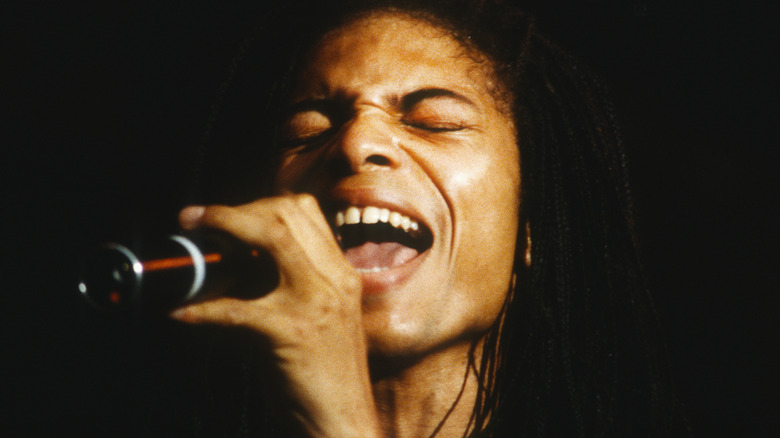
While there were bits of soul, funk, and pop in the mix, Terence Trent D'Arby was primed to be a rock star, and a genre-mixing, innovative one, too. Music was changing in 1987, and the rocker met the moment with the varied LP "Introducing the Hardline According to Terence Trent D'Arby." Earning comparisons to luminaries like Prince, D'Arby broke first in the U.K. and then in the U.S. in early 1988 with his second single, "Wishing Well."
Almost immediately, D'Arby behaved in an off-putting and unearned fashion. In his first interviews, he heralded himself as a generational talent, repeatedly asserting that "Introducing the Hardline" was superior to The Beatles' groundbreaking 1967 opus, "Sgt. Pepper's Lonely Hearts Club Band." "Wishing Well" made it to No. 1 on the pop chart for a week, but he promoted it like he was an established A-list rock star. For example, he at times kept reporters waiting and refused to speak on the record.
Then it became clear that D'Arby couldn't live up to his own hype. His second album, the experimental "Neither Fish nor Flesh," flopped, and the third, "Symphony or Damn," went largely unnoticed in the U.S. In 1995, D'Arby announced that he didn't even want to be called by that name anymore, adopting the new moniker of Sananda Maitreya. "It's just the process of being an artist," the musician said on "Good Morning Britain" in 2001 (via Metro).
Steven Van Zandt
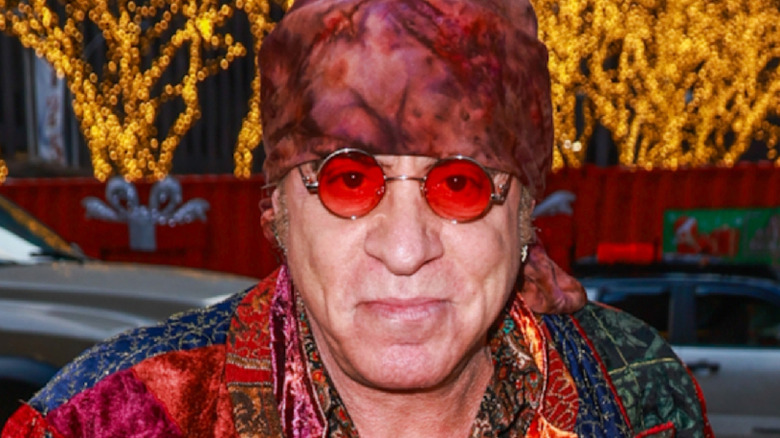
Steven Van Zandt was among the most-heard guitarists of the 1970s and 1980s — he just didn't get credited under his own name, and that was a problem. Most notably, he played with Bruce Springsteen and the E Street Band through its critical heyday, from the "Born to Run" LP in 1975 up through 1984's blockbuster album "Born in the USA." Full of rock songs every boomer dad knows by heart, it's by far the group's biggest hit, moving 17 million copies.
But Van Zandt wasn't around to fully enjoy his band's long-sought-after commercial success, as he left the E Street Band just before "Born in the USA" was released. He thought that it was the ideal moment to venture out with a solo career, inaccurately thinking that his name was at least as well known as Springsteen's and guaranteed commercial viability. "It's the one defining moment of my life," Van Zandt later told Rolling Stone. "It was a mistake I've never recovered from. Financially, it was apocalyptic." However, Artists United Against Apartheid, an organization and musical project Van Zandt founded to call attention to the oppressive separatist government of South Africa, took up most of the guitarist's time in the mid-1980s. That was "worth losing all of my friends, all of my power base, all of my juice," he said, though he did ponder what could have been. "But I look back and think, 'Jeez, if only I could've done those things and stayed,'" Van Zandt said. "I would've had the perfect life."
Brandon Flowers
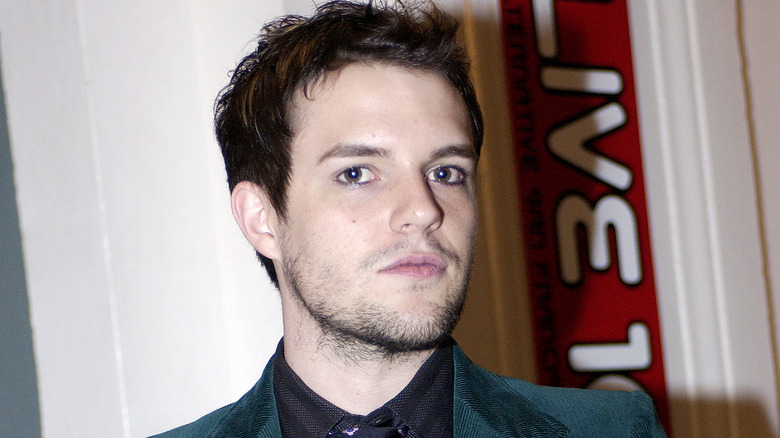
Under the direction of Brandon Flowers, The Killers never again reached the rarified air of 2004's "Hot Fuss," the group's first album. It sold 6 million copies, generated the modern standard "Mr. Brightside," and positioned The Killers as potentially one of the most important rock bands of the 2000s and probably longer. But when Flowers started to reflect on The Killers' impact, he got cocky. "We've already proven that we can write a perfect pop song, but I admire bands like the Talking Heads for having hits that are still pop and rock, but out of the norm," he told Rolling Stone (via Stereogum) in 2005. In one statement, Flowers both self-aggrandized The Killers as a band that could do everything and compared the group to one of the most popular and innovative to ever do it. That sentiment must have fueled Flowers and the other Killers as the musicians convened to record the group's second album in 2006. "This album is one of the best albums in the past 20 years," Flowers proclaimed to MTV News (via Stereogum). "There's nothing that touches this album."
That left expectations extraordinarily high for "Sam's Town." Unfortunately, after it hit stores in October 2006, "Sam's Town" didn't earn a fraction of the critical acclaim that "Hot Fuss" did, nor did it inspire many fans to pony up for another record. It sold about one-third as many copies as did "Hot Fuss," and The Killers would only ever hit the Billboard Top 10 once with "Mr. Brightside."
Billy Corgan
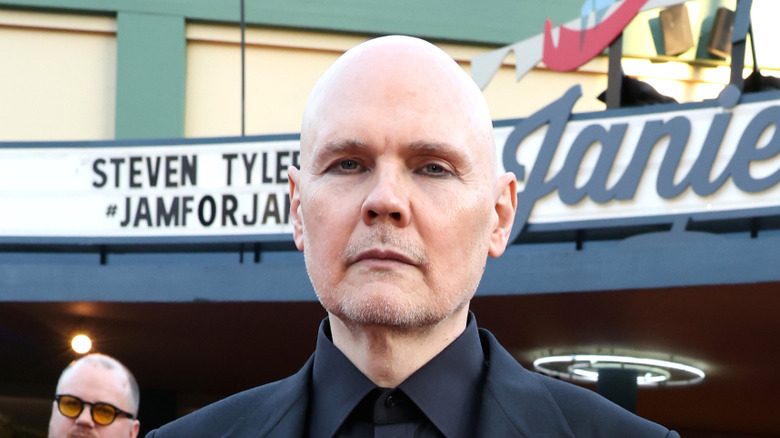
Billy Corgan's Smashing Pumpkins was one of the biggest bands of the mid-1990s, for about as long as "Siamese Dream" and "Mellon Collie and the Infinite Sadness" (a rock album that defined the '90s) were generating singles. Those LPs sold a combined 14 million copies, and Smashing Pumpkins could have continued on to be a major act in the late '90s and beyond, like Radiohead, Pearl Jam, or Foo Fighters. Instead, the group wandered into obscurity, selling fewer and fewer records as it became a vehicle for the musical whims of Corgan.
For example, Corgan had such a specific idea of how "Siamese Dream" should sound that he passive-aggressively refused collaboration. In order to serve his own ideas, rather than those of the band, he scratched the tracks laid down by bassist D'arcy Wretzky and guitarist James Iha and rerecorded the parts himself. "I gave them a year and a half to prepare for this record," Corgan told Spin, adding that "they continue to keep failing me."
When Corgan tried to reunite the prime-era Smashing Pumpkins lineup for a reunion tour in 2018, he persuaded Wretzky to rejoin — until he declined her services through an intermediary. "I honestly think he may have a brain tumor," Wretzky said to Alternative Nation. "He's always been insufferable."