

This Toxic Love Song Was The First-Ever Modern No. 1 In 1958
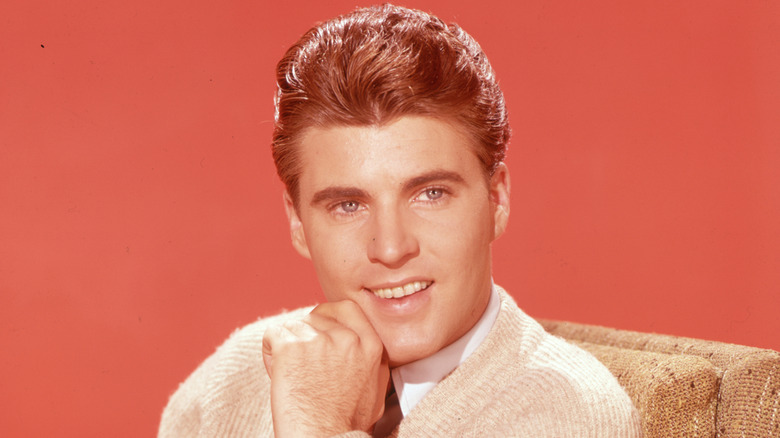
"Poor Little Fool," an early rock 'n' roll song — and a problematic one at that — hit No. 1 in 1958, making it the first chart-topper in what's considered the contemporary era of American music. In its August 4, 1958, issue, music industry trade magazine Billboard debuted the Hot 100, an all-inclusive ranking of the 100 most popular songs in the United States, based on radio, record sales, and jukebox data, regardless of genre. The Hot 100 is still the standard bearer for hit singles, and it's commonly known as the "pop chart."
The single was the work of Ricky Nelson, who one could argue was a musician who only got famous because of his parents, but that's largely because they gave him a big platform. In 1952, he started playing a version of himself on the hit sitcom "The Adventures of Ozzie and Harriet" opposite his parents, Ozzie and Harriet Nelson. When the fictional Ricky Nelson wanted to be a rock 'n' roll singer, the real one followed suit. "Poor Little Fool" was Nelson's first of multiple chart-toppers, despite its now questionable content. Here's how Ricky Nelson's "Poor Little Fool" made pop chart history despite its icky lyrics.
Poor Little Fool depicts a nasty worldview
While performed by Ricky Nelson, "Poor Little Fool" was created by Sharon Sheeley, who wrote "Poor Little Fool" from a male point of view, which is also one with a dim, distrusting, and dangerous view of women. Nelson's narrator admits to being a bit of an uncaring cad, a man who used women and broke their hearts until he met a woman (or rather a "little girl," as he casually juvenilizes the antagonist) with whom he fell hopelessly in love. But then he gets a taste of his own medicine, and that's beyond the pale, he suggests. In the end, it's he who was the poor little fool, made a sucker by a woman with "devil eyes" and a heart that's "full of lies."
Knowing the songwriter's backstory might make listeners view the tune in a slightly different light. According to Rolling Stone, Sheeley penned the song at age 15 after a breakup from another musician, Don Everly of The Everly Brothers. Some reports also say she and Nelson dated, and she was later injured in the 1960 car accident that tragically killed her then-fiance, Eddie Cochran.
Nelson topping the Hot 100 in its infancy helped prove the efficiency of TV as a music-promoting medium. He'd perform his songs on "The Adventures of Ozzie and Harriet," which viewers could then go purchase at their local record store. It's a tactic later employed by musical-themed programs like "The Monkees," "American Idol," and "Glee," all of which sent songs to the upper reaches of the Hot 100. Nelson himself went on to a long and varied career, and he was also the father of the twins central to the hair metal duo Nelson, a popular '90s musical act that's since been completely forgotten.