

5 Songs From 1977 That Define Rock History
Although most people these days may go straight to disco when they think of music trends in 1977, the year wasn't a complete and total wash for rock music. In fact, rock was very well represented on the pop charts that year, and there were multiple songs that have since earned their deserved place in rock history.
When choosing entries for this list, we weren't looking specifically for big chart hits. Instead, we went with songs that we felt left a lasting legacy on rock music, while ideally remaining culturally important in more modern times. And since there are many great songs that straddle 1976 and 1977 (i.e. the parent album coming out in mid-late 1976 and the song getting released as a single in early 1977), we're giving greater precedence to the album release date. That means the Eagles' "Hotel California," while technically a 1977 single, is better suited for a list of definitive rock songs from 1976. We also tried to keep things as diverse as possible in terms of sub-genres, as this list features a mix of arena rock, hard rock, heavy metal, punk, and new wave songs.
That all said, let's turn back the clock and take a look at five rock songs from 1977 that had a significant impact on the genre's broader history.
God Save the Queen (Sex Pistols)
For the most part, the members of the Sex Pistols barely knew how to play their instruments, and it's not like John Lydon, aka Johnny Rotten, was the most technically gifted front man out there. But that was part of its charm, and for better or for worse, the group helped kick the door open for punk as a relevant subgenre of rock. And it's a fair point that Rotten's "tribute" to Queen Elizabeth II, "God Save the Queen," exemplifies the original spirit of punk rock better than any other track on the band's 1977 debut album, "Never Mind the Bollocks, Here's the Sex Pistols."
All the ingredients of a punk classic are there, from Steve Jones' snarling guitar riffs to Rotten's angry vocal delivery and fearless verbal takedown of a well-known world leader and everything they stand for. Aside from the obvious anti-authoritarian bent of the verses and chorus, there's that "There's no future, no future/ No future for you" couplet in the pre-chorus that perfectly captures the nihilstic spirit of early punk rock.
Never mind (no pun intended) that punk has since mutated in many ways that the Pistols might not have imagined possible back in their heyday, or how Lydon/Rotten's stance on Queen Elizabeth II softened over time. "God Save the Queen" picked up where the Pistols' debut single, "Anarchy in the U.K.," left off and helped create a punk rock blueprint for future generations of bands that loved to play it loud and fast.
Psycho Killer (Talking Heads)
While punk rock was busy sticking it to the established titans of the rock scene in 1977, there was another closely related genre that had just gotten started doing the same, albeit with more technical proficiency, substantially more quirkiness, and, in most cases, much less anger. That genre was new wave, and Talking Heads was among the first bands to fall under this classification. Its debut album, the aptly named "Talking Heads: 77," was released in September 1977, and it features a certified early new-wave classic in the penultimate track, "Psycho Killer."
The song doesn't waste any time in proving why it's one of the year's finest. The main bass line, courtesy of Tina Weymouth, is among the most recognizable in rock, showing that keeping it simple on the bass often works best when setting the tone for a song. And despite his unconventional approach to singing, front man David Byrne makes "Psycho Killer" feel as threatening as its title, building up tension until he yodels out the chorus' ominous warning to run away.
Although "Psycho Killer" was a very minor hit on the pop charts, merely peaking at No. 92, it remains among Talking Heads' signature songs. And it was far from their only unconventional yet influential recording; for instance, 1980's "Once in a Lifetime" rightfully ranks among that year's most impactful rock songs.
We Are the Champions (Queen)
By 1977, Queen was unquestionably on top of the rock world, having released two massive hit records in 1975's "A Night at the Opera" and 1976's "A Day at the Races," both of which yielded some of its most popular songs, including "Bohemian Rhapsody" from the former album. Topping all that success was a tall order indeed, but while its 1977 release, "News of the World," failed to approximate the cultural impact of the two albums before it, the record's carrier single, "We Are The Champions/We Will Rock You," did more than just crack the top 5 of the Billboard Hot 100. Both sides of the single also earned their place in rock history as a pair of classic sports anthems.
For the purposes of this article, we're favoring "We Are the Champions" over "We Will Rock You" because of its greater lyrical depth and its theme of triumphing over adversity. As such, it makes for the perfect victory song for any major win at a sporting event or tournament, but it can also be a source of inspiration for anyone going through tough times. And it goes without saying that the chorus is a blast to sing along to — just make sure not to tack on a final "of the world" when singing the final chorus, lest you fall into the trap of one of the most common musical Mandela-effect moments.
Dissident Aggressor (Judas Priest)
Judas Priest didn't exactly get off to the best of starts as a would-be legendary metal band; its 1974 debut album "Rocka Rolla" showed some flashes of future brilliance, but very much had the sound of a young band still trying to find its footing. It was only on its third album, 1977's "Sin After Sin," that things really started to come together for the group, and "Dissident Aggressor" is arguably the standout track on the album.
"Dissident Aggressor" boasts some of the heaviest guitar riffs of the era and lots of intricate lead guitar work from Glenn Tipton and K.K. Downing, as well as providing a great platform for Rob Halford to show off his vocal prowess. Also prominent is the sociopolitical theme, which highlights the stark contrast between East and West Germany during the era of the Berlin Wall, and how the song's protagonist longs for elusive freedom in troubled times.
With fellow British metal icons Black Sabbath on the downswing and Ozzy Osbourne just a few years away from leaving the band, Judas Priest stepped up in a big way with "Sin After Sin" and "Dissident Aggressor," taking the genre further on in its evolutionary path and influencing scores of metal acts in the process. "Dissident Aggressor" has also gotten notable covers from Slayer and Halestorm, which both got Halford's seal of approval in a 2014 interview with Songfacts, saying, "... it's just very gratifying that you know you've made a song that potent that another great band would cover it and tribute it in that way."
Barracuda (Heart)
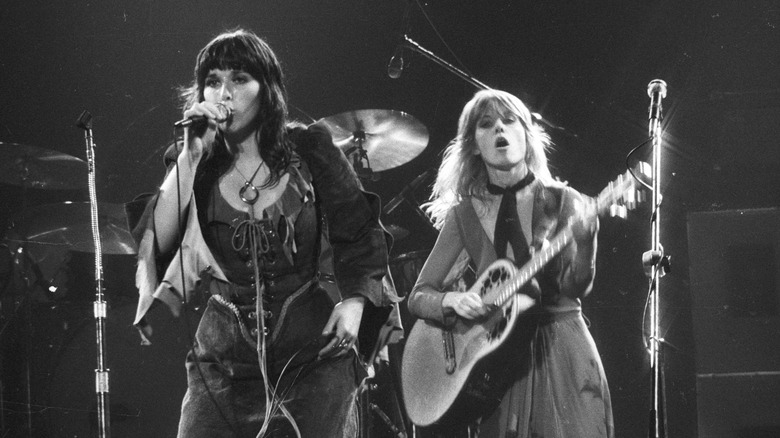
By 1977, it was no longer that unusual for all-girl or female-fronted bands to play hard rock, as evidenced by groups such as the Runaways and Fanny. These were, however, largely niche acts that didn't enjoy much commercial success. Heart, on the other hand, already had its breakout moment with its 1976 debut album, "Dreamboat Annie." And while that record yielded its share of hits, it was the band's 1977 single, "Barracuda," that stands out to this day not only for its cultural impact, but also because of the rare-for-its-time angst that fueled its lyrics.
Whereas most bands of the time focused on relationship drama when writing their angriest songs, Heart based the lyrics of "Barracuda" on a tasteless publicity stunt pulled by its label, which insinuated that front woman Ann Wilson and her guitarist sister Nancy were in an inappropriate relationship with each other. Understandably furious, the sisters poured out their feelings into one of the band's hardest-rocking songs, and ultimately proved that women can and should speak out about bad actors in the music business in the songs they perform. "Those lyrics were written by my true nature, in true rage," Ann Wilson told Rolling Stone. "I hope that that song will come in handy now when women are thinking about what they want to do and not do."
It certainly helps that the tune's fast-paced, driving main riff perfectly matches the raging lyrical tone. That's another key reason why "Barracuda" is still immediately recognizable all these decades later, while also getting more contemporary exposure in everything from movies and TV shows to (much to the Wilson sisters' chagrin) Sarah Palin's 2008 vice-presidential campaign.