

The 5 Most Popular Covers Of '70s Songs
Quite a few '70s songs literally changed the course of music. Arguably and probably the most fruitful and creatively explosive era in modern music history, the singers, bands, and groups of the 1970s provided the soundtrack for a generation as they wrote, recorded, and released one hard rock, arena rock, soul, reggae, and pop classic after another. Both the enduring superstars whose careers lasted to the present day, to the '70s musicians we completely forgot about, the decade gave us some of the most indelible tunes of all time.
It's a sign of a good song if it can be stripped of its often era-specific production techniques and overall vibe and remade anew by imaginative musicians from future generations. Many of the biggest hits of the '80s, '90s, and beyond are actually wildly rethought versions of hits from the '70s. Those beloved songs from long ago got new life later on, and they were just as successful on the charts and with award bodies like the Grammys — or even more so — as the originals they overshadowed, which were so great that they inspired those interpretations in the first place. Here are the five most popular cover versions of 1970s hits.
I Will Always Love You
Country music star Porter Wagoner had a weekly, syndicated variety TV show in the 1960s and 1970s, and he always featured a female singer for duets. Starting in 1967, a previously unknown talent named Dolly Parton filled that role. Her star soon eclipsed that of Wagoner, and by 1973, Parton wanted to see if she could make a name for herself by herself. She deliberated on how to break the news to Wagoner and also to thank him for everything he'd done for her and her career. So Parton wrote a song, a thoughtful and delicate goodbye ballad for Wagoner, "I Will Always Love You." When released as a single in 1974, it topped Billboard's country chart, as did a new, re-recorded version in 1982. It only made it as high as No. 53 on the all-genre Hot 100, however.
In the world of pop, Parton's song remained relatively obscure until Whitney Houston turned "I Will Always Love You" into a heartbreaking, bombastic, show-stopping number for her first movie, "The Bodyguard." The film was a blockbuster, but the soundtrack was even bigger. Full of Houston tracks, the album sold 19 million copies in the U.S. and won the Grammy Award for Album of the Year. Houston won the Record of the Year prize for "I Will Always Love You," shortly after it spent a record-breaking 14 weeks at No. 1 on the pop chart that would make it the No. 1 single of 1993.
I Love Rock 'N Roll
Most Americans had probably never heard "I Love Rock 'N Roll" before Joan Jett and the Blackhearts, crunchy, punky, wailing-guitar-laden version took the song to the top of the pop chart for most of the spring of 1982. Musicians Jake Hooker and Alan Merrill wrote it for their pop-rock band, the Arrows, which starred on its own TV show in England in the late 1970s. The Arrows performed "I Love Rock 'N Roll" on television, but its label would only allow a recording to be released as the flip side of a single. It never did reach the chart in the U.K.
Prior to her reinvention as an edgy rocker with a penchant for radio-friendly hooks, Jett was a member of the moderately popular prefabricated teenaged rock band the Runaways, which toured the U.K. in the late '70s. Jett heard the Arrows play "I Love Rock 'N Roll" on TV and secured permission to record a cover, but she couldn't get the rest of the Runaways interested. When the band split, Jett quickly laid down a cover, which was only released in the Netherlands as a single's B-side. Finally, Jett assembled the Blackhearts and then re-recorded "I Love Rock 'N Roll." This time, the song was a smash. No tune spent more than seven weeks at No. 1 in 1982, and "I Love Rock 'N Roll" was one of the ones with staying power.
Lean on Me
"Lean On Me" is one of just a few songs to hit No. 1 on the U.S. pop chart performed by two separate acts. In 1972, Bill Withers, who wrote the moving song about friendship and relying on others in times of dire need, took his song to the top. Fifteen years later, a five-person dance pop group called Club Nouveau repeated the achievement with its synth-heavy, drum machine-driven, sped-up and utterly jubilant take on Withers' song, which was primarily a ballad and an understated one at that.
The original "Lean On Me" spent three weeks at No. 1 in 1972 and another two in 1987 when Club Nouveau released their version. Covers of '60s songs were a trend in 1987 — Tiffany's rendition of "I Think We're Alone Now," and Billy Idol's cover of "Mony Mony" had both been hits for Tommy James and the Shondells, and Los Lobos' take on Ritchie Valens' "La Bamba" were all smashes — but no '70s revision hit bigger than "Lean on Me."
Venus
In the early 1970s, several Dutch groups landed some hits in the U.S., and the most famous of all "Nederbeat" bands was Shocking Blue. With words and music in English by guitarist Robbie van Leeuwen and lead vocals performed by singer Mariska Veres, "Venus," a propulsive, meandering, acoustic guitar-centered dance-pop song about a supposedly perfect woman, "Venus" topped pop charts in West Germany, Italy, Spain, and Belgium, before it made its way stateside to go to No. 1 in 1970.
Sixteen years later, a very different spin on "Venus" by another European pop act would race up the Hot 100 once again. U.K.-based pop vocal trio Bananarama teamed up with hit-making production team of the era, Stock-Aitken-Waterman, and made a club-ready, synthesizer-saturated "Venus," a song that the group had wanted to record since the musicians started singing together in 1979. In 1986, their cover of "Venus" went to No. 1 in the U.S. for a week.
Killing Me Softly With His Song
Singer-songwriter Lori Lieberman was so enchanted by "American Pie" creator Don McLean when she saw him perform at an L.A. club that she wrote what became "Killing Me Softly With His Song." It didn't sell many copies, but when soul superstar Roberta Flack endeavored to cover it, it became a classic. Flack made the song all hers, and it took just five weeks to climb the Hot 100 to the No. 1 spot, where it stayed for five weeks. "Killing Me Softly With His Song" would later win the Grammy Awards for Record of the Year and Song of the Year.
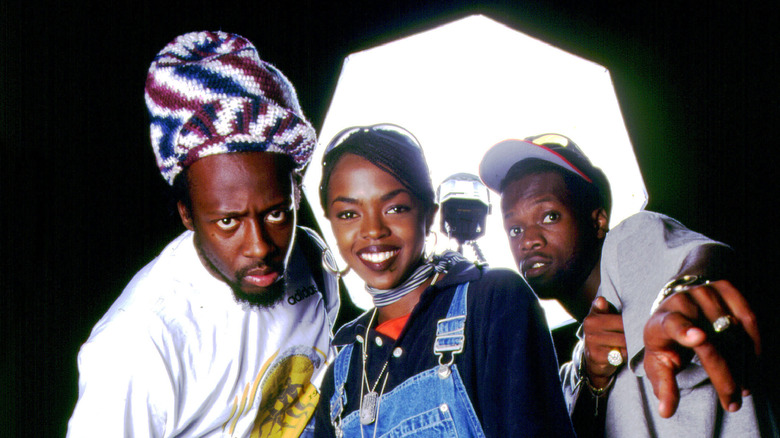
The Fugees had enjoyed a few minor hits and garnered some attention in the mid-1990s, but "Killing Me Softly With His Song" was the New Jersey hip-hop trio's major breakthrough. Lauryn Hill had already exhibited tremendous skill as a rapper, while this tune — which updated the song with hip-hop and reggae elements — showed off Lauryn Hill's powerful and affecting singing voice. The song, revamped for modern listeners, was a smash across multiple and often disparate musical genres. The song hit No. 1 on the Billboard pop airplay chart for three weeks, and No. 1 on the R&B/Hip-Hop Airplay list for a span of five weeks. It was also No. 30 on the adult contemporary list and No. 48 on the dance chart. Soon after, the Fugees won two Grammy Awards, including Best R&B Performance by a Duo or Group with Vocal for "Killing Me Softly With His Song."