

The Eeriest Coincidences That Haunt Rock 'N' Roll History
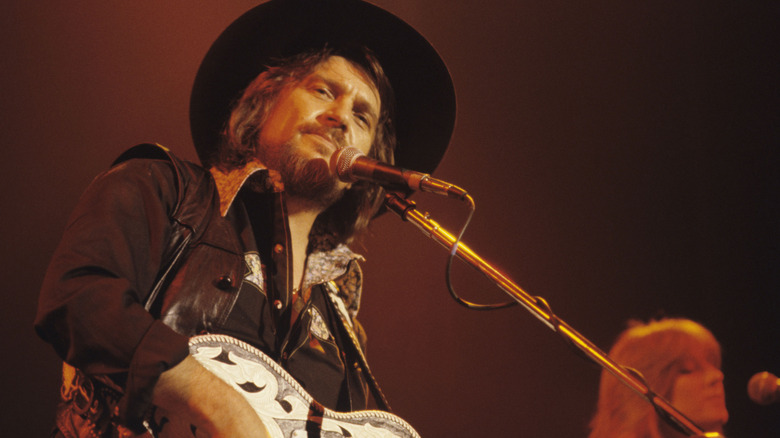
Many legendary stories in rock 'n' roll history are often depicted as these larger-than-life experiences that shaped the foundation of our favorite music. These moments seem untouchable and divinely crafted to play out according to plan. But every so often, a little thing called coincidence rears its head and proves that the rock 'n' roll scene — and those in it — is no exception to fate's mysterious ways.
Coincidence occurs when two seemingly unconnected things unexpectedly connect. If you look closely at events throughout rock history, you'll find that some key moments share an uncanny thread that's either too big to ignore or has somehow completely flown under the radar. Whether it's album art that predicted untimely events, musicians dying on the same day, or innocent jokes that turned into grim realities, the decades are peppered with such events. We're looking at the eeriest coincidences that haunt rock 'n' roll history, from the close calls to the parallel tragedies.
Cass Elliot and Keith Moon died in the same apartment
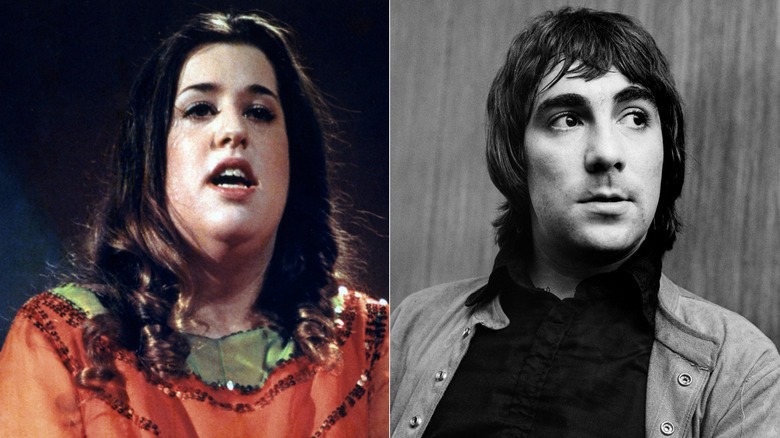
It's eerie when two musicians die on the same day, but what are the odds of two musicians dying in the same place? It's rare, but not entirely unheard of. Cass Elliot, aka "Mama Cass" of The Mamas & the Papas, was a dynamite vocalist whose unmistakable pipes turned songs like "California Dreamin'" and "Monday Monday" into timeless classics. After her stint in The Mamas & the Papas, she went solo, and her song "Make Your Own Kind of Music" got some love on the charts in 1969. She was performing across the pond in London and staying in singer-songwriter Harry Nilsson's flat when she died of a heart attack on July 29, 1974, at age 32.
The tragic death of Cass Elliot wasn't the only terrible thing to happen in that "cursed" apartment, as Nilsson called it (per Far Out Magazine). In September 1978, Keith Moon, the wildly innovative and chaotic drummer of The Who, was attempting sobriety and staying at Nilsson's flat to help him stay on track. He was prescribed Heminevrin to curb alcohol withdrawal symptoms, and after a party hosted by Paul McCartney, Moon reportedly took too many Heminevrin pills and died of an overdose on September 7, 1978, in Nilsson's flat — just four years after Elliot's death.
Dimebag Darrell Abbott and John Lennon died on the same day, decades apart
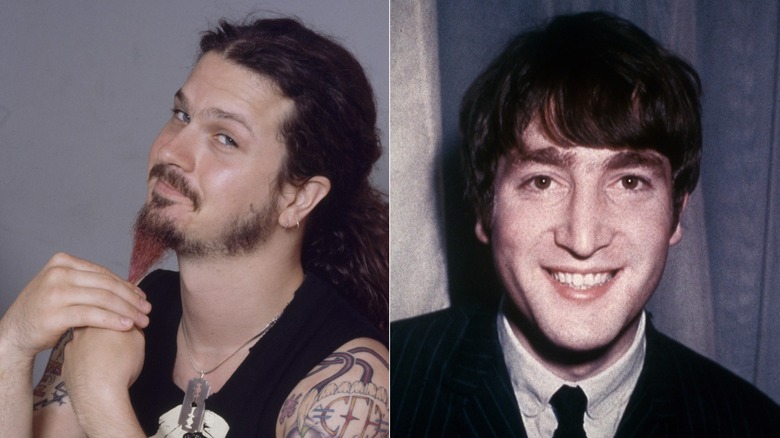
Unfortunately, we've lost several great musicians to senseless acts of violence — including two influential rock stars who were killed by fans on the same day, decades apart. The first is John Lennon, one of the "Fab Four" who made The Beatles a global phenomenon in the 1960s. He also had a successful career after the group broke up, releasing several albums with his wife, Yoko Ono, including "Double Fantasy" in November 1980. Less than a month after that release, on December 8, 1980, Lennon and Ono were outside their apartment building in Manhattan when a man named Mark David Chapman shot and killed the legendary musician. Chapman was, at one point, a big Beatles fan, but he allegedly became discontent with Lennon's lifestyle and sought a way to infamy.
Lennon isn't the only famous guitarist to lose his life on that date. "Dimebag" Darrell Abbott created chunky grooves and unforgettable riffs in Pantera, one of the biggest metal bands of the '90s. The members went their separate ways in 2003, with Dime and his brother, Vinnie Paul Abbott, forming a new band, Damageplan, that same year. On December 8, 2004, Damageplan was playing a gig in Columbus, Ohio, when, in the middle of the set, a man named Nathan Gale opened fire on stage and killed Dime. Three others were killed, and several others were hurt during Gale's rampage. While his true motive for killing Dime is unknown, he was reportedly a Pantera fan upset about the band's breakup while simultaneously paranoid that the group was stealing material from him.
Kurt Cobain and Layne Staley also died on the same day, years apart, in Seattle
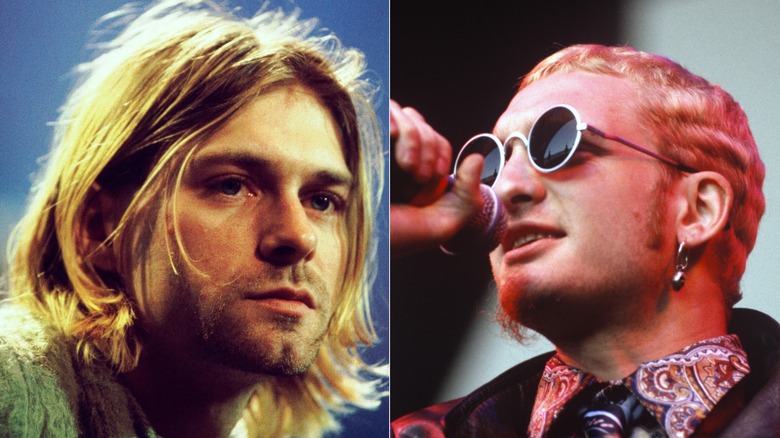
On the surface, Nirvana frontman Kurt Cobain and Alice in Chains frontman Layne Staley seemed to have a lot in common. They were both born in 1967. They both became the faces of highly successful bands in the grunge era and helped bring the "Seattle sound" to the masses. They both delivered distinctive vocals and penned introspective lyrics that helped define their respective bands' sounds. And they both died on the same date, and in the same city, years apart.
Cobain became a mega star following the smashing success of Nirvana's album "Nevermind" in 1991, but he was never fully comfortable with the blinding spotlight he was thrust into. "I didn't know how to deal with it," he told Rolling Stone in 1994. "If there was a Rock Star 101 course, I would have liked to take it. It might have helped me." He very publicly experienced depression and substance use issues, eventually entering rehab after overdosing in March 1994. Just one month later, on April 5, 1994, Cobain died by suicide at his home in Seattle, leaving a generation reeling from the loss of a transformative music idol.
Similar to Cobain, Staley experienced substance abuse issues and tried several stints in rehab, but none seemed to stick. In the final years of his life, he was still experiencing addiction and had severely isolated himself from society. On April 5, 2002 — eight years to the day of Cobain's death — Staley died of a drug overdose in his Seattle apartment, leaving another gaping void in the grunge scene.
Waylon Jennings jokingly predicted Buddy Holly's fatal plane crash
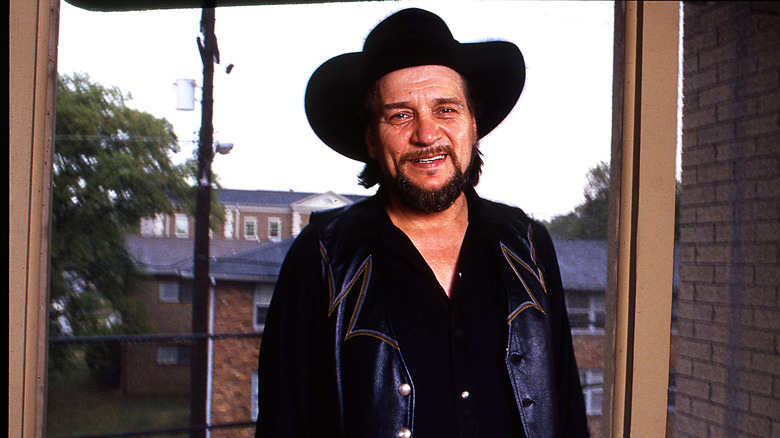
Waylon Jennings was a pioneer in the outlaw country movement, collaborating with acts like Willie Nelson to usher in a new era of gritty twang. Before "Hoss" became a household name, though, he was an up-and-coming musician playing bass for a rock 'n' roll legend: Buddy Holly. In February 1959, Jennings was touring the Midwest with Holly and several other musicians, including J.P. Richardson (aka "The Big Bopper") and Ritchie Valens. Frustrated with how cold and unreliable the tour buses were, Holly chartered a plane on February 2 for himself, Jennings, and guitarist Tommy Allsup out of Clear Lake, Iowa.
Jennings was set to fly on the plane, but at the last minute, he let the Big Bopper take his place, and Allsup let Valens snag his spot. According to the Country Music Hall of Fame, Holly and Jennings joked with one another just before the plane departed: "I hope your damned bus freezes up again," Holly said, with Jennings responding, "I hope your 'ole plane crashes." That playful jab turned into an unfortunate reality when the plane carrying Holly, Richardson, and Valens crashed shortly after takeoff in the early hours of February 3, killing everyone on board. The plane crash that could have killed Waylon Jennings never really left his mind — the musician felt guilt and sorrow over the crash for years. "God almighty, for years, I thought I caused it," he said in an interview with Country Music Television. Jennings even penned a song called "Old Friend" in tribute to Holly.
John Lennon predicted his own death
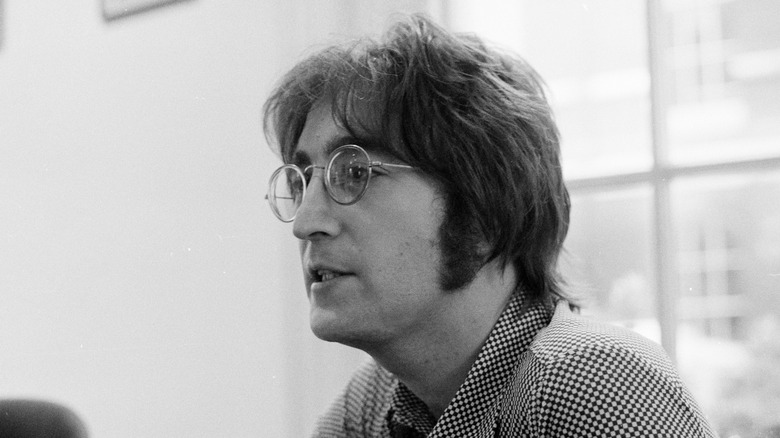
The Beatles took the world by storm when the group debuted in the early 1960s. By the middle of the decade, Beatlemania was in full swing, and Paul McCartney, Ringo Starr, John Lennon, and George Harrison were no strangers to the press. Lennon, in particular, made some interesting statements in interviews, including his infamous "We're more popular than Jesus now" quote in a March 1966 article for the Evening Standard. One of his most haunting interview moments took place in 1965, when he seemingly predicted his own death.
As reported by Far Out Magazine, that year, he told a reporter, "We'll either go in a plane crash, or we'll be popped off by some loony." What was then a cheeky comment to the media turned into a grim prophecy. The latter half tragically came true on December 8, 1980, when he was shot and killed outside his apartment in New York City at age 40.
The 27 Club
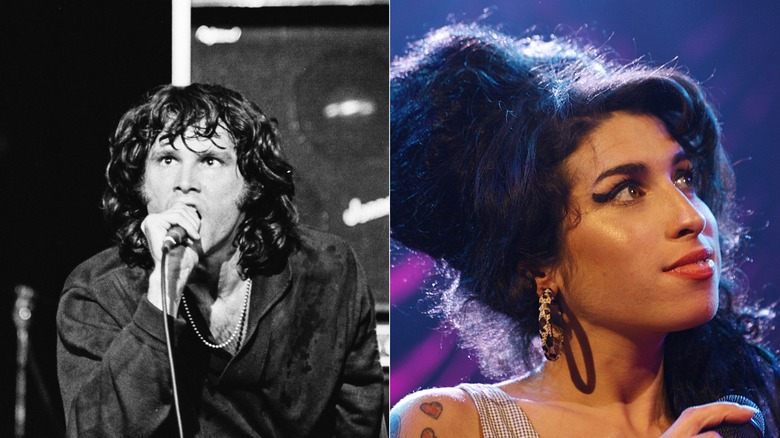
The rock 'n' roll world has seen its fair share of tragedies, with one of the most infamous and unsettling coincidences being the 27 Club. The informal list is made up of notable musicians who died at age 27, including blues artist Robert Johnson, Brian Jones of The Rolling Stones, Jimi Hendrix, Janis Joplin, Jim Morrison, Kurt Cobain, and Amy Winehouse. What makes the 27 Club so haunting is the immense sadness that comes when incredible talent meets a devastating fate at such a young age.
Johnson's cause of death is murky — some say he died of syphilis, while others believe he succumbed to pneumonia or was poisoned. Jones drowned in his pool while intoxicated, Hendrix died of asphyxiation following an overdose of barbiturates, Joplin overdosed on heroin, Morrison's heart failed (though it's worth noting that an autopsy wasn't conducted after his death), Cobain died by suicide, and Winehouse died of alcohol poisoning. These stars who tragically died before 30 had a lot more to show the world than their short lives allowed. But it's important to note that correlation does not imply causation with the 27 Club — plenty of other influential musicians have lived past age 27. These musicians' lifestyles and other circumstances in life greatly influenced their deaths, and the fact that they were all 27 when they died just happens to be one heck of a morbid coincidence.
Aerosmith almost chartered the plane involved in Lynyrd Skynyrd's fatal crash
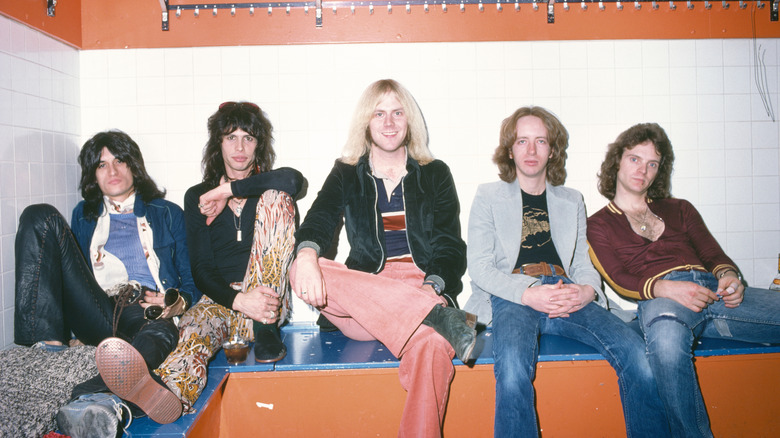
Aerosmith has been blessed with a long career filled with chart-topping albums and classic hits like "Walk This Way" and "Crazy." But the band members had a close call with fate in 1977 that could have changed the trajectory of their lives. They were looking to charter a plane for their tour in August when a Convair CV-240 caught their tour accountant's eye. According to "Walk This Way: The Autobiography of Aerosmith," the father of Zunk Buker, a member of Aerosmith's crew, was asked to go see the plane down in Dallas, Texas. His dad said yes, but when he saw the plane, he wasn't impressed with the aircraft itself or its crew. "Meanwhile, the two pilots are smoking and passing an open bottle of Jack Daniel's in the cockpit," Buker recalls in the autobiography. "The whole thing stank. Dad calls the accountant and tells him to forget it. "No way are we going to fly this airplane.""
While Aerosmith passed on the Convair CV-240, another legendary rock band fatefully decided to give the plane a go for its tour: Lynyrd Skynyrd. The group was on that plane when it crashed in the Mississippi woods on October 20, 1977. The accident killed several people, including Lynyrd Skynyrd members Ronnie Van Zant, Cassie Gaines, and Steve Gaines, and injured other band and crew members.
The cover art for Lynyrd Skynyrd's last album shows the group standing on a fiery street
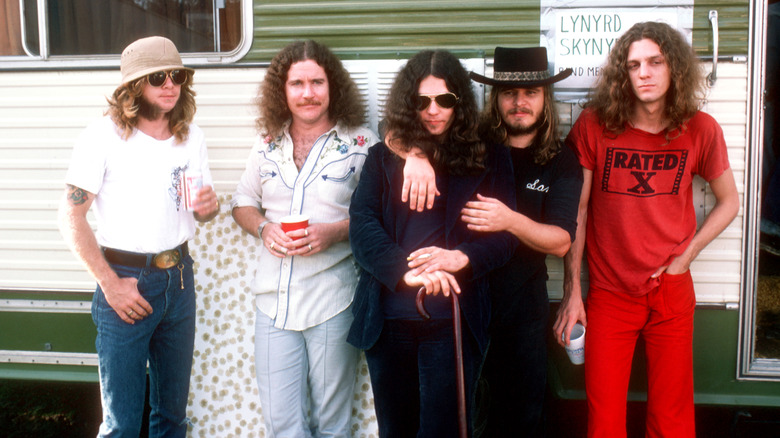
An album's cover art can make it stand out and grab people's attention. But in the case of Lynyrd Skynyrd's fifth album, "Street Survivors," the cover art served as a haunting premonition of the band's fate. The LP dropped on October 17, 1977, just three days before the fatal plane crash that killed several group members and injured the survivors.
Now, the album release being that close to the crash is eerie enough, but the album's cover art pushed the coincidence into bone-chilling territory. The original cover for "Street Survivors" showed the band members standing on a fiery street, seemingly foreshadowing their plane crash. After the accident, MC Records changed the artwork to show Lynyrd Skynyrd standing in front of a black background out of respect for the band. The original flame-clad cover art did eventually make its way back onto store shelves when a deluxe CD of "Street Survivors" was released in 2007, 30 years after its initial release.
Slayer released an album called God Hates Us All on 9/11
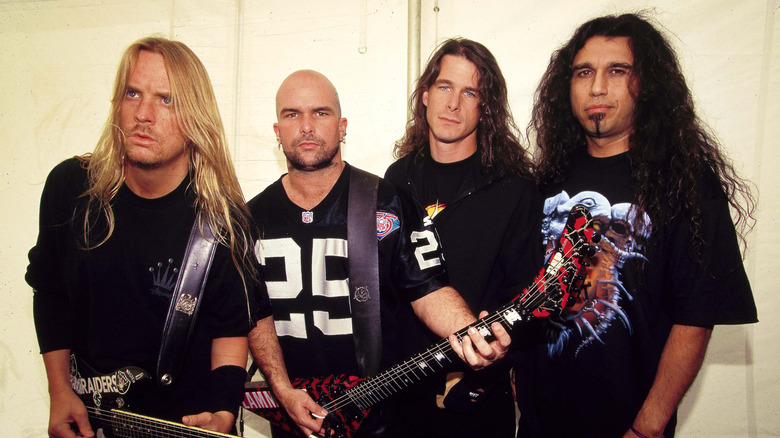
Slayer is known for pushing the boundaries of thrash metal and taking controversial risks that made the group stand out in the rock world. In 2001, the metal legends were working on a new album with an attention-grabbing title: "God Hates Us All." In an interview with Ink 19, Slayer guitarist Kerry King said the bold album title came from a conversation with Pantera after he played them some songs from the record. Kerry said, "I played the songs for Pantera, and they were like, 'Man, "God Hates Us All" would be a great shirt!' And I was like, 'That would be a great title for the record!'"
The album was going to hit shelves in the summer of 2001, but the release was delayed due to an issue with the album cover. As a result, the new release date was set for September 11, 2001. When "God Hates Us All" arrived in stores that Tuesday morning, no one could have predicted the album would coincide with the September 11 terrorist attacks that claimed thousands of lives.
Dream Theater also released a live album on 9/11, with the cover art depicting New York City on fire
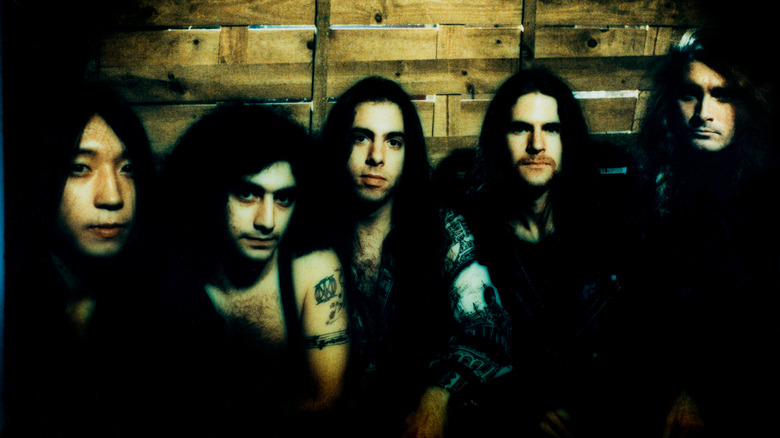
Slayer isn't the only band with an unsettling album coincidence tied to September 11. Dream Theater, one of the pioneers of progressive metal (a popular metal subgenre), recorded a live album at the Roseland Ballroom in New York City in August 2000. That album, called "Live Scenes from New York," was released on September 11, 2001. Not only was the LP recorded in the same city that was attacked on 9/11, but the cover art featured iconic symbols of New York City, including the Twin Towers, engulfed in flames.
In an interview with eonmusic, Dream Theater guitarist John Petrucci revealed that copies of the CD were pulled from stores following the attacks, and the album received new cover art featuring the band's logo before hitting shelves again. Former Dream Theater drummer Mike Portnoy told Noisecreep that this was one of the strangest coincidences of his career. "It has to be one of the most unbelievable coincidences in the history of rock album covers," he said.
A change of plans saved Dave Navarro's life

Over the years, Dave Navarro has made edgy, infectious riffs come to life with acts like Jane's Addiction, Alanis Morissette, and the Red Hot Chili Peppers. But if it weren't for a hasty change of plans back in his teen years, he may not have been around to make that great music and cement his place in rock history. On March 3, 1983, Navarro's mom, Connie Navarro, and her friend, Sue Jory, were killed by Connie's ex-boyfriend, John Riccardi, after he broke into her condo. Navarro was just 15 at the time of his mother's death, and the murders deeply affected him.
In 2001, Navarro told "The Howard Stern Show" that he had a lingering realization that a sudden change of plans likely saved his life. "I used to spend Wednesday evenings with my dad, and for some reason, he couldn't see me one Wednesday, and he saw me on a Thursday instead," he said. "And that's when this happened. And if that little chance didn't happen, I probably would have gotten killed too."
Navarro has opened up about how the tragic death of his mother affected his life and contributed to his experiences with addiction over the years, but he's found ways to work through the trauma. In 2015, he made a documentary called "Mourning Son," where he addresses the impact of his mother's death and confronts Riccardi about her murder.
If you or anyone you know is struggling with addiction issues, help is available. Visit the Substance Abuse and Mental Health Services Administration website or contact SAMHSA's National Helpline at 1-800-662-HELP (4357).